
 English
  Korean
  French
  German
  Hungarian
  Japanese
  Russian
How to Choose the Best Cotton Bag Supplier for Your Eco-Friendly Business
When your brand’s eco game is on point—but your cotton bag supplier keeps ghosting you mid-production—that’s when the real panic sets in. A flaky vendor can tank a launch faster than you can say “out of stock.” If you’re ordering custom cosmetic bags by the thousands, you don’t have time to chase certifications or pray the stitching holds this time.
Finding a legit, sustainable partner isn’t about being picky—it’s survival. You want GOTS-certified cotton that doesn’t feel like sandpaper, pricing that won’t give your CFO heartburn, and someone who actually answers emails when peak season slams into your calendar like a freight train.
“Eco-conscious buyers aren’t just looking for fabric—they’re looking for follow-through,” says Lin Cheng, Senior Sourcing Manager at Topfeel (2024 Q1 Supplier Evaluation Report). That means scalable capacity. Real sampling processes. Transparent contracts that don’t come with gotchas buried in footnotes.
So how do smart brands lock down bag suppliers they can trust? Keep reading—we’re pulling back the curtain on what really matters.
Quick Answers: Cotton Bag Supplier Essentials
➔ Core Reliability Criteria: Evaluate fabric quality (organic cotton, recycled cotton, heavyweight canvas), reinforced stitching, GOTS & Fair Trade certifications, scalable bulk capacity, and dedicated account management.
➔ Vetting in Four Steps: Sample materials, test customization (screen printing to dye sublimation), assess lead times and ethical sourcing, and verify ISO/SA8000/OEKO-TEX compliance.
➔ Pricing Models Explained: Compare flat-rate, tiered volume discounts, cost-plus transparency, and subscription plans to match budgets and forecasted volumes.
➔ Flexible Contract Solutions: Negotiate MOQs, adjust production timelines for tight deadlines, unlock tiered discounts, and arrange phased payment schedules for cash-flow ease.
➔ Seasonal Order Strategies: Align pre-season forecasting with capacity planning, ramp up peak-season bulk manufacturing, and optimize post-season warehousing and freight forwarding.
What Makes a Reliable Supplier
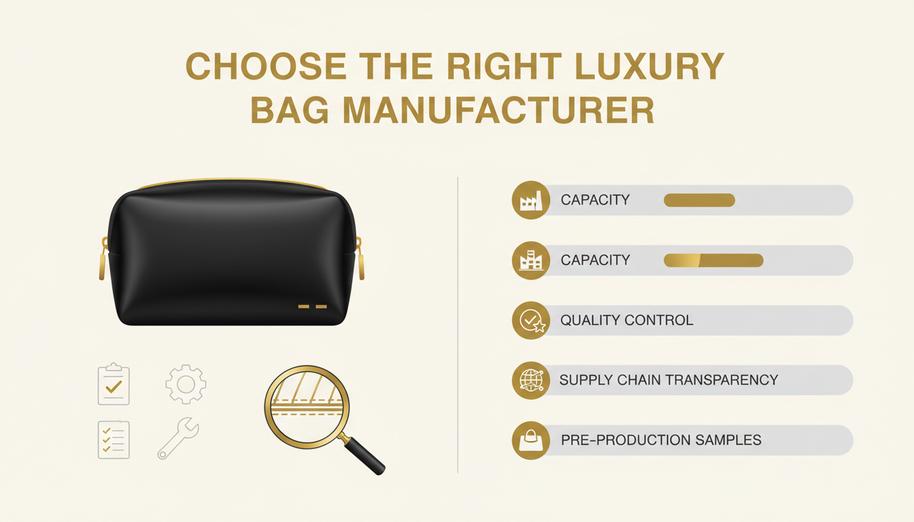
Choosing the right cotton bag supplier can make or break your business. Here’s how to spot one that won’t let you down.
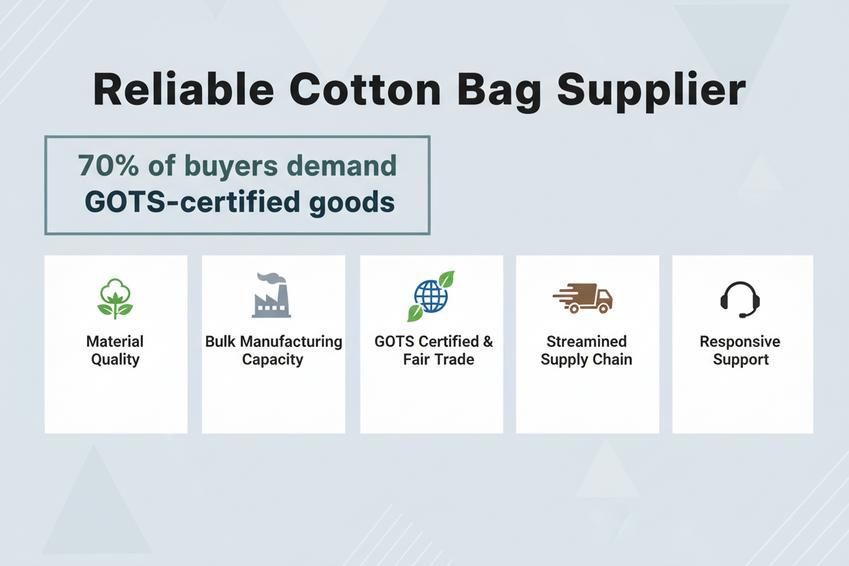
Material Quality with organic cotton, recycled cotton, and heavyweight canvas evaluation
- ✅ Use of organic cotton ensures fewer chemicals and healthier soil.
- ✅ Recycled cotton cuts waste while maintaining softness.
- ✅ Thick, heavyweight canvas boosts durability for daily wear and tear.
Textiles should be breathable yet strong. A reliable supplier checks every roll of fabric for consistency in woven structure and color. If they skimp on materials, your bags won’t last a season.
Bulk manufacturing capacity and rigorous sampling processes
- Confirm their daily output — can they handle 10K units or more?
- Review their sampling protocol, including prototype turnaround time.
- Ask about batch consistency across multiple orders.
A seasoned cotton bag supplier will offer pre-production samples that reflect final quality — not just mockups for show.
GOTS certified & Fair Trade compliance checks
• Check if they’re audited annually for GOTS certification
• Confirm adherence to Fair Trade standards, especially labor rights
• Look into their track record on environmental impact
“According to Textile Exchange’s 2024 Organic Cotton Market Report, over 70% of buyers now demand GOTS-certified goods as part of ESG commitments.”
A trustworthy supplier doesn’t just meet regulations — they lead by example in ethical sourcing.
Streamlined supply chain: warehousing to customs clearance
Multiple short segments:
Efficient warehousing? That means no delays when scaling up orders.
Solid freight coordination? It avoids costly shipping errors.
Smooth customs processing? You’ll hit delivery dates without drama.
The top-tier suppliers have tight control over their entire logistics network, from inventory management to international documentation compliance.
Responsive support through dedicated account managers
Step-by-step relationship flow:
- You get assigned a real person — not a bot.
- This person knows your product specs inside out.
- They follow up post-shipment for feedback.
- If something breaks down, they fix it fast.
Great support turns a good cotton bag manufacturer into an amazing long-term partner. Communication is key — always has been, always will be.
4 Essential Steps to Vet a Cotton Bag Supplier
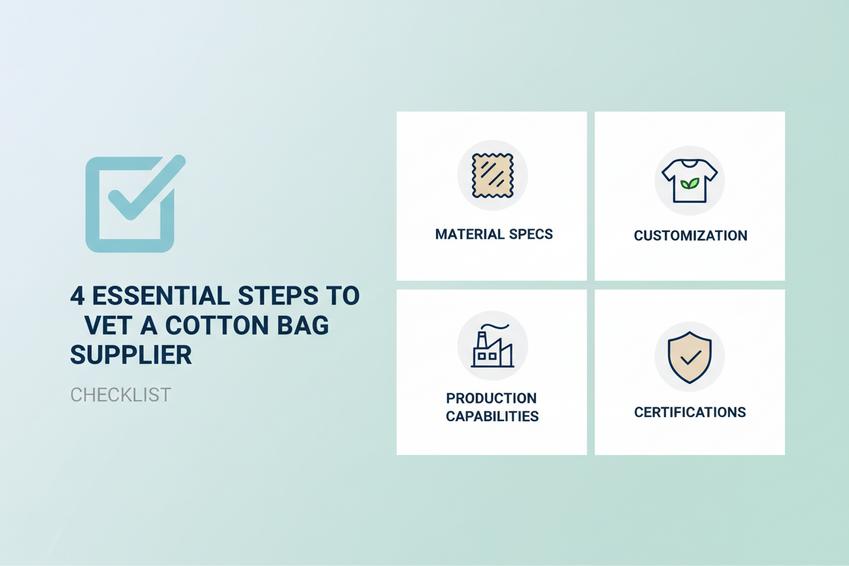
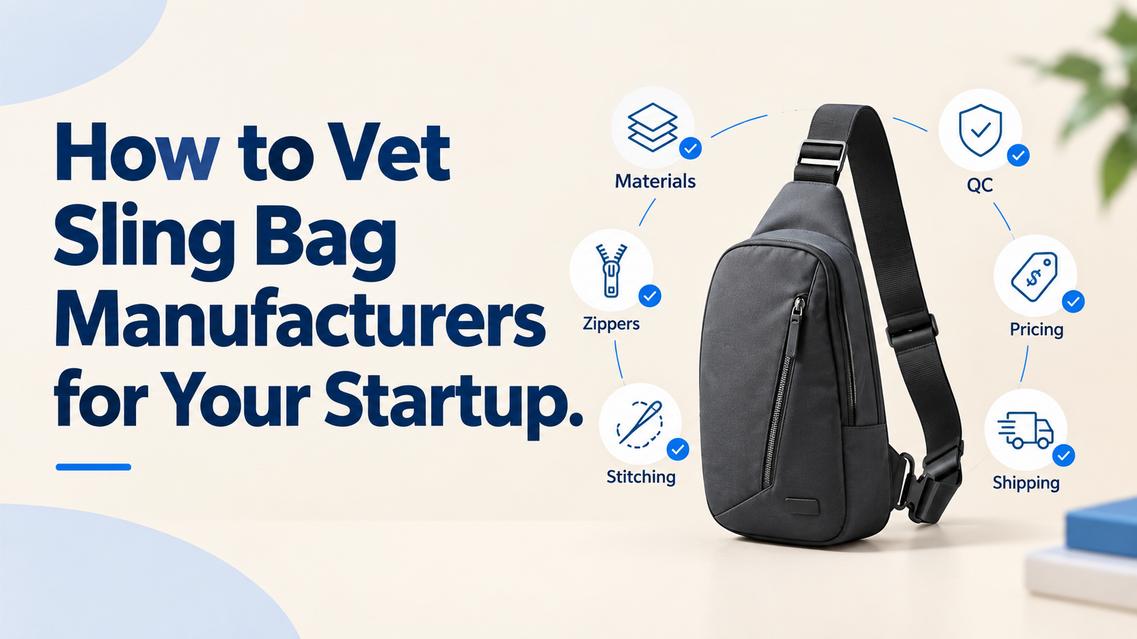
Before signing with any cotton bag supplier, it’s smart to vet them thoroughly. These four steps help you avoid headaches and find the right fit for your brand.
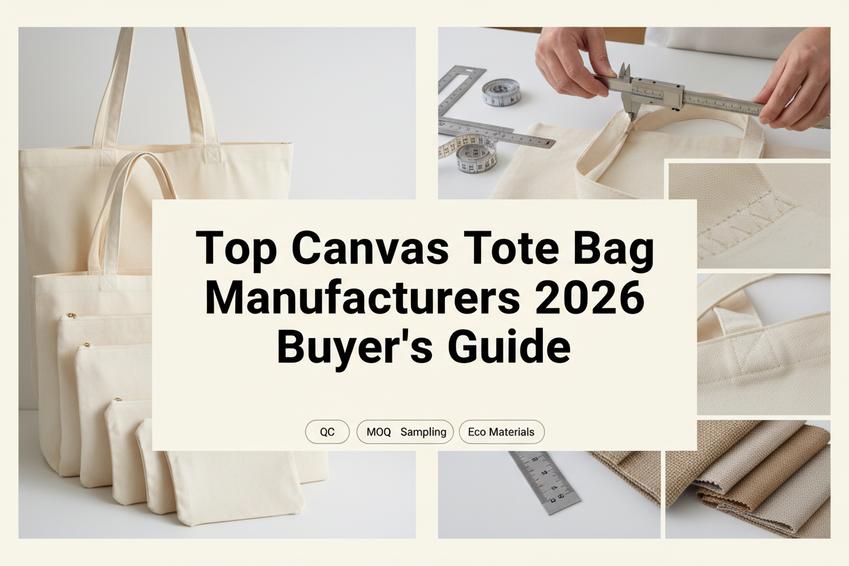
Inspect material specifications via sampling process
Start by breaking down the thickness of cotton fabric—this isn’t just about feel; it’s science and standards.
- Sampling Phase
- Request at least three samples covering different grades of organic cotton, recycled cotton, and blends.
- Compare tactile quality, finish, and stitching on each sample.
- Fabric Analysis
- Measure actual vs. claimed fabric weight using a GSM scale.
- Check the tightness and consistency of the weave—loose weaves may fray faster.
- Technical Review Table
| Sample ID | Fabric Weight (GSM) | Thread Count | Material Blend |
|---|---|---|---|
| A | 280 | High | Organic Cotton |
| B | 240 | Medium | Recycled + Cotton |
| C | 300 | High | Heavyweight Canvas |
This step ensures your chosen cotton bag manufacturer doesn’t just talk a good game—they deliver on specs too.
Evaluate customization options from screen printing to dye sublimation
Customization is where your branding comes alive—but don’t assume every vendor can pull off what you want.
• Ask for mockups using different methods like screen printing, digital transfer, and embroidery. Some methods work better on thick canvas than others.
• Test how well designs hold up under washing—especially if you’re using heat-sensitive ink or detailed logos.
• Explore extras like custom zippers, dyed handles, or woven tags for added flair.
Mixing techniques might be necessary depending on your design complexity—one style rarely fits all when working with diverse bag styles or closure types.
Assess production capabilities and lead times
A solid cotton bag supplier needs more than pretty samples—they need muscle behind their promises.
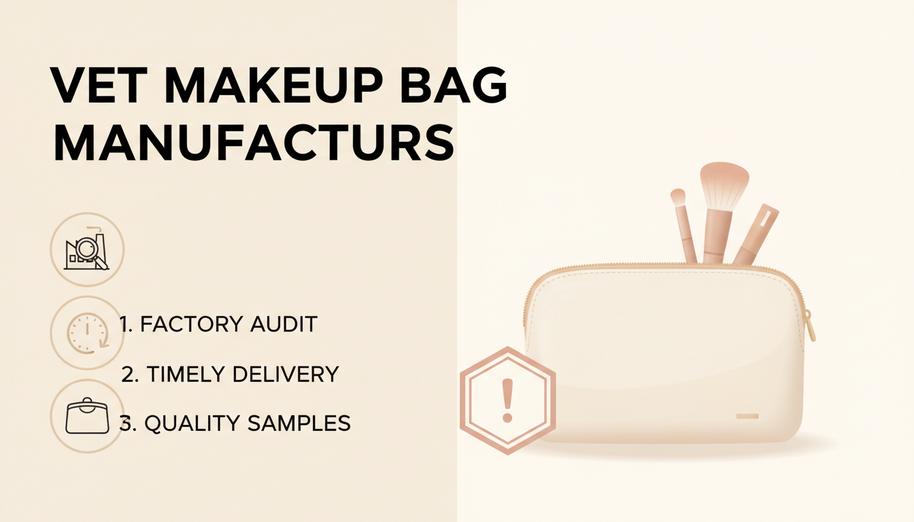
- 🏭 Factory Evaluation
- Visit or request videos/photos showing their facility size and key machinery.
- Confirm they can handle your expected order volume without delays.
- 📦 Delivery & Volume Planning
- Ask about standard lead times for orders over various thresholds:
- Under 500 units
- Between 500–5,000 units
- Over 10,000 units
- ⏱️ Rush Order Feasibility
- Can they accelerate production during peak seasons?
- What’s their penalty policy if deadlines are missed?
Understanding these logistics helps you avoid bottlenecks when demand spikes unexpectedly.
Verify certifications and quality control procedures
Certifications aren’t just badges—they reflect how serious a supplier is about ethics and quality assurance.
- ✅ Certification Review:
• Check for valid documentation of compliance with standards such as:
– GOTS certification

– SA8000 social accountability

– ISO9001 management systems
- 🔍 Quality Control Measures:
• Request details on their regular inspection process—do they test for durability?
• Ask about their average product defect rate over the past year.
• Ensure there’s a system in place to address customer complaints quickly. - 📊 Testing Protocol Breakdown:
• Fabric shrinkage tests after washing
• Colorfastness under sunlight
• Stitch strength pull tests
This step separates hobbyist producers from true professionals in the eco-friendly bag game—and helps you sleep easier post-purchase.
Pricing Models Offered by Top Cotton Bag Suppliers
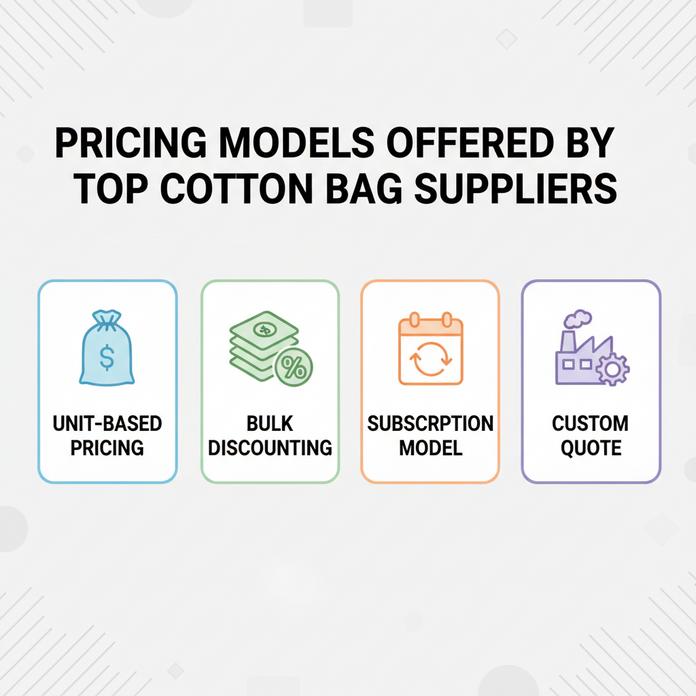
Cotton bag pricing can get tricky. Here’s how different models work so you can pick what fits your brand best.
Flat-rate pricing for predictable unit costs
- You pay one fixed cost per bag—simple as that.
- No surprises, no hidden fees.
- Perfect for startups or small businesses needing budgeting clarity.
- Predictable expenses help you plan promotions better.
- Even if material prices shift, your rate stays locked in.
- Ideal when working with a tight marketing budget.
This model works best when you want a consistent expense and don’t want to chase discounts.
With a flat fee, every cotton bag supplier on your shortlist offers transparency and peace of mind—especially helpful if you’re trying out a new product line.
Tiered pricing – unlocking volume discounts
- Order 500 units? You pay one rate.
- Order 5,000? That rate drops significantly.
- The more you buy, the more you save—thanks to those sweet quantity breaks.
✓ Great for brands scaling up quickly
✓ Encourages bulk purchasing during peak seasons
You’ll often see suppliers offering thresholds like 1000/2500/5000 bags with increasing discount levels, making this model super attractive for long-term campaigns or retail launches.
Cost-plus pricing that balances material expenses and margins
Start here:
- Supplier calculates total production cost, including everything from raw materials to labor.
- Then they tack on a reasonable markup—usually a set percentage.
- You get full visibility into what you’re paying for and why.
This approach is all about fairness and openness. It’s popular among eco-conscious buyers who care about ethical sourcing and want honest deals from their cotton bag supplier network.
Subscription-based models for consistent supply
Step-by-step:
A) Choose your plan: weekly, monthly, or quarterly shipments based on usage rates
B) Lock in quantities: regular orders mean fewer stockouts and panic reorders
C) Enjoy benefits: lower per-unit costs over time plus priority support
Grouped perks include:
Scheduled replenishment without lifting a finger
Improved inventory flow through steady supply chains
A great fit if you’re running an online store or café with branded bags
Some cotton bag suppliers even offer exclusive designs under this setup—Topfeel being one standout name known for reliable delivery and stylish options under long-term agreements that support smart inventory planning through guaranteed availability mechanisms.
Worried About Costs? Flexible Cotton Bag Supplier Contracts
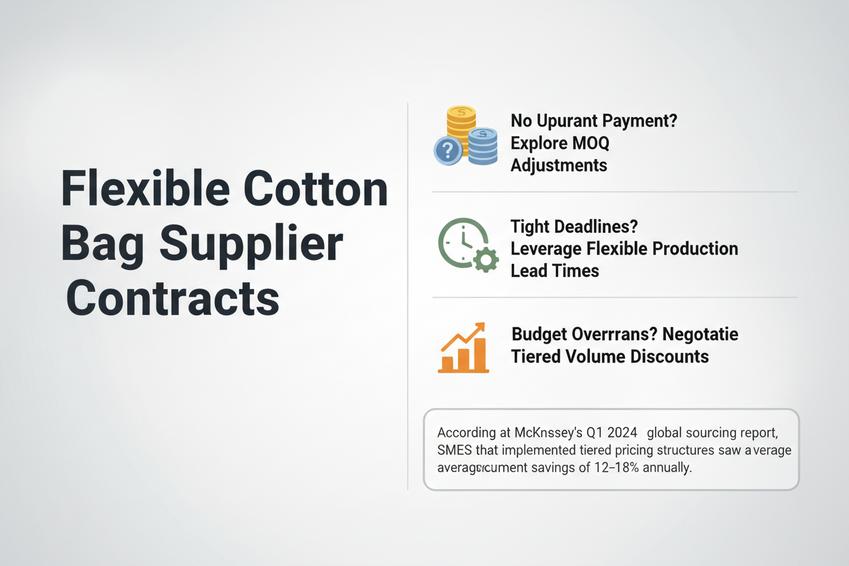
Looking to cut costs without cutting corners? These contract strategies with your cotton bag supplier might just do the trick.
No upfront payment? Explore MOQ adjustments
When you’re strapped for cash, negotiating a lower minimum order can ease entry. Here’s how you can work it out with your cotton bag supplier, especially if you’re new in the game:
A. Understand Your Position
- Are you launching a new product line or testing demand?
- If yes, highlight this during contract negotiation to justify smaller runs.
B. Use Supplier Psychology
- Emphasize long-term potential.
- Offer repeat business in exchange for reduced starting quantities.
- Ask about shared production runs to reduce your share of the total production volume.
C. Present Smart Inventory Plans
- Show that you’ve got solid inventory management, even at low volumes.
- Suppliers often appreciate clients who plan ahead and manage stock well.
A flexible payment terms discussion often follows once MOQ is on the table—so don’t hesitate to push for both.
Tight deadlines? Leverage flexible production lead times
Got a last-minute event or retail window closing fast?
• Talk openly with your supplier about their actual manufacturing capacity, not just what’s on paper.
• Build buffer days into your requested delivery schedules, but prepare for real-time updates via good old-fashioned WhatsApp or email.
• If needed, ask for partial shipments through staggered logistics—this helps balance speed and cost across the supply chain.
⭑ Pro tip: Aligning your needs with their existing workflow boosts goodwill and opens doors to future favors like faster sampling or quick reorders.
Budget overruns? Negotiate tiered volume discounts
If budgets are tight but orders are growing, don’t settle for flat pricing from your cotton bag vendor. Instead:
Tier 1: Identify Your Forecasts
- Estimate monthly or quarterly volumes.
- Work these into a structured discount model based on quantity brackets.
Tier 2: Present a Case Using Procurement Strategy
a) Show how bulk purchasing helps both sides.
b) Offer exclusivity or bundling options to sweeten the deal.
c) Discuss long-term savings tied to consistent ordering patterns.
Tier 3: Lock It In Through Supplier Agreements
- Get it all in writing—volume-based rates, timelines, and penalties if missed.
- Include provisions for renegotiation when scaling up again later.
“According to McKinsey’s Q1 2024 global sourcing report, SMEs that implemented tiered pricing structures saw an average procurement savings of 12–18% annually.”
Solid gold advice when trying to keep things lean without sacrificing quality or trust with your partner manufacturer.
Contract longevity? Benefit from customized payment schedules
The longer you stick around, the better deals get—if you play it right:
Step 1: Start by building trust through consistent orders and timely feedback loops with your cotton bag supplier.
Step 2: Once rapport is strong, propose more adaptive payment flexibility, like phased billing tied to delivery milestones instead of lump sums up front.
Step 3: Suggest hybrid models—part pre-payment, part post-delivery—to ease cash flow while maintaining accountability on both ends.
Step 4: Cement this into official contract terms, ideally paired with loyalty perks such as early reorder access or priority support during peak seasons.
Over time, these custom setups transform short-term transactions into stable partnerships built on mutual growth and smart financial planning—a win-win built on real-world hustle.
Seasonal Campaigns: Scaling Orders with Your Supplier
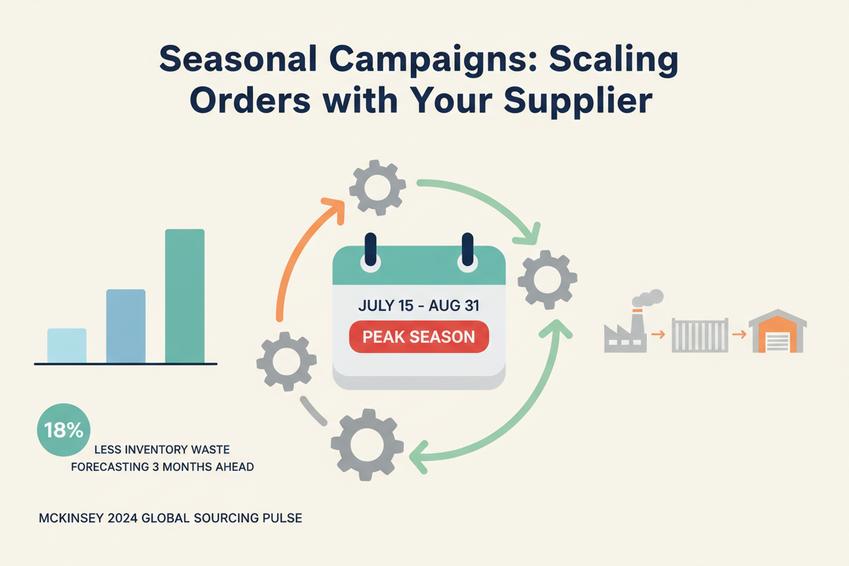
Getting ready for the seasonal wave? Here’s how to keep your supply chain tight, fast, and flexible—without losing sleep over it.
Pre-season capacity planning and demand forecasting
A well-oiled pre-season plan keeps your business from scrambling when orders spike. Here’s what to lock in early:
- Review past sales using historical data—spot trends and adjust accordingly.
- Match projected volume with your supplier’s production capacity so you’re not caught short.
- Tap into market trends to anticipate shifts in buyer behavior.
- Use current inventory levels to gauge reorder points.
- Align with your supplier’s lead times, especially if they’re a smaller-scale cotton bag maker.
- Check your supplier’s capabilities, including backup materials sourcing during high-demand months.
“According to McKinsey’s 2024 Global Sourcing Pulse, brands that forecast demand three months ahead of peak season saw 18% less inventory waste.”
If you’re working with a reliable cotton bag supplier or even testing out a new one, syncing early matters big time. Topfeel makes this alignment smoother by offering pre-season planning tools tailored for businesses scaling sustainably.
Peak season production strategies & bulk manufacturing
When the rush hits, you don’t want bottlenecks slowing down your flow. Here’s how smart brands scale up:
• Reinforce staffing at key points in the manufacturing process, especially during cutting and stitching phases.
• Lock down raw material sourcing before prices jump closer to peak dates.
• Rework the entire production schedule around top-selling SKUs—cut out the fluff.
- Improve line efficiency through better layout design.
- Monitor real-time output for each shift to optimize daily factory throughput.
- Step up on-site checks for tighter quality control, especially on large runs.
By adjusting your labor mix and boosting factory-level coordination, you’ll keep things humming even when order volumes triple overnight.
Post-season logistics with freight forwarding and warehousing
Once the dust settles, it’s all about getting leftover stock where it needs to go without bleeding cash.
- Use smart routing across multiple shipping routes based on destination clusters.
- Partner with customs-savvy agents who streamline tricky international customs clearance steps.
- Choose flexible third-party hubs offering scalable warehousing solutions, so you’re not locked into fixed costs year-round.
Break it down like this:
A) Inventory Management
- Tag slow-movers for redistribution.
- Sync warehouse counts across regions via cloud-based systems.
B) Freight Forwarding
- Consolidate loads where possible using multimodal transportation modes.
- Adjust post-holiday return flows into existing lanes using updated delivery schedules.
If you’re managing seasonal surpluses from a trusted cotton bag supplier, having a solid end-of-season game plan keeps cash flow healthy—and customers happy too.
Topfeel supports this phase by integrating freight partners directly into its platform so clients can move fast after peak sales wrap up.
FAQs
1. How can I identify a reliable cotton bag supplier for large-scale orders?
A trustworthy partner shows consistency and patience in each production step—the sampling process reveals if their organic cotton or heavyweight canvas stays true in texture.
- 📦 Ethical sourcing backed by GOTS certified and fair trade compliant records adds sincerity to their craft.
- 🔍 Capacity planning with transparent production lead time keeps deliveries honest and predictable.
A dependable supplier brings human warmth through responsive communication, offering a dedicated account manager who listens beyond data sheets.
2. What customization options help brands stand out when designing cosmetic bags?
Each style carries personality—screen printing for vivid expression, embroidery for tactile charm, heat transfer when detail needs precision.
| Customization | Material Match | Emotional Effect |
|---|---|---|
| Screen printing | Recycled cotton | Youthful vibrancy |
| Embroidery | Heavyweight canvas | Handmade authenticity |
| Dye sublimation + label integration | Organic cotton or biodegradable fabric | Clean minimal elegance |
Thoughtfully applied designs turn ordinary drawstring bags closures or zippered compartments into symbols of identity customers can feel.
3. Which logistics elements ensure smooth international delivery of bulk orders?
Behind every shipment lies unseen coordination between warehouse calm and freight forwarding urgency:
- 🌎 Warehousing prepared ahead enables flexible packaging solutions matching each gusseted bottom or internal pocket request.
- ⏰ Delivery schedule harmonized with customs clearance keeps arrivals graceful rather than frantic delays.
And after all boxes land where intended, attentive post-production support continues the dialogue—proof that good service travels as far as the bags themselves do across borders.
References
[1] GOTS – The Global Organic Textile Standard
[2] Textile Exchange – Textile Exchange Homepage
[3] SolarTech – Complete Guide To Eco Friendly Bags: Materials, Types & Best Choices 2025
[4] McKinsey & Company – Five fundamental truths: How B2B winners keep growing


.png)



4th-5th Floor, Building B2, Yin Tian Industrial Park, Xi Xiang Road, Bao'an Dist, Shenzhen, 518102 ,China