
 English
  Korean
  French
  German
  Hungarian
  Japanese
  Russian
How to Make Cosmetic Bags?
The real drama behind how to make cosmetic bags hits when a bulk order goes sideways—logos crooked, zippers stiff, timelines slipping. For retailers and beauty brands, a cosmetic bag acts like a silent salesperson, riding in purses, bathrooms, gym lockers, doing brand work 24/7.
This is where margins get won—or bruised.
Built from factory floors and buyer calls, this guide cuts to materials, production flow, and scale decisions that keep costs sane and branding sharp. Think of it like choosing the right road trip car: looks matter, sure, but reliability gets everyone home.
Harmonious Quick Notes for How to Make Cosmetic Bags
➔ Material Selection: Choose lightweight nylon or premium PU leather for durability and branding appeal.
➔ Precision Cutting: Use die cutting and heat sealing to ensure consistent shapes and reinforced edges.
➔ Assembly Techniques: Apply advanced sewing methods and reliable zipper closures for lasting strength.
➔ Organization Features: Add internal pockets and dividers to enhance user convenience and design balance.
➔ Quality Control & Packaging: Conduct material inspections, durability tests, then use protective packaging for safe shipping.
4 Key Materials For Cosmetic Bag Making
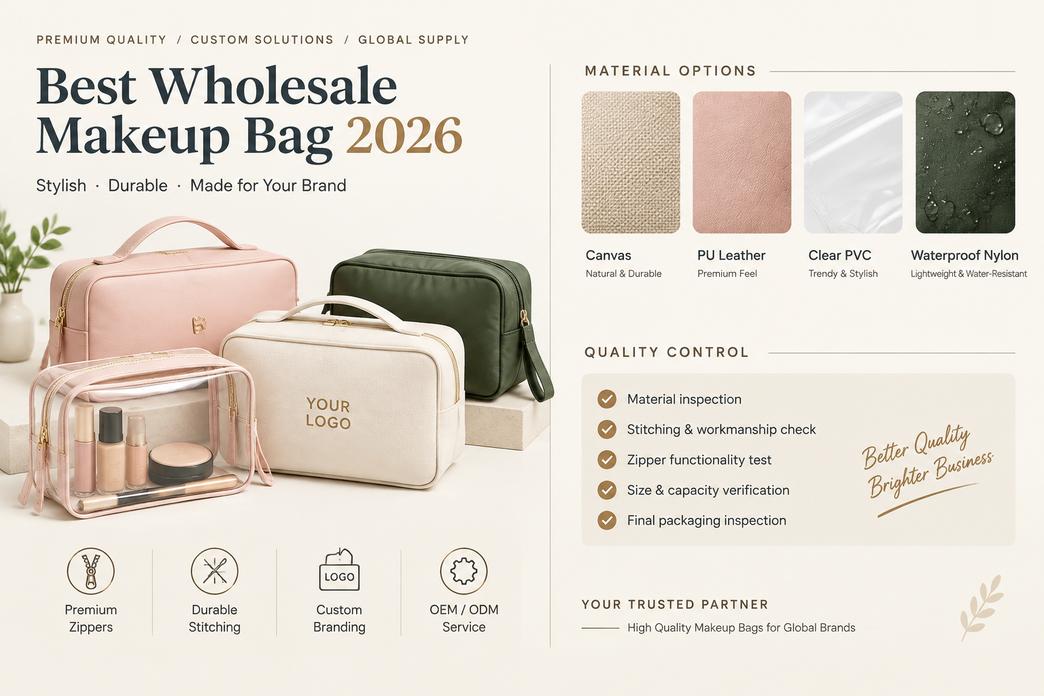
Learning how to make cosmetic bags starts with picking the right materials. Fabric choice affects durability, branding, and even how customers feel when they unzip the bag. If you’re figuring out how to make cosmetic bags that actually sell, material is not just a detail—it’s the backbone.
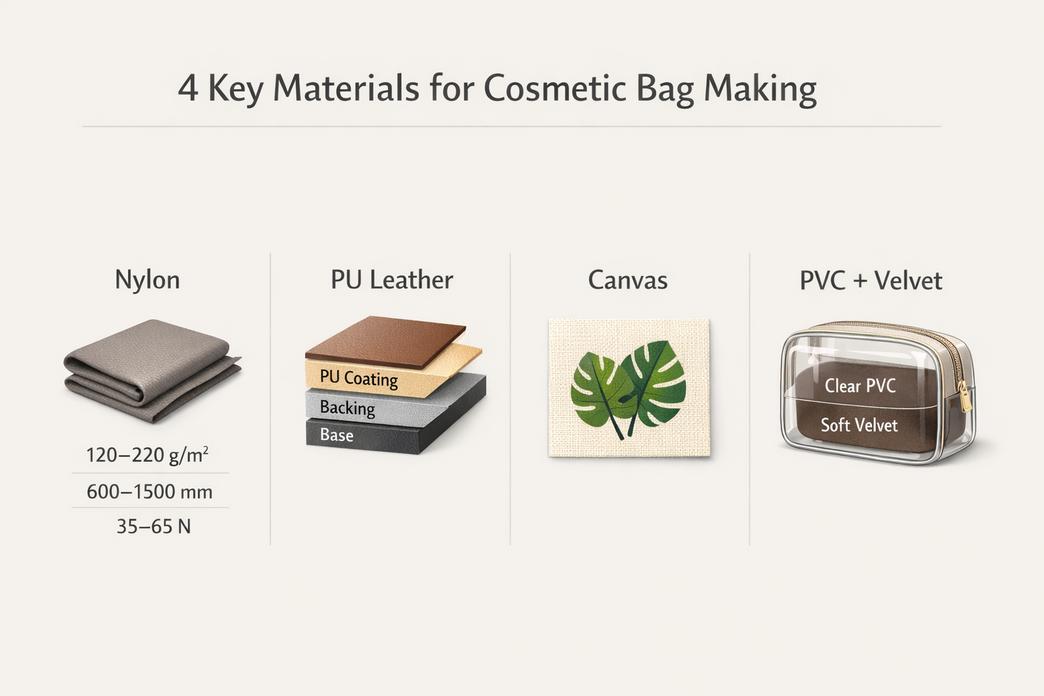
Nylon Fabric: Lightweight & Durable Base
When exploring how to make cosmetic bags, many factories begin with nylon fabric because it’s lightweight, durable, and naturally water-resistant. It handles daily wear without drama.
Performance Overview
| Property | Average Weight (g/m²) | Water Resistance (mm) | Tear Strength (N) |
|---|---|---|---|
| Standard Nylon 210D | 120–160 | 600–1000 | 35–45 |
| Reinforced Nylon 420D | 180–220 | 1000–1500 | 50–65 |
| Ripstop Nylon | 130–170 | 800–1200 | 45–60 |
▸ Key Functional Benefits
- Tear-resistant
- Breathable
- Easy to clean
▸ Why Brands Choose It
- Holds shape during sewing
- Maintains color after washing
- Keeps shipping weight low
For brands like Topfeel, nylon supports travel-friendly designs while keeping costs smart. If you’re learning how to make a cosmetic bag for sports or outdoor use, this base fabric just makes sense.
PU Leather for a Premium Finish
If your focus is upscale branding while studying how to make cosmetic bags, PU leather—also known as faux leather or vegan leather—delivers that premium finish without real leather pricing.
Material Layers
- Surface: smooth texture coating
- Middle: Fiber reinforcement
- Backing: Woven support layer
Application Breakdown
- Cut panels with clean edge sealing
- Stitch with reinforced thread
- Attach hardware for a stylish appearance
The result? A bag that feels luxe, stays easy to maintain, and supports logo embossing. Topfeel often recommends this for gift sets or beauty subscription kits.
Canvas Material with Screen Printing Ease
For brands asking how to make cosmetic bags that look artsy and eco-aware, canvas material is a classic move.
Core Traits
- Made from natural fibers
- Sturdy structure
- Naturally breathable
Customization Options
- Screen printing for bold graphics
- Embroidery for texture
- Heat transfer for detailed art
Canvas feels relaxed. It’s also seen as more eco-friendly, which helps when customers care about sustainability. If you want to know how to make cosmetic pouches that pop on retail shelves, canvas makes printing easy and color-rich.
PVC Plastic & Velvet Textile Combinations
Combining PVC plastic with velvet textile creates contrast—hard and soft, clear and plush.
Material Pairing Logic
- Outer Layer
- Transparent PVC plastic
- Fully waterproof surface
- Inner Layer
- Soft texture velvet lining
- Adds luxurious feel
Functional Advantages
- Moisture protection
- Easy wipe cleaning
- Elevated display value
If you’re studying how to make cosmetic bags for airport security or beach travel, transparent PVC works great. Add velvet inside, and suddenly the bag feels premium, not basic.
Understanding how to make cosmetic bags is really about smart material pairing. Once you know how to make cosmetic bags with the right fabric, production flows easier—and customers notice the difference.
5 Essential Steps: How To Make Cosmetic Bags
Learning how to make cosmetic bags is not just about stitching fabric together. It’s about smart planning, clean production, and details that make customers say, “Yep, this feels premium.” Here’s how pros handle it without overcomplicating things.
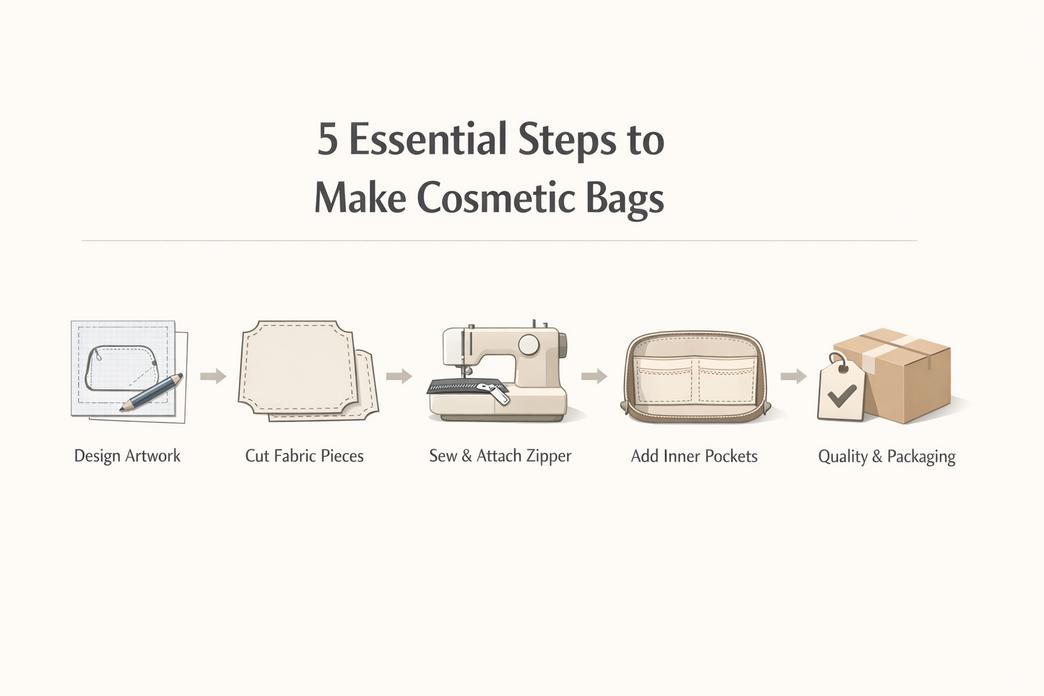
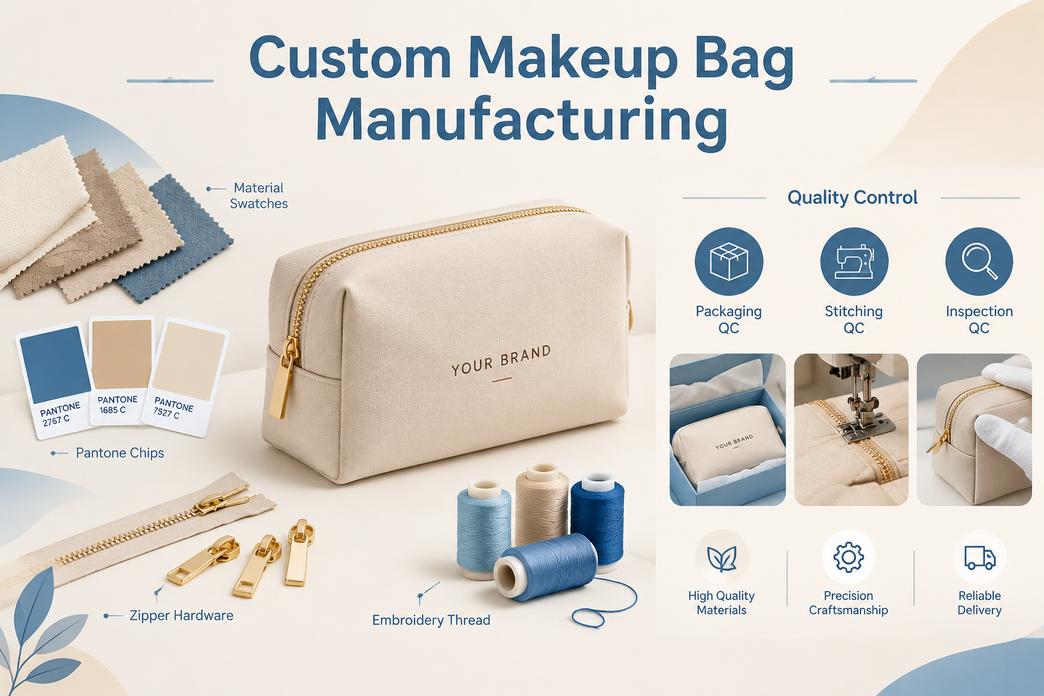
Step 1 – Artwork Submission & Size Specifications
When brands ask how to make cosmetic bags, the starting point is always design clarity.
- Artwork design
- Confirm file format (AI, PDF, PSD).
- Define print area and bleed margins.
- Logo placement
- Front center, corner stamp, or full-panel print.
- Check alignment against zipper direction.
- Bag dimensions
- Final size requirements (length × width × height).
- Capacity test for daily makeup or travel kits.
- Color matching
- Pantone reference.
- Physical swatch approval.
At Topfeel, sampling only moves forward once artwork and measurements line up perfectly. That’s how to make cosmetic bags without costly redo.
Step 2 – Die Cutting & Heat Sealing Materials
Material prep shapes durability and finish.
- Material selection
- PVC with waterproof coating
- Canvas for soft touch
- Mesh for breathability
- Fabric cutting
- Manual trimming for prototypes
- Automated die cutting process for bulk
- Edge reinforcement
- Heat sealing
- Seam pressure control
- Testing for seam strength
- Durability check
- Scratch test
- Flex test
- Pull resistance
If you’re serious about how to make cosmetic bags that last, material durability can’t be guessed.
Step 3 – Sewing Techniques & Zipper Closure
Construction defines lifespan.
- Choose proper sewing methods based on fabric thickness.
- Apply correct stitch types (lockstitch for structure, overlock for edges).
- Secure reinforced seams at stress points.
- Install high-grade zipper quality components.
Details matter:
- Clean edge finishing
- Strong handle attachment
- Smooth zipper installation
This is where many “make a cosmetic bag” tutorials fall short. Industrial standards make the difference.
Step 4 – Adding Internal Pockets & Compartment Dividers
Good internal layout sells the bag.
- Pocket design
- Slip pockets
- Zippered inserts
- Compartment layout
- Fixed panels
- Removable dividers
- Extra storage upgrades
- Elastic loops
- Mesh pockets
- Smart divider placement
For brands exploring how to make cosmetic bags with better internal organization, customization options drive repeat orders.
Step 5 – Material Inspection & Packaging Solutions
Final checks keep reputation intact.
- Quality control
- Stitch alignment
- Thread trimming
- Defect checking
- Surface scratches
- Zipper tension
- Material inspection
- Color fastness
- Odor control
- Shipping prep
- Protective wrapping
- Retail-ready packaging design
- Barcode labeling
Topfeel treats inspection like insurance. When customers research how to make cosmetic bags or plan to manufacture cosmetic pouches at scale, consistent quality and safe shipping preparation close the loop cleanly.
DIY Vs. Bulk Custom Cosmetic Bags
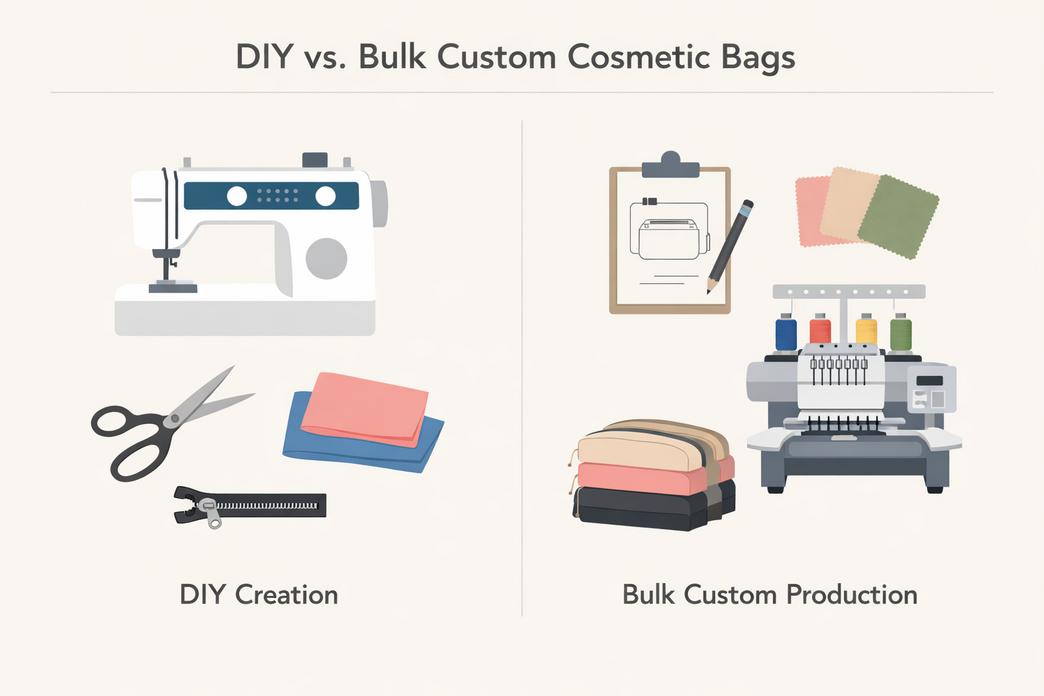
Curious about how to make cosmetic bags that actually look good and last? You’re not alone. From weekend craft lovers searching how to make cosmetic bags at home to brand owners asking how to make cosmetic bags in bulk, the path you choose changes everything. Let’s break down DIY creativity and bulk production in a real-world way.
DIY Cosmetic Bags
Learning how to make cosmetic bags by hand often starts with a simple setup at home, but the process has layers.
- Tools and Setup
- Core equipment
- A reliable sewing machine
- Sharp scissors
- Flexible measuring tape
- Basic materials
- Durable fabric
- Matching thread
- Smooth zipper
- Planning
- Printed or hand-drawn pattern
- Size testing with scrap fabric
- Core equipment
- Making Process
- Measure and cut the fabric using your pattern and measuring tape.
- Stitch panels together with steady thread tension on the sewing machine.
- Attach the zipper, then reinforce edges for strength.
- Reality Check
- Creative freedom is high.
- Output is limited.
- Quality depends fully on skill.
If you’re researching how to make cosmetic bags for personal use, this route feels rewarding. But scaling how to make makeup bags consistently? That’s a different story.
Bulk Custom Cosmetic Bags
For brands exploring how to make cosmetic bags at scale, bulk custom production shifts the game.
Here’s what usually happens:
- Concept phase
- Finalize design direction
- Select suitable material
- Decide on logo placement
- Sampling
- Test printing or embroidery
- Review stitching and finishing
- Adjust packaging style
- Mass production
- Confirm lead time
- Lock quality standards
- Schedule shipment
Bulk suppliers provide structure, stable timelines, and repeatable results. Brands like Topfeel support clients from early design drafts to final packaging, helping simplify how to make cosmetic bags for retail shelves.
If your goal is learning how to make cosmetic bags for business growth, bulk customization offers consistency, cleaner branding, and better cost control per unit. For scaling smartly, Topfeel keeps the process smooth without the home-studio stress.
FAQs about How to make cosmetic bags
How to make cosmetic bags durable for long-term use?
A cosmetic bag earns trust through touch and time. Durability starts quietly, then proves itself.
- Nylon fabric or Mesh fabric resists daily spills and friction.
- Edges gain strength through sewing techniques paired with heat sealing.
- A smooth zipper closure is checked again and again for zipper functionality.
- Before packing, material inspection, stitching integrity, and durability testing catch flaws that hands would later feel.
What materials create a premium look and feel?
Luxury lives in restraint and detail, not noise.
- PU leather delivers a soft grain and calm confidence.
- Custom logo placement feels intentional when paired with refined hardware selection.
- Precise color matching keeps branding honest across batches.
Material Visual Mood Best Use PU leather Polished Retail display Velvet textile Soft glow Gift sets Canvas material Artistic Lifestyle brands How to make cosmetic bags with internal compartments and dividers? Inside the bag, order meets emotion.
- Size specifications guide balance and comfort.
- Internal pockets shaped with lining material hold small rituals in place.
- Compartment dividers cut by die cutting stay neat under pressure.
A gentle handle design completes the feel, ready for real hands, real days.
What supplier capabilities matter in bulk production?
Scale tests patience, not just machines.
- A clear sampling process builds trust early.
- Honest lead time estimation eases planning anxiety.
- Steady production capacity, backed by prototyping services, keeps promises intact.
- Behind the scenes, communication protocols, inventory management, and required certification standards protect every shipment until final shipping arrangements land safely.
References
- Nylon Materials Science – https://www.google.com/search?q=sciencedirect.com/ScienceDirect
- Durable Water Repellent – wikipedia.org/Wikipedia
- What Is Vegan Leather? – peta.org/PETA
- Sustainability – epa.gov/EPA
- Bleed in Printing – https://www.google.com/search?q=adobe.com/Adobe
- What is Pantone? – https://www.google.com/search?q=pantone.com/Pantone
- Understanding Die Cutting – https://www.google.com/search?q=thomasnet.com/ThomasNet
- Heat Sealing – https://www.google.com/search?q=sciencedirect.com/ScienceDirect
- Lockstitch – wikipedia.org/Wikipedia
- YKK Fastening Products – https://www.google.com/search?q=ykkfastening.com/YKK
- Colorfastness – aatcc.org/AATCC
- Packaging Design – https://www.google.com/search?q=packagingdigest.com/Packaging Digest
- Sewing Association – sewing.org/Sewing.org
- Quality Management Principles – iso.org/ISO


.png)



4th-5th Floor, Building B2, Yin Tian Industrial Park, Xi Xiang Road, Bao'an Dist, Shenzhen, 518102 ,China