
 English
  Korean
  French
  German
  Hungarian
  Japanese
  Russian
Plastic Bag vs Reusable Options for Cosmetic Bag
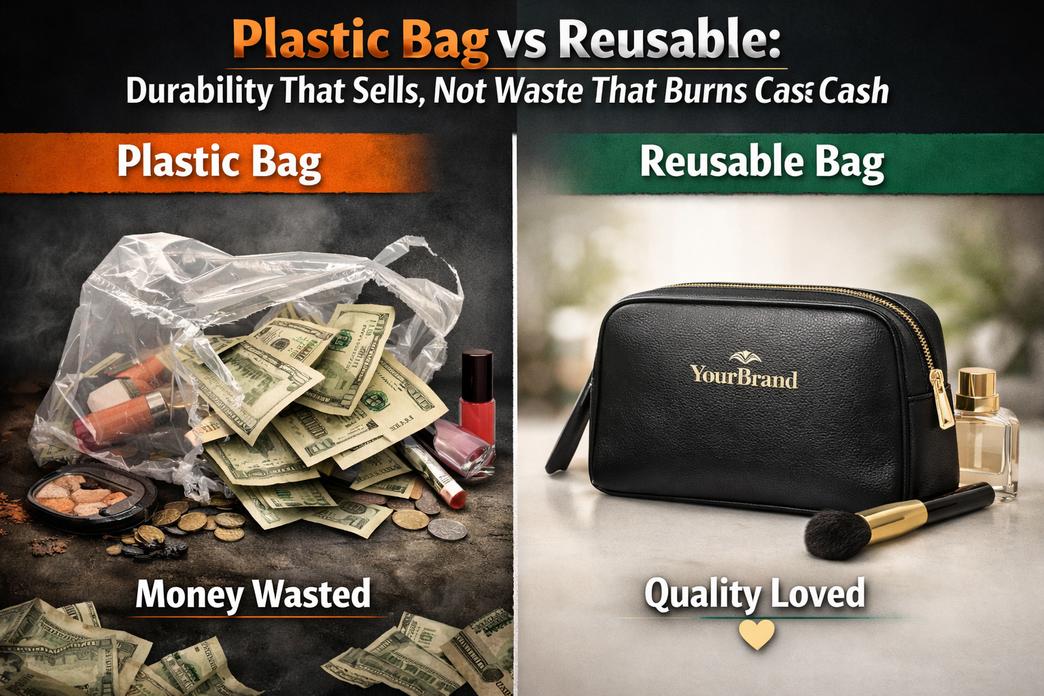
The debate over plastic bag vs reusable cosmetic bags isn’t just a line item on your sourcing sheet—it’s the difference between a quick buck and a brand that actually sticks. On paper, plastic looks cheap and cheerful. In real life? It’s like buying dollar-store luggage before a long-haul flight. One bump, one tear, and you’re reordering by the truckload. Meanwhile, buyers are juggling cost pressure, eco claims, and customers who read labels like detectives.
Topfeel’s Packaging Engineering Director put it bluntly in a 2025 supplier summit: “Short-term savings disappear fast when replacement cycles double.”
That’s the tension. Do you want packaging that ends up in the trash by Tuesday, or a cosmetic bag customers reuse for travel, gym runs, and daily touch-ups? The smart money isn’t chasing pennies—it’s buying staying power, brand lift, and fewer headaches down the road.
Key Insights on Plastic Bag vs Reusable
- Single-use plastic rips fast, driving up replacement costs and landfill waste.
- Reusable canvas or PU leather offers reinforced stitching and waterproof closures for long-term brand exposure.
- Nylon and polyester demand high water and energy, while sustainable canvas and Tyvek reduce ecological footprints.
- Bulk shipping of heavier totes raises carbon emissions, but fewer replacements balance lifecycle impacts.
5 Hidden Costs Of Plastic Bag Vs Reusable Options
When people talk about plastic bag vs reusable, it often sounds simple—cheap plastic or eco tote. But the real story hides in landfills, water meters, and shipping docks. Let’s break down plastic bag vs reusable options in plain terms, no fluff, just facts.
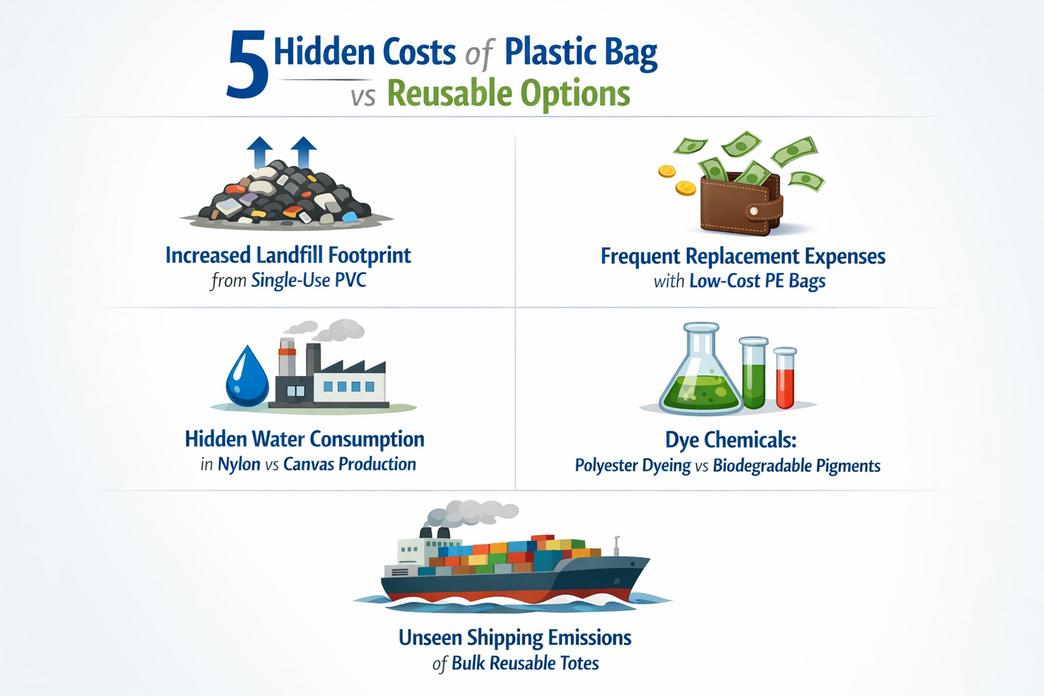
Increased Landfill Footprint from Single-Use PVC
In the plastic bag vs reusable debate, PVC often gets overlooked.
- Disposal Stage
- Single-use PVC enters landfill streams quickly.
- Low recycling rates.
- Limited recycled content integration.
- Slow breakdown increases long-term waste volume.
- Single-use PVC enters landfill streams quickly.
- Environmental Impact
- Accumulated landfill mass raises methane risks.
- Additives in PVC complicate disposal sorting systems.
- Waste Flow Comparison
- Plastic bag vs reusable lifecycle:
- One-time PVC use → immediate waste.
- Reusable tote → extended product lifespan, delayed disposal.
- Plastic bag vs reusable lifecycle:
That’s the quiet cost. In plastic vs reusable choices, landfill pressure builds fast when single-use rules the checkout line.
Frequent Replacement Expenses with Low-Cost PE Bags
Plastic bag vs reusable isn’t just green talk. It hits your wallet.
- PE bags often lack durability.
- Thin film tears under weight.
- Material degradation speeds up with sunlight and heat.
Result? High replacement frequency.
- Short product lifespan
- Rising cost of ownership
- Constant re-purchasing cycle
Reusable options cost more upfront. Yet in plastic bag vs reusable comparisons, long-term math favors durability. Topfeel designs emphasize reinforced stitching to reduce repeat buying. That means fewer broken handles, fewer store runs for “just one more bag.”
Hidden Water Consumption in Nylon vs Canvas Production
Plastic bag vs reusable also means checking the tap.
- Nylon production
- High water usage
- Energy-heavy polymer processing
- Petrochemical-based fabric origin
- canvas manufacturing
- Cotton cultivation affects resource intensity
- Processing methods shape total footprint
- Sustainable sourcing reduces textile industry strain
Comparative Water Use (Estimated Averages)
| Material | Water Usage (Liters/kg) | Resource Intensity Level |
|---|---|---|
| Nylon | 200–300 | High |
| Conventional Canvas | 150–250 | Medium–High |
| Recycled Canvas | 80–120 | Lower |
So in plastic bag vs reusable talk, nylon totes aren’t automatically “better.” The textile industry matters. Smart sourcing changes the score.
Dye Chemicals: Polyester Dyeing vs Biodegradable Pigments
Color looks cool. The backstory? Not always.
★ Polyester dyeing often involves heavy dye chemicals.
★ Risk of chemical runoff during washing stages.
★ Strong colorfastness, but chemical-intensive textile treatment.
Now compare that to biodegradable pigments on canvas or Tyvek:
- Reduced toxic discharge
- Lower impact on water systems
- Balanced durability and eco goals
In plastic bag vs reusable decisions, material is only half the deal. Finishing processes shape the real environmental impact.
Unseen Shipping Emissions of Bulk Reusable Totes
Plastic bag vs reusable also plays out in logistics.
Step 1: Heavier canvas or PU totes increase bulk packaging volume.
Step 2: Higher weight raises transportation fuel use.
Step 3: Expanded supply chain distance amplifies shipping emissions.
Step 4: Total carbon footprint climbs before the bag even hits shelves.
The International Energy Agency’s 2024 transport update noted that freight emissions continue rising due to volume growth in global logistics, despite efficiency gains.
“Freight transport emissions remain a critical pressure point in global decarbonization efforts,” the IEA reported in its 2024 transport outlook.
That’s why brands like Topfeel optimize packaging density to cut unnecessary shipping emissions. In the plastic bag vs reusable conversation, design choices behind the scenes can tip the balance.
Plastic bag vs reusable isn’t black and white. It’s landfill math, water meters, dye labs, and cargo ships—all adding up in ways most shoppers never see.
Is Plastic Bag Vs Reusable Really More Eco-Friendly?
The debate around plastic bag vs reusable keeps popping up at checkout counters and dinner tables. Is a single-use plastic bag worse, or does a reusable tote carry hidden costs? Let’s break it down in plain terms.
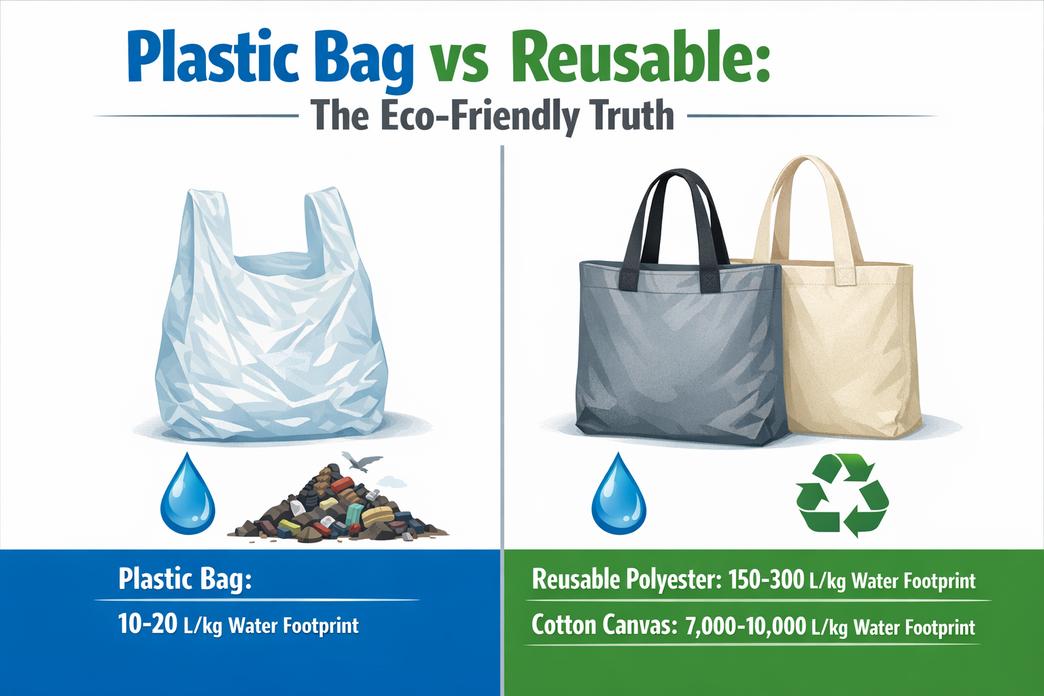
Lifecycle Emissions: Recycled Content vs Virgin PVC
When people compare plastic bag vs reusable, the spotlight usually lands on Lifecycle Emissions and overall Carbon Footprint. The difference often starts at raw material level.
- Material Source
- Virgin PVC
- High Energy Consumption during extraction and refining
- Heavier Manufacturing Process impact
- Recycled Content
- Lower embedded emissions
- Reduced demand for fossil feedstock
- Virgin PVC
- Production Stage
- Resin melting
- Film extrusion
- Printing and sealing
Each step adds to total Lifecycle Emissions, but recycled inputs trim emissions per unit.
- Use Phase
- Single-use plastic bag: short lifespan
- Reusable bag: extended cycles reduce per-use impact
In the plastic bag vs reusable conversation, durability flips the math. A reusable PVC tote with high Recycled Content can outperform thin plastic—if used enough times. If it sits in a drawer, its higher starting Carbon Footprint lingers.
So the real answer in plastic vs reusable bags isn’t just material. It’s usage frequency multiplied by production emissions.
Water Footprint Analysis of Nylon and Polyester Bags
Water matters more than most shoppers think in the plastic bag vs reusable debate.
Quick facts:
- Nylon Bags often rely on energy-heavy polymerization.
- Polyester Bags use petrochemicals but require intensive Dyeing Process stages.
- Washing reusable totes increases lifetime Water Usage.
Here’s a simplified comparison:
| Material | Estimated Water Footprint (L/kg) | Key Water Stage | Washing Impact |
|---|---|---|---|
| Nylon | 250–400 | Polymer cooling | Moderate |
| Polyester | 150–300 | Dyeing Process | Low–Moderate |
| Cotton Canvas | 7,000–10,000 | Agriculture irrigation | High |
| Recycled Polyester | 50–120 | Reprocessing | Low |
| HDPE Plastic Bag | 10–20 | Resin production | None |
In plastic bag vs reusable comparisons, cotton often shocks people. Agriculture irrigation drives massive Water Footprint numbers. Meanwhile, lightweight plastic bags use minimal water during production but create waste headaches later.
So when weighing plastic vs reusable bags, it’s not just plastic bad, fabric good. The numbers tell a more layered story.
End-of-Use Scenarios: Biodegradable Canvas vs Plastic Waste
The end game shapes the entire plastic bag vs reusable argument.
- Biodegradable Canvas
- Needs:
- Oxygen
- Microbial activity
- Controlled compost conditions
- In proper systems:
- Supports natural Decomposition
- Reduces long-term Landfill burden
- Needs:
- Plastic Waste
- In landfill:
- Slow breakdown
- Risk of Microplastics
- In recycling streams:
- Dependent on sorting quality
- Limited Recycling rates globally
- In landfill:
In many cities, compost systems are weak. That means biodegradable canvas tossed into regular Landfill behaves slower than expected. Meanwhile, thin plastic bags can clog sorting systems, reducing effective recycling yields.
In the plastic bag vs reusable debate, end-of-use reality often outweighs marketing labels. Infrastructure decides outcomes.
Quality Control’s Role in Reducing Overall Waste
Quietly, Quality Control influences the plastic bag vs reusable equation more than material hype.
- Manufacturing Stage
- Inspect stitching tension
- Monitor ink curing
- Test Material Integrity
- Common Failure Points
- Weak seams
- Faded prints
- Fabric tearing
When Manufacturing Defects slip through, early disposal follows. That shortens Lifespan Extension potential and increases total waste.
- Consumer Behavior
- Overloading bags
- Skipping washing guidance
- Treating reusable totes as disposable
Strong Product Durability plus smart handling cuts Reducing Waste targets in half, sometimes more. In the plastic bag vs reusable conversation, a well-made reusable bag used 50 times beats a poorly made one used five.
So is plastic bag vs reusable more eco-friendly? It depends on emissions, water, disposal systems, and how people actually use the bag in real life.
Plastic Bag Vs Reusable: Material Durability Compared
When people talk about plastic bag vs reusable, the real debate often comes down to durability. From grocery runs to retail display setups, plastic bag vs reusable isn’t just about style—it’s about strength, lifespan, and how much weight your hands can handle.
Plastic Bag
In the plastic bag vs reusable debate, standard plastic options focus heavily on convenience.
- Material Composition
- Most are made from material like PE or PVC.
- Thin thickness keeps costs low but limits reuse.
- Basic film structure means modest tear resistance.
- Performance Factors
- Light loads: works fine for quick shopping trips.
- Heavy items: handles stretch, stress points split.
- Wet goods: decent water resistance, but seams weaken fast.
- Practical Observations
- High transparency makes product visibility easy for retail.
- Limited disposal options; often single-use in reality.
- In plastic bag vs reusable comparisons, lifespan rarely exceeds a few uses.
For brands like Topfeel, understanding these limits helps buyers avoid overpromising on load-bearing claims.
Reusable Tote
Now flip the script in the plastic bag vs reusable conversation.
- Fabric Foundations
- Fabric type ranges from canvas to polyester mesh.
- Denser weave boosts load capacity.
- Reinforced seams improve stitching quality.
- Structural Enhancements
- Zipper closure reduces strain on handles.
- Structured straps distribute weight evenly.
- Washable builds improve washability and hygiene.
- Long-Term Value
- Extended longevity supports repeated retail or travel use.
- Lower environmental impact over time compared to single-use plastic vs reusable carry options.
- In plastic bag vs reusable durability tests, totes consistently outperform thin-film designs.
Topfeel develops reusable solutions that respond directly to the plastic bag vs reusable durability gap—stronger stitching, smarter fabric blends, and designs that actually last.
From Design To Disposal: The Full Lifecycle
Choosing between plastic bag vs reusable options isn’t just a checkout decision. It’s about materials, making methods, daily use, and what happens after we toss—or keep—the bag.
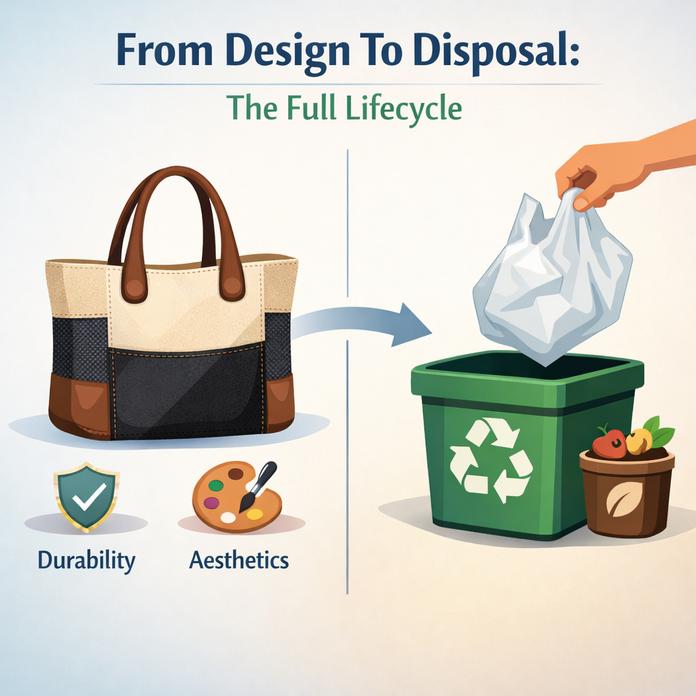
Material Selection: PU Leather, Canvas, Mesh Choices
When comparing plastic bag vs reusable, material choice changes everything.
- Material Properties
- PU Leather
- Smooth texture, premium Aesthetics
- Strong Durability
- Moderate Weight
- Canvas
- Breathable surface
- High load-bearing strength
- Natural look with solid Material Properties
- Mesh
- Lightweight Weight
- Visible contents
- Flexible stretch
- PU Leather
In the debate of plastic bag or reusable, durability often tips the scale. A thin plastic bag tears fast. Canvas lasts. Mesh breathes. PU leather elevates brand appeal.
For brands like Topfeel, selecting the right blend of texture and strength directly shapes user perception in the reusable bag vs plastic conversation.
Manufacturing Processes: Sublimation, Screen Printing & Sewing Assembly
Production choices define how reusable bag vs plastic alternatives perform at scale.
- Manufacturing Techniques
- Printing Layer
- Sublimation Printing for full-color saturation
- Screen Printing for bold logos
- Structural Layer
- Die cutting for precision edges
- Reinforced Sewing Assembly for strength
- Printing Layer
- Design layout alignment
- Graphic transfer execution
- Panel stitching and reinforcement
- Quality inspection for Production Efficiency
Customization affects Labor Costs and flexibility. In plastic bag vs reusable comparisons, reusable items require more assembly—but deliver longer service life and brand exposure.
Usage Phase: Waterproof Zipper Closure & Easy-Clean Features
Daily use is where plastic vs reusable bags truly separate.
- Functional Enhancements
- Waterproof Zipper keeps cosmetics dry
- Multi-compartment layout boosts Functionality
- Smooth Easy-Clean Surface improves Hygiene
Portability matters. A reusable organizer with smart closure upgrades User Experience.
Maintenance stays simple:
- Wipe interior lining
- Air dry
- Store flat or hang
In plastic bag vs reusable scenarios, reusable designs clearly win on Maintenance, comfort, and long-term Functionality. That’s why Topfeel focuses on easy-clean linings and durable closures.
End-of-Life Options: Recyclable Tyvek and Compostable Fabrics
End-of-life thinking flips the plastic bag vs reusable debate into a bigger sustainability talk.
- Disposal Pathways
- Recyclable Tyvek
- Supports structured Recycling Process
- Reduces landfill load
- Compostable Canvas
- Encourages Biodegradability
- Aligns with eco-driven Waste Management
- Recyclable Tyvek
♻ Smart material disposal lowers Environmental Impact.
Reusable bag vs plastic decisions feel small at checkout. Over time, though, Material Disposal routes shape real-world waste outcomes. Choosing recyclable or compostable fabrics keeps the plastic bag vs reusable discussion grounded in action, not just talk.
Scenario: Trade Show Giveaways—Best Tote?
At trade shows, the real debate isn’t just about style. It’s the classic plastic bag vs reusable showdown. Brands want impact, attendees want convenience, and sustainability is on everyone’s radar. When comparing plastic bag vs reusable bags, the right tote can quietly turn into a walking billboard.
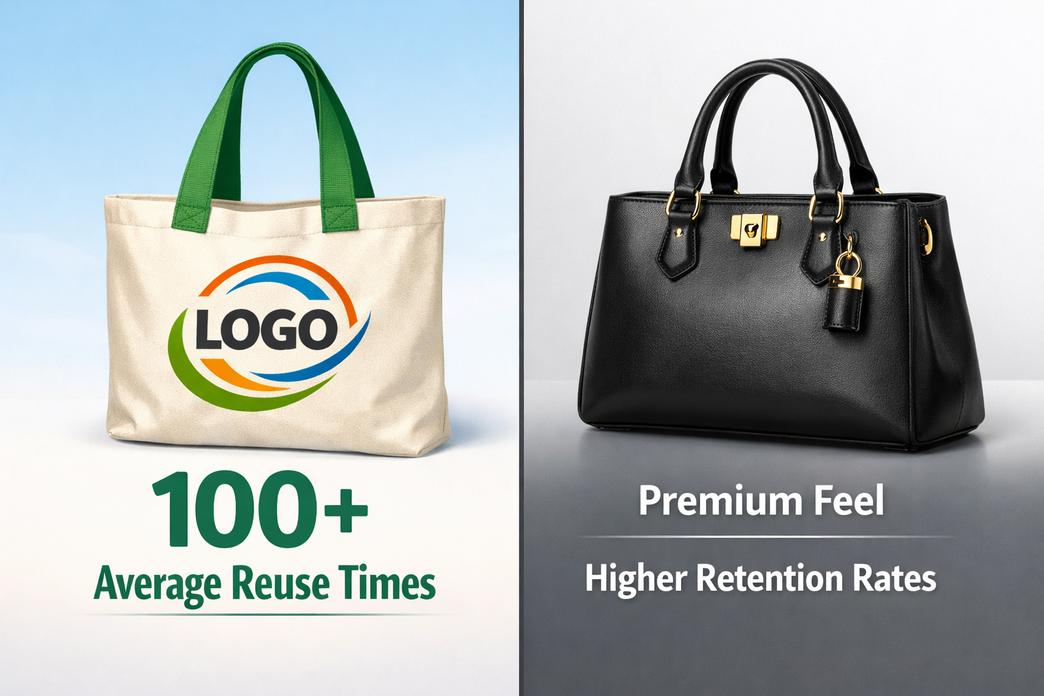
Customizable Canvas Tote with Logo Printing & Embroidery
When brands weigh plastic bag vs reusable, the canvas tote often wins for long-term visibility.
- Core customization features
- Branding options
- logo printing for bold, full-color graphics
- embroidery for textured, premium stitching
- Structural flexibility
- Adjustable size and gusset depth
- Reinforced handles for trade show loads
- Branding options
- Marketing impact
- As a promotional item, it extends exposure beyond the booth
- As a giveaway bag, it supports repeat use in daily errands
- Compared to a plastic bag or reusable alternative made cheaply, canvas holds shape and message
Performance Snapshot
| Feature | Canvas Tote | Plastic Bag | Basic Reusable PP |
|---|---|---|---|
| Average Reuse Times | 100+ | 1–3 | 20–40 |
| Print Durability | High | Low | Medium |
| Load Capacity (kg) | 8–12 | 3–5 | 6–8 |
Nested decision logic many exhibitors follow:
- Brand Visibility1.1 Short event use → plastic1.2 Long exposure → canvas
- Sustainability Messaging2.1 Eco claims required → reusable2.2 No messaging focus → short-term option
With Topfeel, brands tweak fabric weight, stitching density, and finishing touches without losing budget control. In the reusable bag vs plastic bag debate, canvas quietly dominates.
Sleek PU Leather Bag Featuring Hardware Finish Variations
Not every booth wants casual vibes. The PU leather bag shifts the plastic bag vs reusable conversation into premium territory.
- Design Appeal
- sleek design with structured edges
- Custom hardware finish in matte gold, brushed silver, or gunmetal
- Perceived Value
- Soft-touch surface gives a premium feel
- Functions as an accessory pouch after the event
A 2025 McKinsey consumer packaging insight noted:
“Consumers increasingly associate reusability with brand responsibility, and premium reusable formats show higher retention rates than disposable packaging.”
That insight hits hard in the plastic vs reusable options debate. A refined PU leather bag isn’t just reusable; it feels gift-worthy. Short. Sharp. Memorable.
Brands working with Topfeel often position this choice for VIP kits, media guests, or executive lounges. When the question is plastic bag vs reusable, upscale booths rarely gamble on flimsy plastic.
Eco-Friendly Mesh Tote Made from Recycled Content
For eco-driven exhibitors, the mesh tote makes the plastic bag vs reusable argument crystal clear.
- Material Foundation
- Made with verified recycled content
- Engineered as an eco-friendly, sustainable alternative
- Functional Benefits
- Breathable construction reduces odor buildup
- Lightweight structure for easy packing
- Built as a reusable bag with reinforced seams
Decision hierarchy many green brands use:
- Environmental Alignment1.1 Corporate ESG goals1.2 Audience expectations
- Practical Trade Show Use2.1 Carry brochures2.2 Store samples2.3 Fold flat into luggage
In the ongoing plastic bag vs reusable debate, mesh signals transparency—literally and figuratively. Compared with plastic bag vs reusable bags made from virgin plastic blends, recycled mesh strengthens credibility.
Topfeel fine-tunes mesh density and stitching so the bag feels solid, not flimsy. And when someone asks plastic bag or reusable, the answer becomes obvious the moment that breathable tote lands in their hand.
FAQs about Plastic Bag Vs Reusable
1. How does durability impact long-term cost in plastic bag vs reusable choices?
In daily use, the difference becomes personal and visible.
- Plastic (PE, PVC): thin, often tears at the handle, limited reuse.
- Reusable (Canvas, Nylon, Polyester, Tyvek): reinforced stitching, stronger handle type, structured shape.
- Functional upgrades: zipper closure, waterproof lining fabric, easy clean interiors extend lifespan.
For a travel organizer or makeup storage set, one durable reusable bag can replace dozens of plastic ones. The upfront price feels higher, yet reduced waste and fewer reorders shift the long-term cost in favor of reusable options.
2. Which materials perform better environmentally in plastic bag vs reusable comparisons?
Environmental impact depends on material choice and usage frequency.
- PVC plastic bags → low recycling rate, short life cycle.
- Canvas with biodegradable pigments → supports sustainable sourcing.
- Tyvek with recycled content → lightweight yet reusable.
- Polyester or Nylon → higher dyeing impact but long service life.
A reusable bag only becomes eco-friendly when used repeatedly. Durable construction, quality control during sewing assembly, and reduced waste in production all shape the real sustainability story.
3. Why are reusable bags preferred for promotional items and event giveaways?
At trade shows or retail displays, appearance matters as much as function.
Reusable materials such as Canvas, PU Leather, and Mesh support:
- Logo printing, embroidery, or sublimation
- Color matching to brand identity
- Size variation for gift set packaging
- Custom hardware finish and label tag details
Plastic bags limit graphic layout and texture options. A well-designed reusable bag becomes part of the brand memory—used again as a makeup storage pouch or travel organizer, extending visibility far beyond the event giveaway.
4. What hidden production and shipping factors affect plastic bag vs reusable decisions?
The real tension often sits behind the scenes.
Manufacturing side
- Screen printing, heat transfer, and die cutting errors increase material loss.
- Strong quality control reduces defects and early disposal.
- Thoughtful pocket configuration and closure mechanism design improve user satisfaction.
Shipping side
| Factor | Plastic Bag | Reusable Bag |
|---|---|---|
| Weight | Lightweight | Canvas heavier, Tyvek lighter |
| Volume | Compact | Depends on dimensions & structure |
| Lifecycle Emissions | High due to single use | Lower when reused many times |
Bulk buyers balance freight impact with durability. A reusable, durable, waterproof bag with compartments may ship heavier once—but replaces repeated plastic shipments over time.
References
- landfill – epa.gov
- PVC – niehs.nih.gov
- methane risks – unep.org
- water usage – waterfootprint.org
- textile industry – textileexchange.org
- supply chain – supplychaindive.com
- International Energy Agency – iea.org
- freight emissions – iea.org
- Carbon Footprint – carbontrust.com
- Microplastics – noaa.gov
- Recycling – epa.gov
- Biodegradability – ellenmacarthurfoundation.org
- McKinsey – mckinsey.com
- ESG goals – hbr.org
- Waste reduction targets – un.org


.png)



4th-5th Floor, Building B2, Yin Tian Industrial Park, Xi Xiang Road, Bao'an Dist, Shenzhen, 518102 ,China