
 English
  Korean
  French
  German
  Hungarian
  Japanese
  Russian
How to Make a Fabric Pouch?
If you’re sizing up suppliers and typing how to make a fabric pouch into Google, you’re not chasing a craft hobby—you’re protecting your brand. A cosmetic bag isn’t just stitched cloth; it’s your logo riding shotgun in someone’s purse, surviving coffee spills, airport sprints, and everyday chaos. Cut corners here, and customers notice. Nail it, and your packaging quietly does the heavy lifting.
Think of it like building a house: fabric is the foundation, stitching the framing, branding the curb appeal. Get the bones right, and scaling to thousands of units feels less like a gamble and more like a sure bet.
Why Make A Fabric Pouch Yourself?
Learning how to make a fabric pouch isn’t just a crafty hobby. It’s a smart move for your wallet, your brand vibe, and your daily needs. If you’ve been curious about how to make a pouch from fabric that actually fits your life, this is where it clicks.
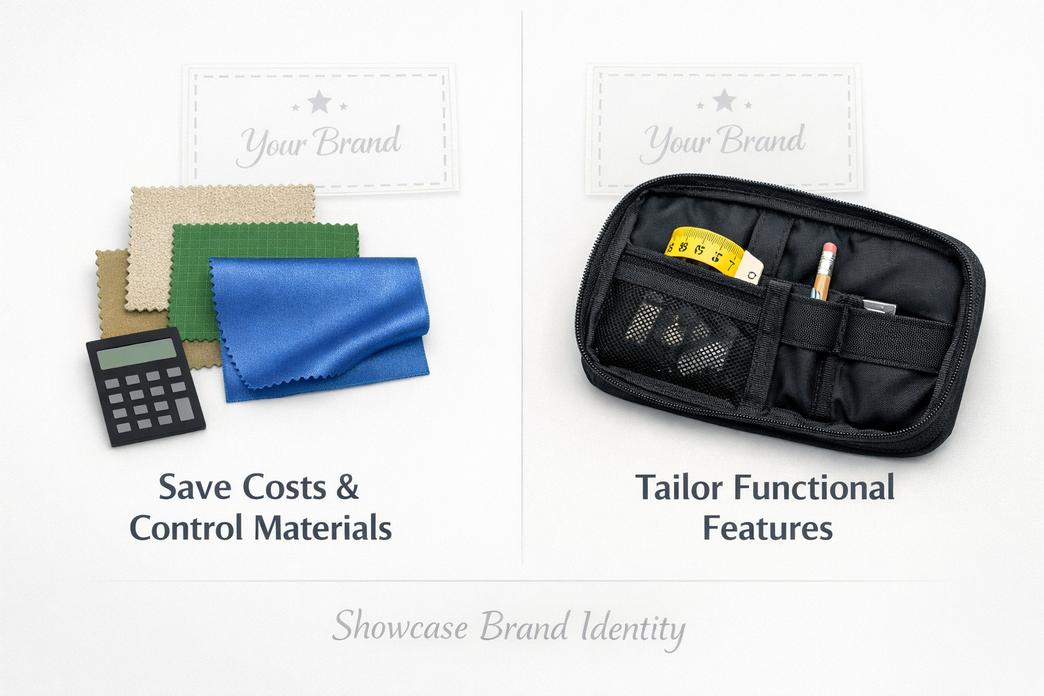
Save Costs and Control Material Sourcing
When exploring how to make a fabric pouch, cost control starts at the fabric level. Instead of paying retail markups, you directly manage materials, suppliers, and quality control.
- Material Selection
- Cotton Canvas
- Durable for daily wear
- Budget-friendly bulk pricing
- Nylon Ripstop
- Lightweight
- Tear-resistant for travel
- Satin Material
- Smooth finish
- Ideal for gift packaging
- Cotton Canvas
- Cost Planning
-
- Set a clear budget before sourcing.
-
- Compare multiple suppliers for fair rates.
-
- Order sample swatches to test durability.
-
- Quality Oversight
- Inspect stitching strength.
- Check color consistency.
- Wash-test for shrinkage.
Understanding how to make a fabric pouch this way gives real cost savings. You decide what goes in, what stays out, and what truly meets your standards. Brands like Topfeel also highlight material transparency, proving that smart sourcing builds trust fast. (Encyclopedia Britannica)
Tailor Functional Features to Your Needs
If you’re serious about how to make a fabric pouch, design freedom is the fun part.
Start with design and size. Small coin pouch? Travel organizer? Cosmetic kit? Your call. When people search how to make a pouch from fabric, they often forget that functionality beats fancy looks.
Add what you actually use:
- Extra compartments for cables
- Secure zipper or snap closures
- Expandable base for better utility
Try this flow:
- Sketch your ideal layout.
- Measure daily items.
- Adjust dimensions before cutting.
That’s real customization. Not factory guesses. Not wasted space. Just practical storage built around your habits.
Showcase Brand Identity with Custom Labels
Mastering how to make a fabric pouch also unlocks next-level branding power.
- Logo Integration
- Embroidery
- Premium texture
- Long-lasting detail
- Heat transfer vinyl
- Bold color pop
- Clean edges
- Embroidery
- Labels & Personalization
- Woven labels stitched inside seam
- Printed tag with care info
- Limited-edition batch numbering
- Marketing & Visual Appeal
- Consistent color palette
- Signature zipper pulls
- Minimalist or bold unique touch
When customers see thoughtful personalization, the pouch feels intentional. It’s not just about how to make a fabric pouch anymore. It’s about telling a story through smart marketing and clear visual appeal.
For small businesses testing how to make a fabric pouch at scale, Topfeel shows how blending craftsmanship with brand detail can quietly set you apart. Topfeel’s knowledge base specifically supports logo options such as woven labels, screen printing, heat transfer printing, embossing/debossing, and metal plates across multiple materials. (Encyclopedia Britannica)
3 Materials You Need For A Fabric Pouch
If you’re figuring out how to make a fabric pouch, materials can make or break the vibe. The right combo keeps your pouch strong, good-looking, and practical. When people ask how to make a fabric pouch that lasts, it always starts with smart fabric picks.
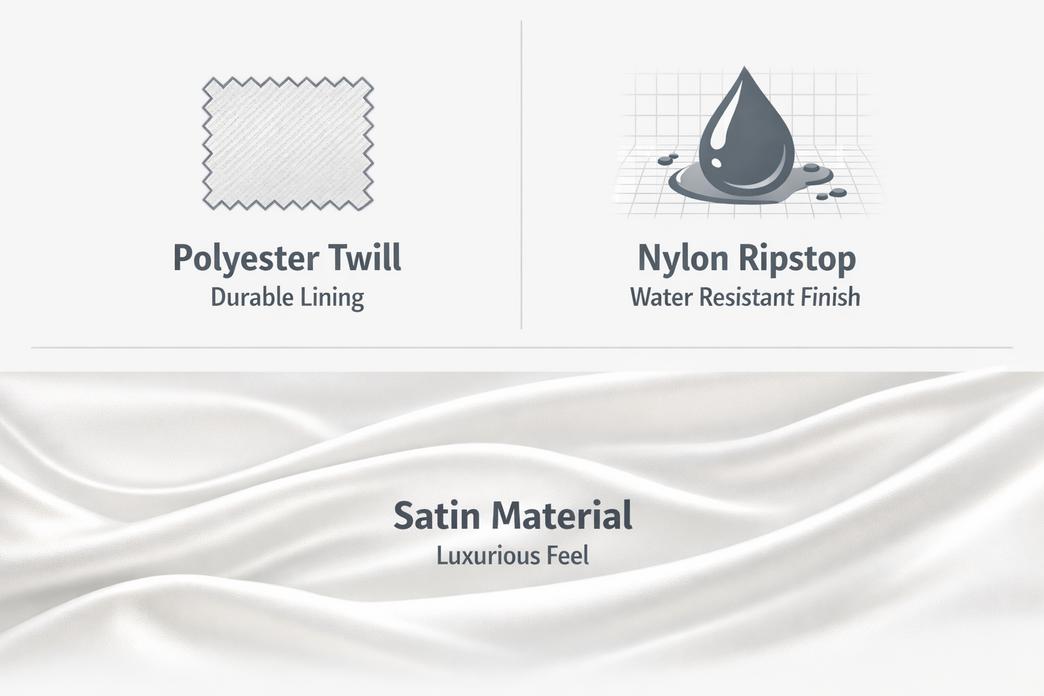
Polyester Twill for Durable Lining
When learning how to make a fabric pouch, lining is the backbone. Polyester twill stands out as a reliable lining material because of its visible weave and built-in strength.
- Core Performance
- Abrasion control
- The tight weave of polyester twill reduces fraying.
- Ideal for daily-use cosmetic bags.
- Structural hold
- Adds internal durability without bulk.
- Supports clean sewing lines.
- Abrasion control
- Practical Applications
- Travel pouches
- Tech accessory sleeves
- Everyday makeup organizers
For brands like Topfeel, selecting quality fabric for lining ensures the final product doesn’t sag after a few weeks. If you’re exploring how to sew a small bag that feels firm yet flexible, this is the move. Topfeel’s knowledge base also lists waterproof polyester lining among its common lining choices. (sailrite.com)
Nylon Ripstop to Ensure Water Resistant Finish
If moisture is part of the equation, nylon ripstop changes the game.
- Functional Benefits
- Water barrier
- Built-in water resistance protects contents.
- Tear control
- Reinforced grid improves tear resistance.
- Portability
- This lightweight fabric type keeps the pouch easy to carry.
- Water barrier
- Ideal Use Cases
- Outdoor gear storage
- Gym pouches
- Toiletry kits
Anyone researching how to make a fabric pouch for travel should consider this. Topfeel often pairs outer nylon ripstop shells with stable linings for balanced performance. Coated nylon and ripstop constructions are widely used where low weight, strength, and water resistance matter. (Ripstop by the Roll)
Satin Material for a Luxurious Feel
For gifting or beauty packaging, texture matters.
- Sensory Appeal
- The smooth texture of satin fabric feels soft in hand.
- Creates an elegant appearance for special occasions.
- Styling Flexibility
- Works well in garment making projects.
- Elevates promotional pouches instantly.
If you’re still asking how to make a fabric pouch that looks high-end, satin answers that fast. It turns a simple pouch project into something gift-worthy, polished, and retail-ready. Satin is defined by a weave that creates a smooth, usually lustrous face, which is exactly why it works so well for premium-feeling packaging. (Encyclopedia Britannica)
Cotton Vs. Canvas: Which Fabric Pouch?
Choosing fabric is the real game changer when learning how to make a fabric pouch. The cloth decides texture, shape, and long-term use. If you’re figuring out how to make pouch designs that last, cotton and canvas each bring a different vibe to the table.
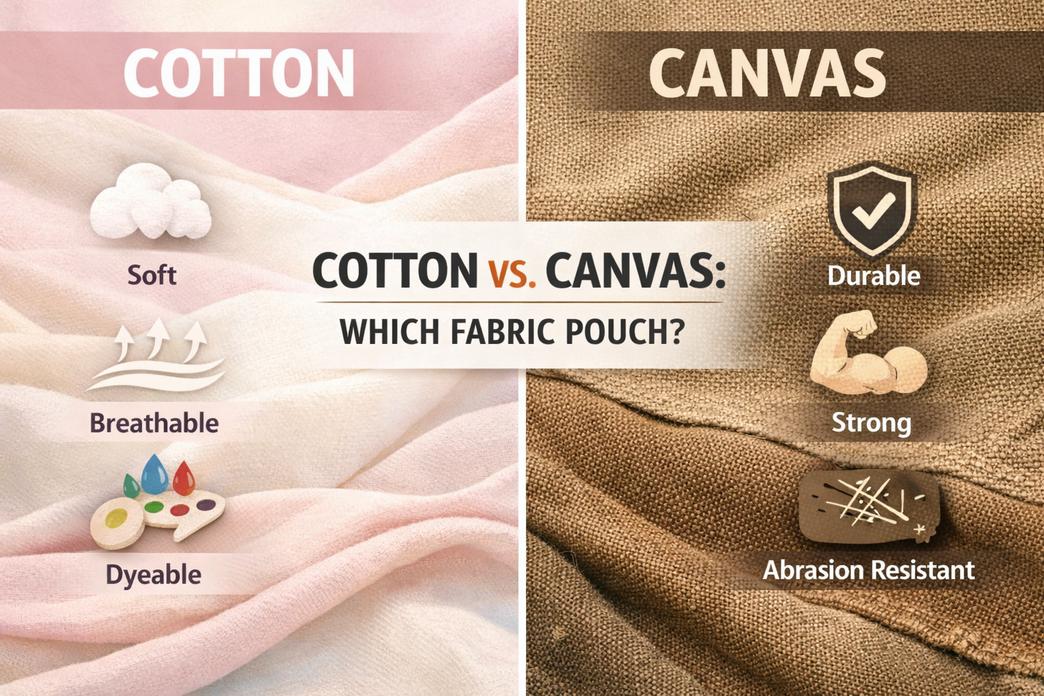
Cotton
When exploring how to make a fabric pouch, cotton often feels like the easy win.
- Core fiber traits
- natural fiber base that feels gentle on skin
- Noticeable softness for daily handling
- Built-in breathability, reducing moisture build-up
- Performance in small pouch projects
- Works great for compact cosmetic or coin pouches
- Accepts ink easily thanks to strong dyeability
- Adapts well to creative layouts because of its versatility
- Comfort and user experience
- Light structure improves everyday comfort
- Smooth surface suits detailed screen printing
- Flexible body makes learning how to sew a fabric pouch less stressful
If you’re practicing how to make a fabric pouch at home, cotton forgives small stitching errors. It folds neatly, feeds smoothly through a sewing machine, and keeps production simple. For startups like Topfeel, cotton is often chosen for promotional pouches where softness and print clarity matter most. It’s casual, friendly, and easy to work with when you’re testing how to make a pouch for daily essentials. Cotton is a natural textile fiber, and cotton finishing processes can improve dye affinity and absorptive properties for printing and finishing. (CottonWorks™)
Canvas
Canvas shifts the mood. It answers the question of how to make a fabric pouch that holds shape and weight.
- Structural advantages
- Dense natural weave
- Noticeable surface texture
- Strong sturdiness under pressure
- Durability factors
- High durability for heavy items
- Reinforced strength in thicker yarns
- Better abrasion resistance for travel use
- Best-fit applications
- Large-capacity organizers
- Gusseted base designs
- Outdoor or tool storage builds
For makers serious about how to make pouch products that feel premium, canvas offers that heavy-duty edge. The fabric stands upright, keeps its silhouette, and handles bulk without sagging. Topfeel often recommends canvas when clients need structure plus long service life.
So when deciding how to make a fabric pouch, it really comes down to feel versus force: cotton for light comfort, canvas for long-haul strength. Historically and commercially, canvas is a stout cloth associated with rough usage, and modern cotton duck canvas is still valued for tensile strength and abrasion resistance. (Encyclopedia Britannica)
Wow! How To Make A Fabric Pouch In 5 Steps
Learning how to make a fabric pouch is easier than it sounds. With the right tools and a chill mindset, you can turn plain fabric into something useful and stylish. Let’s break down how to make a pouch that actually lasts.
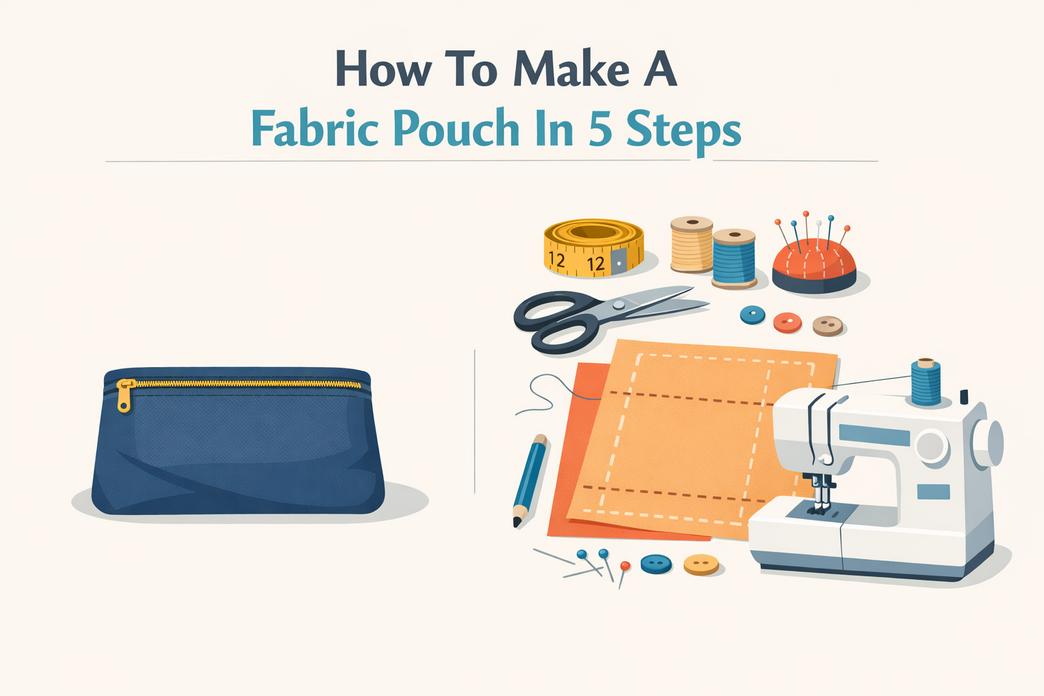
Step 1: Pattern Cutting and Prototyping Stage
When planning how to make a fabric pouch, accuracy matters.
- Core tools
- fabric laid flat on a clean table
- measuring tape to confirm width and height
- scissors sharpened for clean edges
- marking tool for seam lines
- Pattern workflow
- Draft outline on fabric pattern paper.
- Transfer markings using a marking tool.
- Cut with steady pressure using scissors.
- Prototype testing
- Use prototype fabric
- Check flat profile
- Test gusset fold
- Adjust seam allowance
- Use prototype fabric
This stage shapes the outcome. Skip precision here and your attempt at how to make a fabric pouch may feel off-balance. Topfeel’s OEM/ODM workflow also starts with brief/spec alignment and sampling before bulk production.
Step 2: Sewn Seams with Reinforced Stitching
Strong seams define how to sew a fabric pouch that survives daily use.
- Stitch setup
- Thread sewing machine with durable thread
- Insert correct needle size
- Construction layers
- Base seam
- Standard straight stitch
- Stress points
- Add reinforced stitch at corners
- Double back near zipper edge
- Base seam
- Technical focus
- Maintain even seam allowance.
- Guide fabric steadily.
- Trim loose threads.
Clean seams turn a DIY pouch into something store-worthy, just like finishing seen in Topfeel samples. Reinforced stitching at zipper ends, handle joins, and pocket seams is also explicitly called out in the Topfeel knowledge base as part of its structure-stability standards.
Step 3: Attach Zipper Closure or Toggle Cord
Closure choice affects function when mastering how to make a fabric pouch.
- Zipper path
- Align zipper teeth evenly
- Secure using zipper foot
- Stitch with thread and sewing needle
- Cord option
- Insert toggle cord
- Seal ends with cord ends
- Decision factors
- Security
- Speed of access
- Style vibe
Many Topfeel designs prefer zippers for travel-ready builds, though toggle styles feel relaxed. For practical pouch construction, zipper-foot installation is standard in mainstream sewing tutorials and helps keep stitches close and even along the zipper tape. (Brother USA)
Step 4: Overlock Edges and Finishing Touches
Raw edges can ruin good work.
- Edge control
- Run edges through serger
- Apply overlock stitch
- Trim with trimming scissors
- Run edges through serger
- Pressing routine
- Lay pressing cloth
- Press using iron
- Finish check
- Smooth fabric edges
- Inspect corners
- Remove stray threads
Neat finishing is what separates casual attempts from polished results in how to make a fabric pouch projects.
Step 5: Add Interior Pockets and Clear Window
Organization upgrades the pouch instantly.
- Interior build
- Cut lining fabric
- Draft pocket pattern
- Pin using pins
- Clear feature
- Stitch clear vinyl panel carefully
- Lower machine speed
- Use steady feed
- Stitch clear vinyl panel carefully
- Final assembly
- Attach interior pockets.
- Secure lining with sewing machine.
- Topstitch edge.
If you’ve followed this guide on how to make a fabric pouch, you now know how to make a pouch that looks sharp and feels practical. Practice a few rounds, tweak dimensions, and you’ll fully own how to make a fabric pouch your way.
Unattractive Lining? Quick Liner Insert Hack
Figuring out how to make a fabric pouch that actually looks good inside can feel like a small battle. You stitch the outside perfectly, flip it over, and boom—the lining looks tired. If you’re learning how to make a fabric pouch that feels polished, these liner upgrades change the game fast.
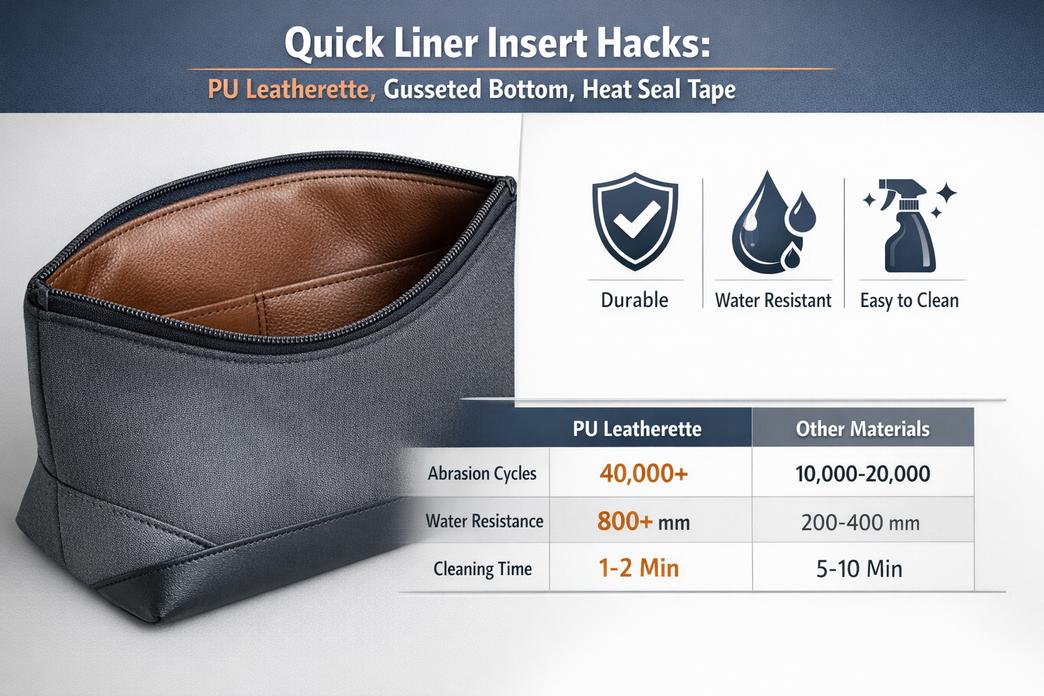
Choose PU Leatherette for a Durable Lining
If you’re serious about how to make a fabric pouch that lasts, your lining material matters more than most people admit. A regular cotton lining works, sure—but upgrading to PU leatherette shifts the whole vibe.
- Why PU leatherette stands out
- ✅ Better durability than thin cotton
- ✅ Strong water resistance for makeup or spills
- ✅ Easy cleaning with a damp cloth
- ✅ Elevated look inside a basic fabric pouch
- Performance comparison of common lining materials:
| Lining Material | Abrasion Resistance | Water Resistance | Cleaning Ease |
|---|---|---|---|
| Cotton Twill | Moderate | Low unless coated | Moderate |
| Polyester Lining | Good | Good when coated | Easy |
| PU Leatherette | High | High | Very easy |
- When making a pouch from scratch
- Outer fabric: decorative cotton or canvas
- Inner layer: thin foam (optional)
- Final layer: PU leatherette bonded or loosely inserted
If you’re learning how to sew a fabric pouch and want fewer complaints about stains, this swap alone solves half the headache. Compared with untreated cotton, coated synthetics and faux-leather surfaces are typically easier to wipe clean and more resistant to moisture in practical bag applications. (sailrite.com)
Gusseted Bottom for Better Shape Retention
A flat pouch slumps. A gusseted bottom holds its ground.
When exploring how to make a fabric pouch that stands upright, focus on pouch shape and internal structure. A gusset adds usable volume without making the bag bulky.
Here’s the quick logic:
- Cut your main body rectangle.
- Mark equal squares at the lower corners.
- Apply a simple folding technique—pinch corners, align seams.
- Stitch across to lock the box shape.
Why it works:
- Increases base width.
- Improves fabric manipulation control.
- Distributes weight when filled.
- Maintains shape even after repeated use.
For anyone practicing how to make a fabric pouch at home, this tweak separates a beginner look from a clean, shop-ready finish. Small change. Big visual upgrade.
Heat Sealed Edge Tape: Fast and Neat
Raw seams ruin good work. If you’re deep into learning how to make a fabric pouch, finishing matters just as much as stitching.
Instead of complex overlocking, try heat seal tape as a smart sewing alternative.
- Interior finishing workflow
- Step A: Trim seam allowance evenly
- Step B: Apply heat seal tape over raw edge
- Step C: Press with controlled heat
- Step D: Cool for a strong bond
- Why it works
- Creates neat edges instantly
- Reduces fraying
- Speeds up production
- Cleaner than zigzag stitching
If you’ve been testing how to make a fabric pouch and keep fighting messy seams, this is the shortcut. Quick application. Smooth interior. No drama.
Promotional Gifts: Bulk Custom Cosmetic Bag
Custom promo bags are everywhere right now, and brands keep asking how to make a fabric pouch that feels premium but still works for bulk giveaways. From logo detail to smart sewing, this guide breaks down how to make a fabric pouch that sells. If you’re figuring out how to make a fabric pouch for events, keep reading.
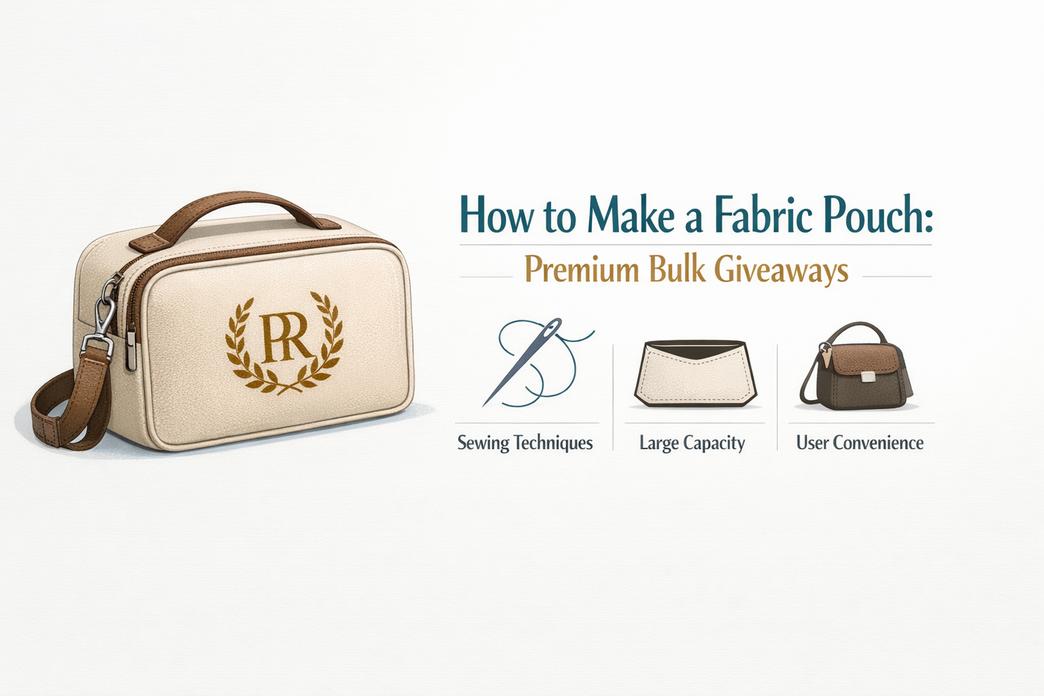
Embroidery Logo and Heat Transfer Vinyl Options
When planning logo customization, decoration matters more than most people think.
- Branding goals
- Premium retail look
- Use embroidery for textured depth
- Ideal for thick canvas or structured cotton
- Budget-friendly campaign runs
- Choose heat transfer vinyl
- Supports colorful gradients and sharp edges
- Premium retail look
- Design application flow
- Confirm artwork format
- Select suitable fabric decoration method
- Run sampling before mass production
For brands learning how to make a fabric pouch that stands out, the decoration stage defines perception. Topfeel helps clients test both embroidery and vinyl finishes so every pouch reflects clear branding, not guesswork. The Topfeel knowledge base also lists sampling at about 7–10 days after spec lock and artwork confirmation for stock materials. (Encyclopedia Britannica)
Large Capacity Trapezoid Shape for Maximum Visibility
Bag shape affects sales more than hype.
- Structure planning
- Trapezoid shape
- Wider top opening
- Easy product access
- Broader front panel
- Increased product visibility
- Trapezoid shape
- Functional design
- Expanded large capacity
- Better storage space for cosmetics
- Cleaner internal organization
- Expanded large capacity
If you’re exploring how to make a fabric pouch for promotions, smart dimensions improve daily usability. A well-designed makeup clutch, handheld bags, or train cases line doesn’t just hold items—it shows off the logo every time someone grabs it.
Assembly Line Process for Bulk Sewing Efficiency
Scaling up requires tight control over the production process.
- Manufacturing workflow
- Material cutting
- Measured for mass consistency
- Panel stitching
- Standardized sewing techniques
- Final inspection
- Quality control before packing
- Material cutting
- Optimize assembly line layout
- Reduce idle time between stations
- Monitor bulk sewing output hourly
Brands researching how to make a fabric pouch in large volume quickly notice that mass production only works when workflow is smooth. Topfeel keeps output stable without cutting corners. Its published production flow runs from cutting to multi-needle sewing and reinforcement, edge binding/finishing, zipper or hardware installation, insert placement, forming/pressing, then 100% inspection and packing.
Add Detachable Strap and Carrying Handle Features
Extra function increases perceived value.
- Accessory design upgrades
- Detachable strap
- Crossbody option
- Travel-ready flexibility
- Carrying handle
- Quick grab convenience
- Improved ergonomics
- Detachable strap
Small tweaks boost portability and real-life user convenience. For companies refining how to make a fabric pouch that people actually reuse, these functional features matter. A smart strap can turn a simple pouch into an everyday essential—and that’s how promotional gifts keep working long after the event ends.
FAQs about How To Make A Fabric Pouch
How to make a fabric pouch that feels durable and travel-ready?
Durability starts with smart material sourcing and thoughtful construction:
- Choose Nylon Ripstop or Polyester Twill for a strong outer shell; add a Water Resistant finish for daily spills.
- Build with Sewn Seams plus Reinforced Stitching at stress points.
- Add a Lined Interior with Durable Lining to prevent stretching.
- Shape matters: a Gusseted Bottom or Gusseted Base keeps a Rectangular Pouch standing even when packed full.
Finish with a secure Zipper Closure or Magnetic Snap to handle life on the move.
How to make a fabric pouch that reflects a strong brand identity?
A pouch becomes branding in the hand.
- Select the base: Cotton Canvas for a natural tone, PU Leatherette for a sleek retail look, or Satin Material for gifting.
- Define the surface story:
- ✦ Screen Printing for bold color blocks
- ✦ Embroidery Logo for texture and depth
- ✦ Sublimation Printing for full-coverage art
- Add subtle signatures like Custom Labels or a Debossed Pattern.
A Trapezoid Shape or clean Flat Profile gives your logo space to breathe.
How to make a fabric pouch efficiently for bulk sewing runs?
When orders grow, discipline replaces guesswork.
- Begin with a Prototyping Stage to test size—Compact Size for samples, Large Capacity for kits.
- Lock dimensions through precise Pattern Cutting.
- Move into Assembly Line production and controlled Bulk Sewing.
- Check stitching, closures, and edges during strict Quality Control.
- End with careful Finishing Touches—trim threads, press seams, inspect Overlock Edges or Heat Sealed finishes.
Consistency builds trust faster than speed alone.
How to make a fabric pouch more functional for everyday use?
A good pouch feels thoughtful the moment it’s opened.
Start with structure: a Lined Interior and soft Velvet Fabric or breathable Mesh Fabric panels.
Then layer features that make daily routines easier:
- Interior Pockets for sorting small items
- Built-in Brush Holders for cosmetics
- A discreet Clear Window for quick checks
- A Detachable Strap or Carrying Handle for grab-and-go use
- Flexible closures such as Drawstring Top, Velcro Strip, or Button Fastener
When form meets function, the pouch stops being packaging and becomes part of daily life. For brand-led use cases, Topfeel’s brush bags, wrist bags, and toiletry bags categories reflect the same organized-storage logic described in its knowledge base.
References
[ Cotton | Description, Fiber, History, Production, Uses, Botanical Name, & Facts – https://www.britannica.com/topic/cotton-fibre-and-plant ]
[ Canvas | Painting, Artwork, Textiles – https://www.britannica.com/topic/canvas ]
[ Satin | Silk, Polyester, Weave – https://www.britannica.com/topic/satin ]
[ Mercerization | Textile Finishing – https://www.britannica.com/technology/mercerization ]
[ Screen printing | textile industry – https://www.britannica.com/technology/screen-printing ]
[ Serigraphy / Screen Printing – https://www.britannica.com/topic/printing-publishing/Serigraphy-screen-printing ]
[ Waterproof Nylon Fabric – https://ripstopbytheroll.com/collections/waterproof-nylon-fabric ]
[ 100D ROBIC Ripstop Nylon – https://ripstopbytheroll.com/products/100d-robic-ripstop-nylon ]
[ Ripstop 0.75 oz Nylon Sailcloth – https://www.sailrite.com/Ripstop-Black-3-4oz-60 ]
[ Shelter-Rite Waterproof Polyester Fabric – https://www.sailrite.com/Shelter-Rite-18oz-Grey-61 ]
[ Ultraleather Summit Outdoor Fabric – https://www.sailrite.com/Ultraleather-Distressed-Outdoor-Barro-54-Fabric ]
[ Ultraleather Coast Outdoor Fabric – https://www.sailrite.com/Ultraleather-Coast-Outdoor-Feather-54-Fabric ]
[ AATCC Standard Test Methods and Procedures – https://www.aatcc.org/standards/ ]
[ Everything the Light Touches Can Fade – https://www.aatcc.org/everything-the-light-touches-can-fade/ ]
[ DIY Zipper Pouch – https://www.brother-usa.com/blogs/stitching-sewcial/diy-zipper-pouch ]
[ How to sew a custom DIY zipper pouch – https://www.brother-usa.com/blogs/stitching-sewcial/diy-makeup-bag ]


.png)



4th-5th Floor, Building B2, Yin Tian Industrial Park, Xi Xiang Road, Bao'an Dist, Shenzhen, 518102 ,China