
 English
  Korean
  French
  German
  Hungarian
  Japanese
  Russian
How to Check If Your Cotton Bag Maker Uses Real Organic Materials?
Choosing among organic cotton bags manufacturers can feel like dating in the age of filters—everyone says “100% organic,” but who’s showing up with receipts? Your beauty brand’s reputation rides on that little tag stitched inside the seam. One wrong supplier, and suddenly your clean skincare launch is wrapped in greenwashed guesswork. That’s not a risk worth taking.
The global organic cotton market was valued at over $20 billion in 2022 (Textile Exchange), and demand keeps climbing. Translation? More players, more claims, more smoke and mirrors. As the FTC warns, “Marketers should have competent and reliable evidence” for environmental claims. No proof, no pass.
Before you place that bulk order, it pays to know who’s real—and who’s just good at marketing.
Reading Notes for Organic Cotton Bags Manufacturers
- Confirm GOTS and OEKO-TEX Standard 100 certifications, and request ISO 9001 and SA8000 records to ensure true organic sourcing and social compliance.
- Inspect physical samples (recycled cotton twill, hemp, bamboo fiber), review reinforced stitching and water-resistant lining tests, and verify PFC-free coatings with lab reports.
- Trace chain-of-custody from farm to finished tote, validate Fair Trade pathways, and ensure digital printing inks and woven labels meet eco-friendly standards.
Is Your Bag Maker Truly Organic?
Choosing among organic cotton bags manufacturers can feel tricky. Some suppliers talk big about sustainability, yet the details tell the real story. If you’re sourcing from organic cotton bag manufacturers or comparing cotton bag manufacturers for retail or promo use, it pays to slow down and check the facts.
How to Spot PFC-Free Coated Cotton Claims
When reviewing organic cotton bags manufacturers, dig into how they handle PFC-free coating and water-repellent finish claims.
- Certification Review
- Check material certifications tied to organic cotton fabric.
- Confirm lab tests showing zero fluorinated chemical treatments.
- Coating Transparency
- Ask what replaces PFCs.
- Are eco-friendly alternatives clearly listed?
- Is the coating applied in-house or outsourced?
- Ask what replaces PFCs.
- Product Application
- For zipper totes and drawstring styles:
- Verify lining specs.
- Match coating reports to batch numbers.
- For zipper totes and drawstring styles:
Reliable organic cotton bags manufacturers, including Topfeel, share reports without pushback.
Checking Ethical Sourcing and Fair Trade Practices
Not all organic cotton bags manufacturers follow strict fair labor standards.
- Policy Layer
- Public commitment to ethical manufacturing.
- Proof of fair trade certification.
- Audit Layer
- Recent social compliance audits (SA8000).
- Clear records on worker welfare.
- Supply Chain Layer
- Traceable farms.
- Documented supply chain transparency.
Topfeel works closely with audited cotton bag manufacturers to keep sourcing clean and traceable.
Validate Bulk Production Capacity for Organic Cotton Canvas
Serious organic cotton bags manufacturers must prove scale.
- Capacity Check
- Monthly production volume for organic cotton canvas.
- Backup lines for rush orders.
- Manufacturing Capabilities
- Cutting, stitching, printing in-house.
- Stable material availability.
- Quality Control
- Multi-point quality control system.
- Random batch testing.
- Commitment to consistent supply.
If an organic cotton bags manufacturers partner can’t show numbers, that’s a red flag. Topfeel, as one of the experienced organic cotton bags manufacturers, aligns capacity with beauty brands and promo buyers who need steady output from trusted organic cotton bag manufacturers.
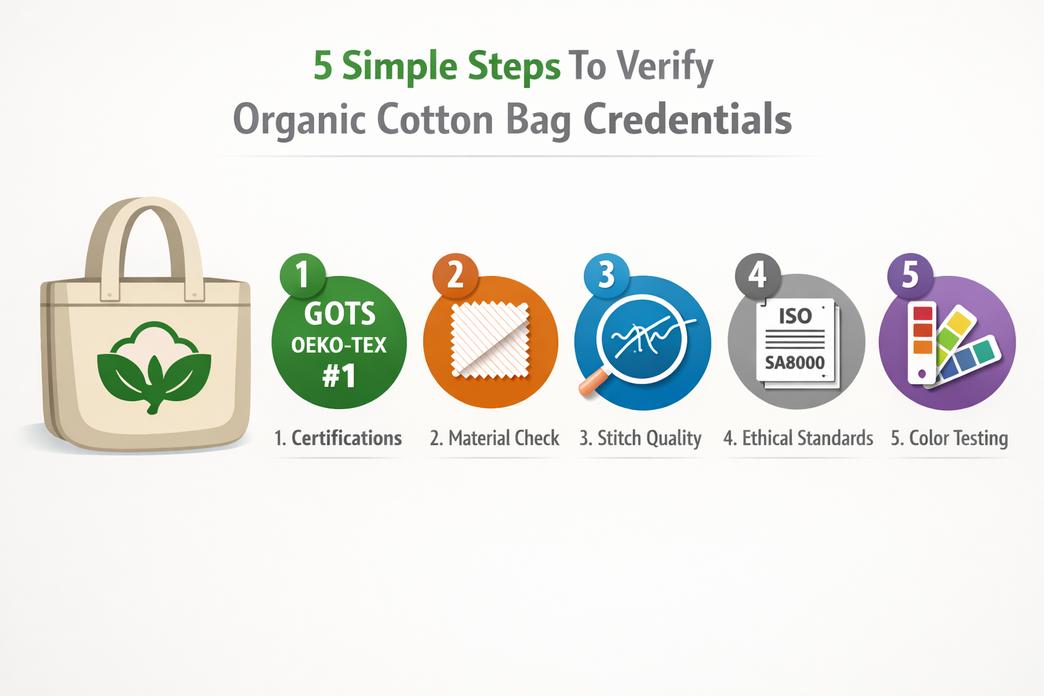
5 Simple Steps To Verify Organic Cotton Bag Credentials
Choosing reliable organic cotton bags manufacturers can feel tricky. Certifications look fancy, but real proof sits in the details. If you source from organic cotton bag manufacturers, eco bag producers, or custom cotton tote suppliers, these checks keep things real and protect your brand reputation.
Step 1: Confirm GOTS Certification and OEKO-TEX Standard 100
When screening organic cotton bags manufacturers, focus on layered material verification:
- Certification review
- Check valid GOTS certification number
- Scope covers organic cotton fabric
- Includes printing and dyeing units
- Verify OEKO-TEX Standard 100
- Applies to trims, threads, lining
- Confirms chemical safety
- Check valid GOTS certification number
- Compliance cross-check
- Match certification holder with factory name
- Confirm audit date within 12 months
- Conduct random supplier audit
Serious organic cotton bag manufacturers won’t dodge these questions.
Step 2: Inspect Recycled Cotton Twill and Hemp Fabric Samples
Fabric tells the truth fast. Ask organic cotton bags manufacturers for real fabric samples.
- Fiber types
- Recycled cotton
- Hemp fabric
- Bamboo blends
- Technical inspection
- Check twill weave density
- Rub test for surface pilling
- Wash test for shrinkage
- Sustainability validation
- Review claims vs lab data
- Confirm fiber percentage breakdown
Texture, weight, and stitching response reveal if eco promises hold up.
Step 3: Review Quality Control Reports on Reinforced Stitching
Strong bags sell themselves. Weak seams ruin everything.
- Production checkpoints
- Incoming fabric inspection
- In-line quality control review
- Final packing audit
- Structural verification
- Reinforced stitching at handles
- Gusset stress tolerance
- Zipper cycle testing
Below is a sample durability reference used by experienced organic cotton bags manufacturers:
| Test Item | Standard Value | Test Result | Pass Rate (%) |
|---|---|---|---|
| Seam Strength (N) | ≥180N | 195N | 100 |
| Handle Load (kg) | 15kg/1hr | 18kg | 100 |
| Zipper Cycles | 5,000 | 5,200 | 99 |
| Color Fastness | Grade 4 | Grade 4-5 | 98 |
Numbers like these protect product integrity and long-term durability.
Step 4: Request ISO 9001 and SA8000 Social Accountability Records
Certifications reflect factory culture.
- Management system
- Valid ISO 9001 certificate
- Covers design and production
- Lists factory address
- Internal audit frequency
- Valid ISO 9001 certificate
- Ethical compliance
- SA8000 documentation
- Worker age verification
- Overtime policy records
Responsible organic cotton bags manufacturers maintain clear labor practices and transparent ethical production systems. Topfeel follows structured factory standards to align quality with accountability.
Step 5: Match Custom Dye Colors and Woven Labels with Standards
Brand details matter. Sloppy color work screams low-end.
- Color control
- Approved custom dye colors
- Pantone-based color matching
- Wash and rub fastness reports
- Branding accuracy
- Correct woven labels placement
- Logo alignment
- Font size consistency
- Final compliance
- Ink approval under GOTS rules
- Material consistency review
Experienced organic cotton bags manufacturers double-check label accuracy against brand guidelines. Topfeel works closely with clients and sustainable bag suppliers to keep custom cotton tote production sharp, consistent, and fully aligned with certification standards.
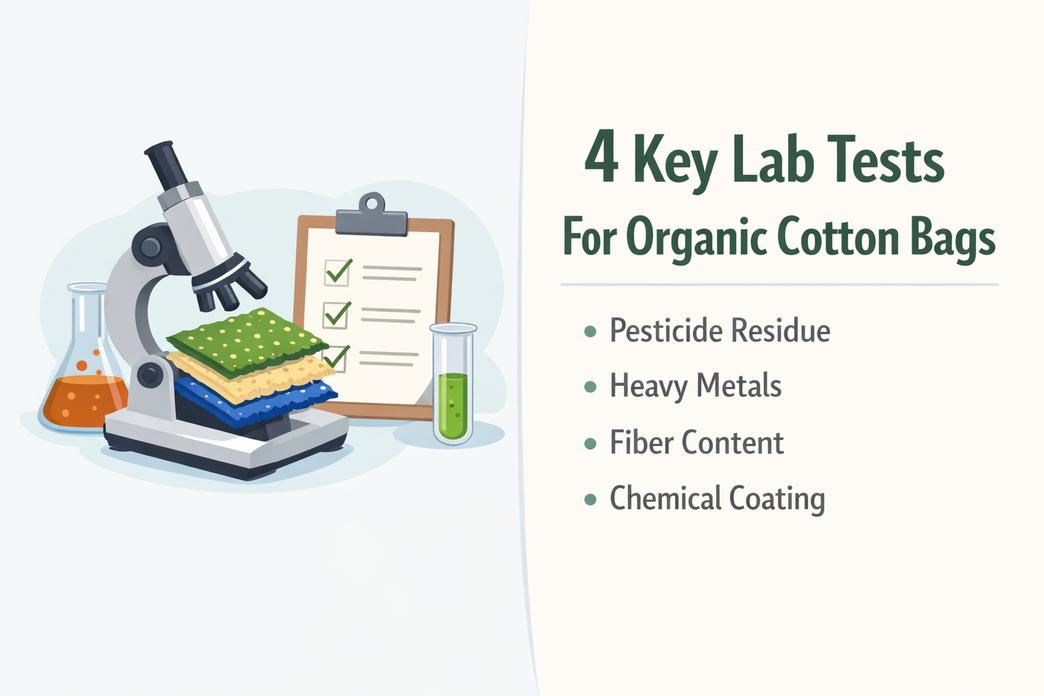
4 Key Lab Tests For Organic Cotton Bags
Choosing reliable organic cotton bags manufacturers is not just about price or stitching. Lab testing matters, big time. Brands sourcing from organic cotton bag suppliers need proof that fabrics are clean, safe, and honest. From organic cotton canvas to linings and coatings, smart cotton bag manufacturers rely on solid lab data. That’s how Topfeel keeps quality tight and retailers confident.
Pesticide Residue Analysis on Bamboo Fiber and Jute Material
For responsible organic cotton bags manufacturers, checking pesticide residue in bamboo fiber, jute material, and canvas is non-negotiable.
- Raw Material Screening
- Fiber sampling
- Random batch cuts from:
- Bamboo fiber
- Jute material
- Organic cotton yarn
- Lab solvent extraction
- Residue concentration analysis
- Fiber sampling
- Testing Methods
- Gas chromatography for trace contaminants
- Mass spectrometry confirmation
- Cross-check with organic certification limits
- Compliance Review
- Compare with retailer eco-standards
- Flag restricted agricultural chemicals
- Issue safety summary for organic cotton bag factories
This layered approach protects material credibility. It also supports eco claims that buyers expect from organic cotton bags manufacturers supplying global brands.
Heavy Metals Screening for Water-Resistant Lining Fabrics
Heavy metals can sneak in through lining fabrics, water-resistant treatment, or even zipper paint. That’s why serious cotton bag manufacturers test beyond the canvas shell.
Key checkpoints include:
- Screening for heavy metals such as lead and cadmium
- Reviewing dye chemistry in prints
- Verifying material safety against compliance standards like OEKO-TEX
- Focus areas:
- Inner pocket lining
- Heat transfer logos
- Metal accessories
According to a 2025 update from OEKO-TEX®, stricter thresholds on certain extractable metals are driving brands to tighten supplier audits, especially for products marketed to skincare and baby-care sectors.
At Topfeel, every batch undergoes independent lab analysis before shipment. For brands working with organic cotton bags manufacturers, that extra screening step keeps surprises off the shelf.
Fiber Content Verification of Organic Cotton Canvas
Honest labeling matters. Buyers searching for organic cotton bags manufacturers want proof that fiber content matches the claim.
- Sample Preparation
- Cut swatches from finished cotton canvas
- Separate warp and weft yarns
- Fiber Identification
- Microscopic review
- Burn testing indicators
- Chemical solubility checks
- If blends appear:
- Measure % of:
- Organic cotton
- Recycled cotton
- Hemp fibers
- Material Authenticity Review
- Trace back to ginning records
- Confirm ginning process documentation
- Match transaction certificates
Short version? No guesswork. Just clear testing procedures that back up the label. That’s how trusted organic cotton bag suppliers stay credible in a crowded market.
Chemical Coating Assessment for Drawstring Top Bags
Drawstring styles often use surface finishes, so chemical coating checks are crucial.
Step 1: Identify declared surface treatment, including wax or PU alternatives.
Step 2: Run chemical analysis to detect fluorinated compounds and verify PFC-free claims.
Step 3: Conduct durability testing for wash resistance and rub fastness.
Step 4: Review impact on material integrity and flexibility.
Step 5: Recommend eco-friendly alternatives if restricted substances appear.
For beauty and skincare brands sourcing from organic cotton bags manufacturers, this testing protects both product safety and brand reputation.
That’s the standard at Topfeel—clean coatings, verified fabrics, and organic cotton bags manufacturers that actually walk the talk.
GOTS Versus OCS: Which Certification Matters?
Choosing between certifications can feel confusing, especially for brands sourcing from organic cotton bags manufacturers. If you are comparing organic cotton, cotton bags, and reliable manufacturers, the details matter. For buyers working with organic cotton bags manufacturers, understanding certification scope helps avoid costly mistakes and keeps your organic cotton bags supply chain clean and credible.
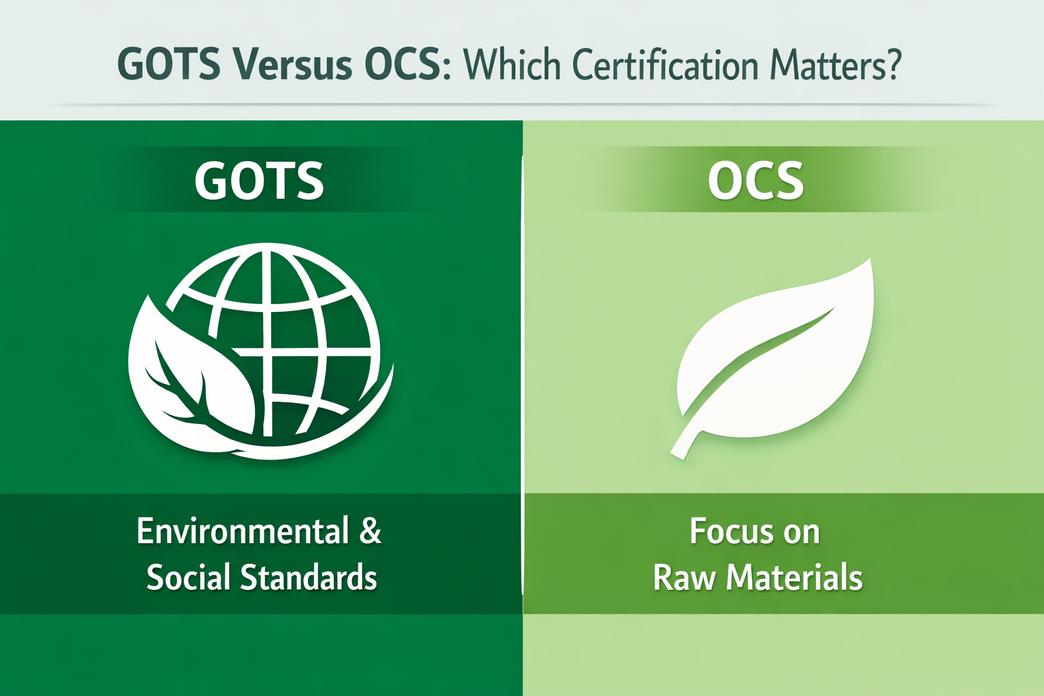
GOTS Certification
When evaluating organic cotton bags manufacturers, GOTS stands out because it covers the full chain of textile processing, not just raw fiber.
- Scope of Control1.1 Raw Fiber
- Requires certified organic cotton input.
- Verifies strict traceability from farm level.
1.2 Manufacturing
- Audits chemical inputs during dyeing and finishing.
- Reviews wastewater and environmental management aligned with environmental criteria.
1.3 Social Responsibility
- Enforces social criteria such as safe working conditions and fair wages.
- Why It Matters for Brands2.1 Risk Reduction
- Lower compliance risk for retailers.
2.2 Market Trust
- Strong labeling recognition across EU and US markets.
2.3 Supplier Fit
- Ideal when partnering with premium organic cotton bags manufacturers like Topfeel that manage certified organic production end to end.
For businesses serious about organic cotton bags, GOTS signals deep control, not surface-level claims.
OCS Certification
OCS takes a narrower route, which still appeals to many organic cotton bags manufacturers focused mainly on raw material validation.
- Core Verification1.1 Input Validation
- Confirms organic content percentage.
- Checks certified organic raw material documentation.
1.2 Chain of Custody
- Reviews tracking and verification across the supply chain.
1.3 Label Use
- Allows clear labeling of organic percentage.
- Key Differences from GOTS2.1 No Chemical Review
- Does not assess processing chemical inputs.
2.2 Limited Environmental Scope
- Excludes wider environmental criteria.
2.3 Social Factors
- No mandatory social criteria audit.
For startups working with organic cotton bag suppliers, OCS can be a practical entry point. Still, brands wanting full-package assurance often lean toward partners like Topfeel, especially when comparing multiple organic cotton bags manufacturers for long-term growth.
Missing Certifications? Request Chain-of-Custody Proof
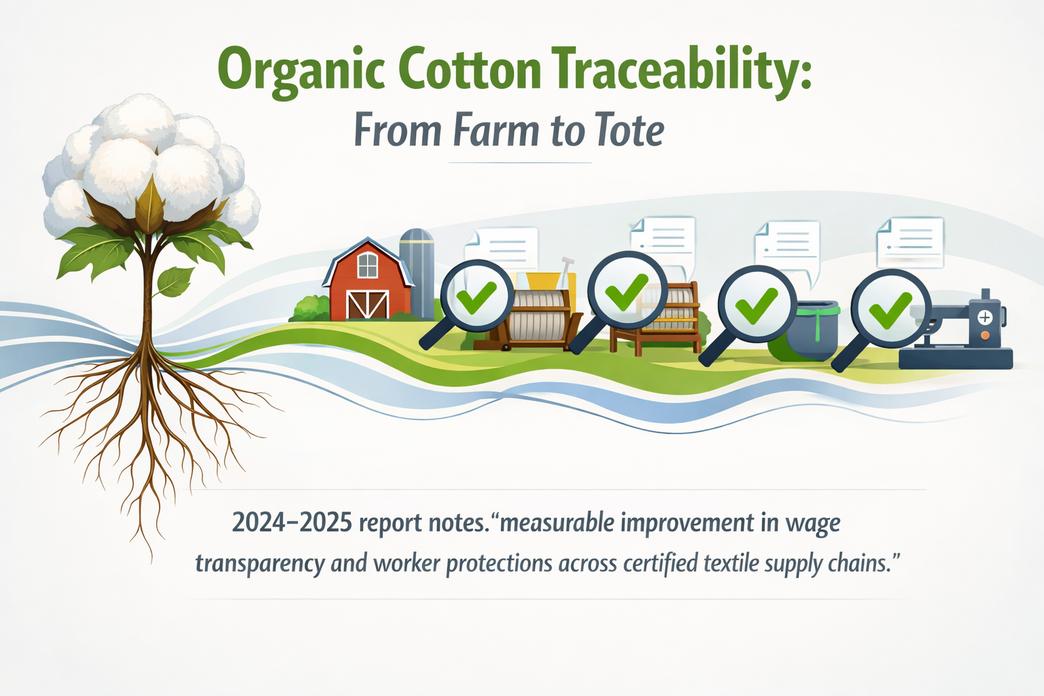
If you’re working with organic cotton bags manufacturers, paperwork matters just as much as stitching. Real traceability builds trust, protects your brand, and keeps your supply chain clean and drama‑free.
Ask for Tracing Documents from Skincare Companies to Mills
When dealing with organic cotton bags manufacturers, don’t just accept a logo stamp. Ask for layered documentation that tracks organic cotton from farm to tote.
- Upstream verification
- Farm level
- Organic certification issued by recognized bodies
- Harvest batch identification
- Ginning and spinning
- Fiber processing logs
- Transaction certificates
- Farm level
- Midstream validation
- Weaving mills
- Mill records confirming fabric origin
- Production volume reconciliation
- Dyeing units
- Input chemical declarations
- Weaving mills
- Downstream confirmation
- Cut-and-sew factories
- SKU linkage to fabric rolls
- Shipment records
- Export invoices tied to batch codes
- Cut-and-sew factories
Serious organic cotton bag suppliers won’t dodge these requests. Topfeel, for example, aligns its material sourcing data with client audits, making supply chain reviews smoother and way less stressful.
Verify Supplier’s Fair Trade Certification Pathway
Ethical sourcing isn’t just talk. For cotton bag manufacturers, the fair trade certification pathway should cover every link.
- Certification scope
- Farms
- Worker wage compliance
- Community premiums
- Spinning mills
- Health and safety audits
- Sewing facilities
- Verified labor practices
- Farms
- Oversight system
- Independent certification body audits
- Annual compliance checks
- Corrective action tracking
The Fairtrade International 2024–2025 monitoring report notes that brands demanding full-chain verification saw “measurable improvement in wage transparency and worker protections across certified textile supply chains.”
Ask for audit summaries. Cross-check dates. Real organic cotton bags manufacturers will show proof without hesitation. If gaps appear between farm and factory, push back.
Ensure Digital Printing and Screen Printing Inputs Are Traced
Printing often gets ignored, but it shouldn’t.
- Input transparency
- Printing inks
- Supplier origin
- Chemical disclosure sheets
- Screen printing pastes
- Heavy metal test results
- Digital printing systems
- Ink batch trace codes
- Printing inks
- Accessory traceability
- Embroidery threads
- Woven labels
- Drawcord materials
- Safety alignment
- Eco-friendly dyes certifications
- Material safety declarations
- Traceable components logged per order
Topfeel works closely with vetted organic cotton bags manufacturers to ensure print inputs match the same traceability standards as fabric sourcing. For brands that care about clean beauty packaging, that extra layer of proof isn’t overkill—it’s smart business.
FAQs about Organic cotton bags manufacturers
How do organic cotton bags manufacturers prove fabrics are truly organic?
A buyer often senses trust before reading paperwork, yet proof still matters. Reliable organic cotton bags manufacturers show it in layers:
- GOTS certification tied to organic cotton canvas and GOTS certified manufacturing
- Backup routes like OEKO-TEX Standard 100 or GRS recycled standard for recycled cotton twill or bamboo fiber blends
- Quiet confidence from traceable records linking hemp fabric and jute material back to mills
Short test summaries on fiber content and coatings ease concerns for beauty brands and eco-friendly retailers.
Why does PFC-free coated cotton matter for cosmetic and skincare bags?
A makeup bag touches skin, hands, water, and emotion. That tension makes material choices visible.
• PFC-free coated cotton keeps water-resistant lining safe for skincare companies
• Reduces chemical worry around zipper closure and internal pockets
• Aligns with ethical sourcing expected in corporate gifting and promotional product suppliers
Small lab reports calm large brand risks, especially for pouch bags and travel organizers.
How can buyers confirm bulk production capacity without risking delays?
Capacity feels human: people, pace, and pressure. Smart checks keep stress low.
- Factory scale supporting bulk production capacity for tote bags and drawstring bags
- Quality control logs covering reinforced stitching, gusseted bottom strength, and zipper flow
- ISO 9001 quality management routines shaping daily work
Event organizers and eco-friendly retailers gain confidence when timelines sound calm, not rushed.
Do customization options stay compliant with eco standards?
Yes, when craft respects rules. Organic cotton bags manufacturers balance creativity and restraint:
| Custom area | Eco-safe practice | Common use |
|---|---|---|
| screen printing | water-based inks | beauty brands |
| embroidery | certified threads | clutch bags |
| digital printing / heat transfer | low-impact process | promotional product suppliers |
| woven labels & custom dye colors | GOTS-approved inputs | tote bags, custom dimensions |
This harmony supports sustainable production while keeping fair trade practices intact.
References
- Textile Exchange – textileexchange.org / Textile Exchange
- FTC warns – ftc.gov / Federal Trade Commission
- PFC-free coating – epa.gov / EPA
- GOTS certification – global-standard.org / GOTS
- OEKO-TEX Standard 100 – oeko-tex.com / OEKO-TEX
- ISO 9001 – iso.org / ISO
- SA8000 – sa-intl.org / Social Accountability International
- pesticide residue – epa.gov / EPA
- bamboo fiber – ftc.gov / Federal Trade Commission
- water-resistant treatment – rei.com / REI
- heavy metals – cpsc.gov / CPSC
- organic cotton – organiccotton.org / Organic Cotton


.png)



4th-5th Floor, Building B2, Yin Tian Industrial Park, Xi Xiang Road, Bao'an Dist, Shenzhen, 518102 ,China