
 English
  Korean
  French
  German
  Hungarian
  Japanese
  Russian
The Ultimate Guide to Finding a Reliable Hand Bag Supplier
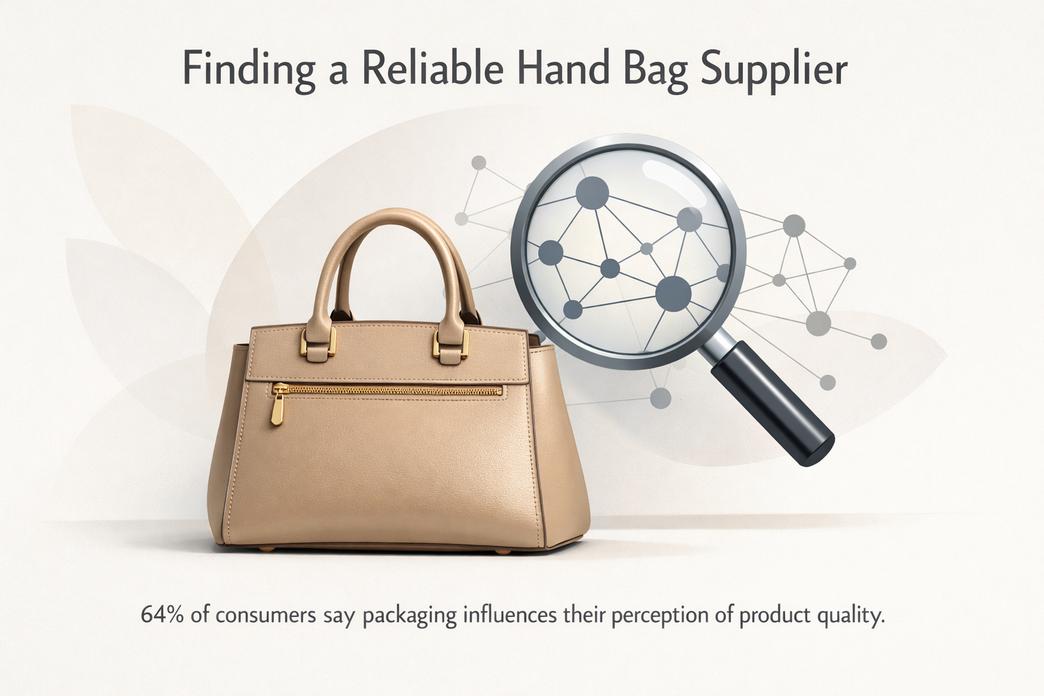
You’ve got a product line hotter than a curling iron on high—but your launch is about to crumble because your hand bag supplier ghosted you mid-production. Sound familiar? You’re not alone. In the beauty biz, sourcing custom cosmetic bags isn’t just some supply chain footnote—it’s war paint for your brand. One bad zipper or late shipment, and poof—your seasonal promo goes up in smoke.
According to McKinsey’s 2023 Global Beauty Consumer Report, nearly 64% of consumers say packaging influences their perception of product quality. That tiny pouch? It carries more weight than most press kits.
This guide gets straight to the point: how to sniff out the right supplier before things go sideways—from material choices that match your vibe (and ethics), to factory partners who won’t flake when order volumes surge. Because in this industry, “cute but unreliable” doesn’t cut it—not for dates, and definitely not for sourcing partners.
Key Criteria For Evaluating Hand Bag Supplier
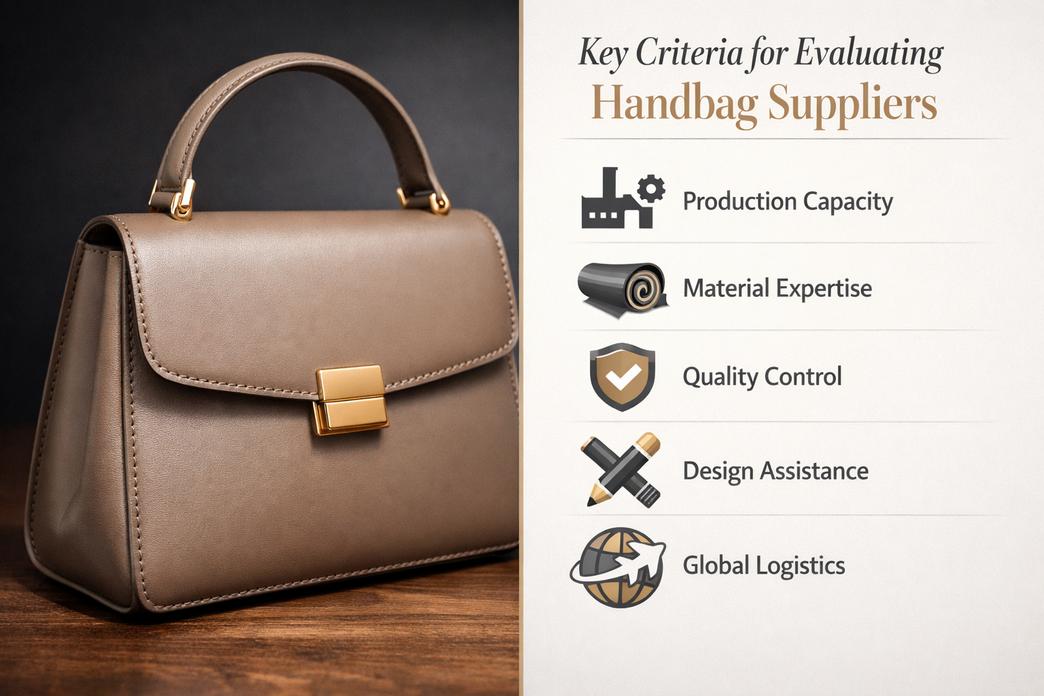
Choosing the right hand bag supplier can make or break your product line. Here’s what really counts when you’re scouting for a solid partner.
Supplier production capacity and stable bulk manufacturing performance
- Consistent production capacity during peak seasons
- Proven record of handling high-volume orders
- Scalable manufacturing performance for growing brands
- Ask for monthly and quarterly output reports.
- Tour the facility (virtually or in person) to check actual factory output.
- Confirm lead time commitments under different order sizes.
✓ If a supplier can’t scale up without delays, that’s a red flag.
A dependable hand bag manufacturer should handle sudden spikes without quality dips. Topfeel, for example, has shown consistent delivery even during Q4 rushes—something that sets them apart from smaller players.
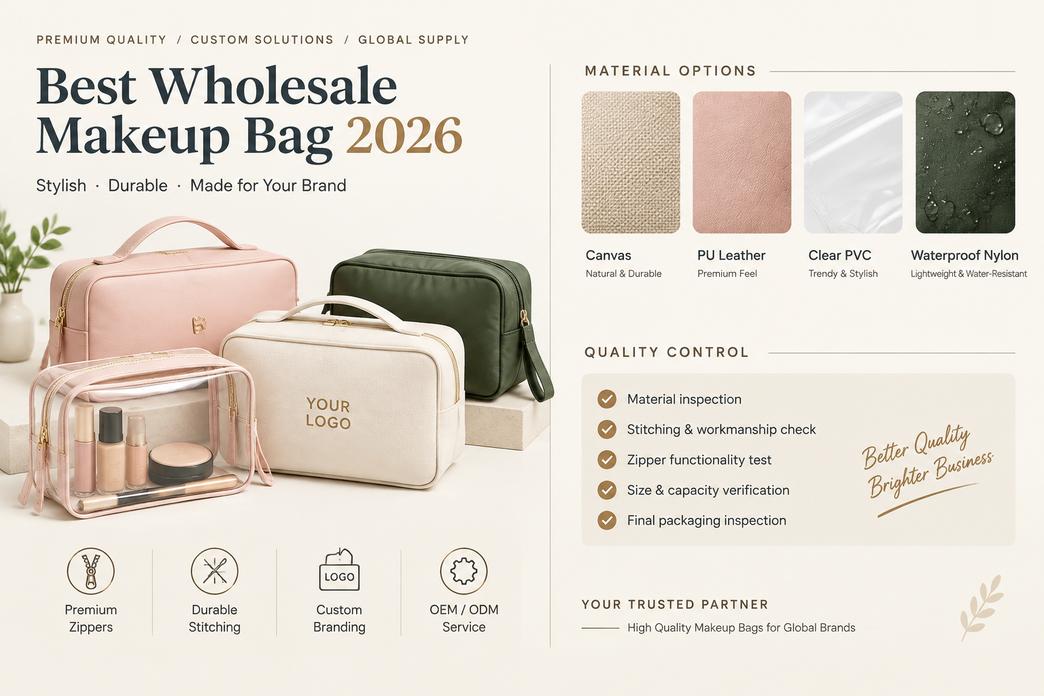
Material selection expertise: PU leather, canvas material, recycled PET
• Strong background in eco-friendly sourcing like recycled PET
• Deep knowledge of textures and finishes across PU leather, suede, and cotton blends
• Ability to align materials with your brand’s ethics and aesthetics
Short-run? Go with canvas material. Premium vibe? Try vegan leather alternatives. Need waterproofing? Coated nylon might do the trick.
Suppliers who know their stuff won’t just offer swatches—they’ll explain why certain fabrics work better for travel pouches versus vanity kits.
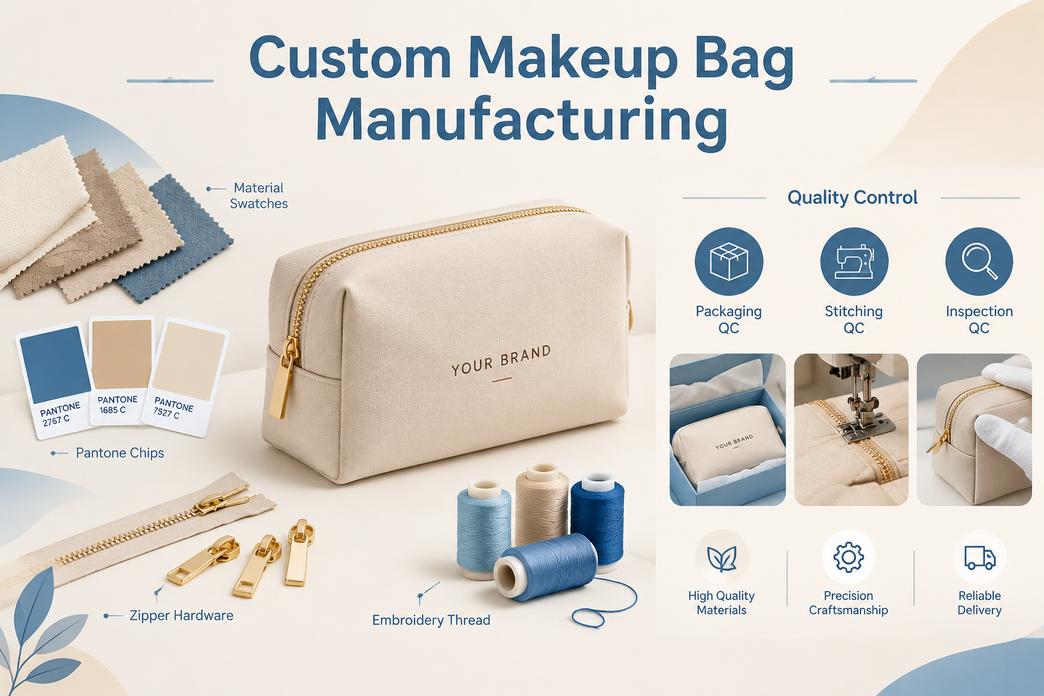
Quality control standards behind durable material and reinforced stitching
Here’s what you want to hear from your potential partner:
- “We test every batch.” ✅
- “Our seams are double-stitched.” ✅
- “Each zipper gets inspected manually.” ✅
If they’re vague about their quality control, run the other way.
| QC Metric | Benchmark Level | Test Frequency | Pass Rate (%) |
|---|---|---|---|
| Zipper Durability | 5,000 open/close | Weekly | 98% |
| Stitch Strength | 15 lbs pull force | Bi-weekly | 95% |
| Water Resistance | 30 min soak test | Monthly | 92% |
| Material Shrinkage | ≤2% after wash | Monthly | 97% |
A legit hand bag supplier backs every claim with hard numbers like these—not just pretty words.
Design assistance for functional bag features like multiple compartments
Design isn’t just about looks—it’s about smart use of space:
- Makeup brush loops that don’t fray after two weeks
- Inner mesh pockets that stretch but don’t sag
- Hidden zippers that actually stay hidden
Step-by-step collaboration usually looks like this:
1️⃣ You submit initial sketches or mood boards
2️⃣ Supplier proposes layout changes based on feasibility & cost
3️⃣ Prototyping begins—expect at least two rounds before final approval
The best partners help you refine ideas into real-world ready bags without losing your brand voice in the process.
Global shipping, certification standards, and after-sales support reliability
Good luck selling overseas if your bags don’t meet EU or US compliance rules! A credible hand bag supplier ensures:
➤ Certifications: REACH-compliant materials, CPSIA testing for kids’ bags
➤ Logistics: On-time delivery through trusted freight forwarders globally
➤ Service: Quick replies post-delivery—especially important if there’s damage or missing units
Grouped by priority:
🗂 Certification Standards:
Must provide lab reports on request
Should include safety data sheets (SDS)
📦 Shipping Reliability:
Use trackable carriers only (DHL/FedEx preferred)
Offer customs documentation support
🛠 After-Sales Support:
Dedicated rep per client account
Resolution within 48 hours max
Topfeel checks all three boxes here—and that’s why more DTC brands trust them as their go-to cosmetic pouch manufacturer worldwide.
OEM Vs. ODM: Which Suits You?
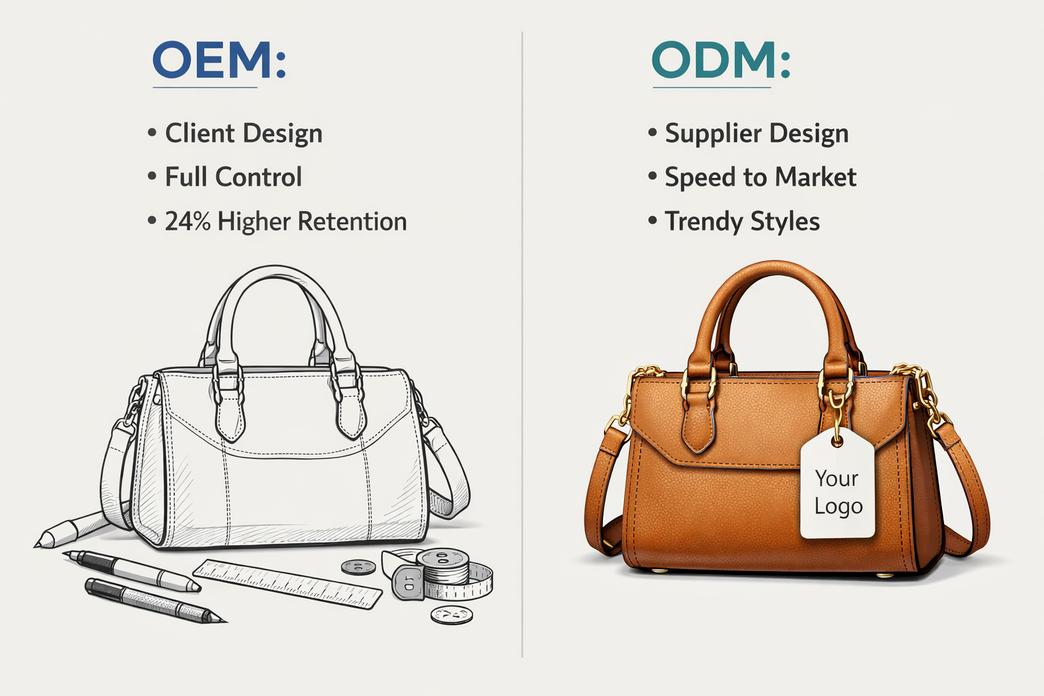
Curious which bag production route fits your beauty brand? Let’s break down how OEM and ODM differ—and which one gets you to market faster.
OEM
You call the shots from day one—every stitch, every zipper, every shade of pink. With client design in hand, a hand bag supplier follows your exact manufacturing specifications, ensuring the final product screams your brand identity.
- You control:
- The blueprint
- The materials
- The vibe
- Supplier handles:
- Tooling
- Full-scale production process
- Consistent quality control
“Brands using OEM models saw a 24% higher customer retention rate due to increased product uniqueness,” according to a 2024 McKinsey Beauty Manufacturing Insight report.
That means if you’re building a premium cosmetics label or launching an influencer collab line, this path gives you full creative grip. Topfeel offers OEM services with deep customization and hands-on support—from sourcing luxe fabrics to refining stitching details.
ODM
No time for sketches or sampling marathons? Let’s make it snappy. A solid ODM partner already has stylish bags ready to go—just slap on your logo and tweak the color palette. This is where supplier design, existing molds, and smart shortcuts shine.
- Choose from:
- Pre-designed silhouettes
- Popular fabric combos
- Trend-aligned styles
- Add your spin with:
- Logo placement
- Color tweaks
- Labeling options
With minimal fuss over product development, you can still stand out using semi-customized bags that align with current trends. Perfect for retailers who want speed without sacrificing style—or for promo teams needing branded swag fast.
Topfeel’s ODM line brings trendy designs straight from factory floors into your store shelves, lightning quick and budget-friendly.
4 Main Risks With Hand Bag Suppliers
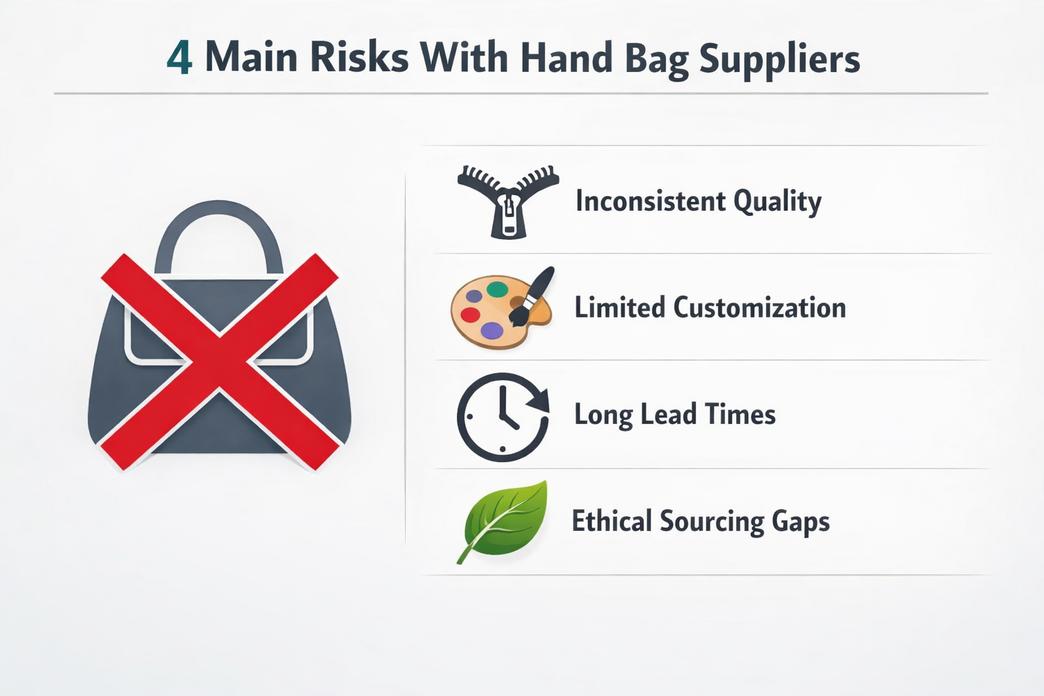
Choosing the wrong hand bag supplier can mess up your brand’s reputation, delivery timelines, and product quality. Here’s what to watch out for.
Inconsistent quality control affecting zipper closure and waterproof lining
You might think a zipper is just a zipper—until it breaks during a product demo. Poor quality control leads to:
- Crooked stitches that unravel quickly
- Broken or misaligned zipper closures
- Leaky seams that ruin the supposed waterproof lining
Inconsistent checks at the factory level often mean bags that fall apart after one use. A solid manufacturing standard should catch these issues early—but many don’t bother. That’s why Topfeel runs multi-point inspections on every production batch, not just the first few.
Limited customization options for logo printing and hardware customization
Some suppliers offer you two colors and call it “custom.” That’s not going to cut it in today’s branding game.
- You need full-spectrum options for logo printing, including embossing, foil stamping, or UV print.
- Want gold-toned zips or matte black buckles? Real hardware customization should be on the table.
- Without flexible designs, your brand ends up looking like everyone else at trade shows.
The right partner lets you play with different textures, finishes, and even eco-friendly coatings—because cookie-cutter doesn’t sell anymore.
Long production lead time caused by weak sample production workflows
⏳ Slow sampling = missed launch dates = lost sales.
A weak sample process usually means:
• Confusing communication between design and factory
• Delays in prototype approvals
• No clear timeline for revisions
This bottleneck kills momentum before mass production even begins. Topfeel speeds this up with digital prototyping tools that cut sampling time by nearly half compared to traditional methods.
Ethical sourcing gaps impacting cosmetics brands and beauty retailers
When your customers care about sustainability, your supply chain better match up—or risk blowback online.
According to McKinsey’s 2024 Consumer Pulse Report: “73% of Gen Z shoppers say they would stop buying from a brand if they learned its products were made unethically.”
That means poor records on labor conditions or lack of recycled materials can cost you more than just money—it damages trust permanently. Brands working with a vetted hand bag supplier like Topfeel gain access to verified audits and transparent sourcing data aligned with modern compliance standards like GRS and SMETA.
FAQs about Hand Bag Supplier
1. How does a hand bag supplier maintain stable bulk manufacturing for cosmetics brands?
A steady flow of production begins with sample production, tested materials, and clear delivery timelines. Reliable suppliers check machine readiness, assign supervisors to monitor daily progress, and balance orders during peak demand so that bulk manufacturing keeps pace without delays.
2. Which materials best express quality in premium pouch bags or vanity cases?
Suppliers often blend tactile beauty with endurance using:
- PU leather: sleek finish suited for cosmetic pouches or train cases; easy maintenance.
- Canvas material & nylon fabric: breathable yet strong—ideal for travel organizers needing flexibility.
- Recycled PET & velvet textile: fashionable eco-options favored by skincare companies seeking sustainability stories.
Every piece benefits from reinforced stitching, smooth zipper closure, and optional waterproof lining to protect contents.
3. What customization options allow a brand’s pouch bag collection to stand out?
Logo identity becomes vivid when artistry meets detail:
• Fine-tuned color matching through test prints before large runs.
• Crafted embossing or delicate embroidery services on PU leather surfaces.
• Hardware customization—metal tags, engraved pulls—that accent each model’s tone.
Alongside these details come functional upgrades such as removable dividers or custom dimensions balancing usability with visual flair.
4. Why is quality control essential in every stage of handbag production?
From prototype to shipment box, careful eyes trace each seam: testing zippers under stress loads and checking lining adhesion one batch at a time. A thorough QC round secures consistent standards across vanity cases or brush holders destined for high-end beauty retailers and promotional merchandise lines alike.
5. In what ways can a reliable hand bag supplier assist creative design ideas before mass rollout?
Skilled factories offer flexible support beyond sewing tables—rapid mock-ups via internal prototyping services, practical layout suggestions like hidden compartments inside clear toiletry bags, plus ergonomic advice drawn from prior collections delivered worldwide through proven logistics chains ensuring global shipping ease and dependable after-sales support.
References
- Sustainability in packaging 2023: Inside the minds of global consumers – McKinsey
- The beauty boom and beyond: Can the industry maintain its growth? – McKinsey
- New study reveals Gen Z purchasing power could be a force for ethical labor – Thomson Reuters
- Bags Quality Control – Tetra Inspection
- Strength Tests for Zippers according to ASTM D2061-07 – Centexbel


.png)



4th-5th Floor, Building B2, Yin Tian Industrial Park, Xi Xiang Road, Bao'an Dist, Shenzhen, 518102 ,China