
 English
  Korean
  French
  German
  Hungarian
  Japanese
  Russian
How Leather Handbag Manufacturers Use Innovative Customization Options
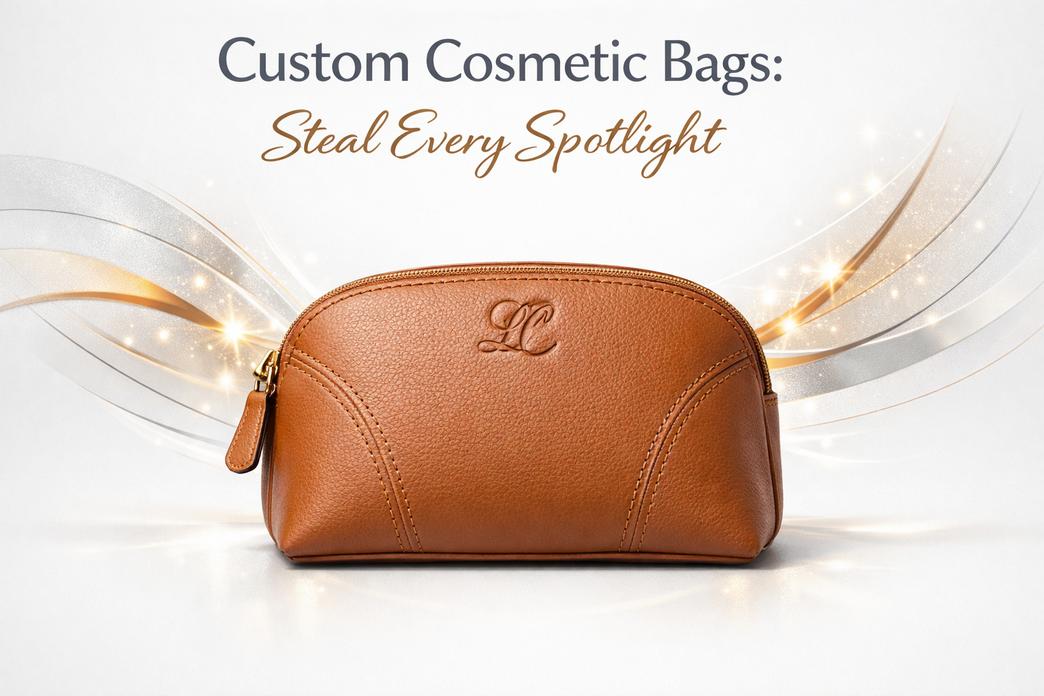
Ever walked into a boutique, picked up a sleek little makeup pouch, and thought—“Wow, this thing gets me”? That level of connection isn’t magic; it’s the quiet genius of leather handbag manufacturers who’ve ditched cookie-cutter designs in favor of wild creativity. They’re not just stitching zippers—they’re baking your brand’s soul into every seam.
Truth is, mass-produced bags have all the charm of week-old toast. Big buyers know: if your cosmetic line rolls out in generic packaging, you might as well be whispering at a rock concert. Customization isn’t some fancy bonus—it’s your loudest branding megaphone.
According to McKinsey & Company’s 2023 State of Fashion report, 71% of Gen Z consumers say they expect brands to reflect their personal values. Translation? If your bag doesn’t scream “I care about style and sustainability,” you’re already losing shelf space—and hearts—to someone who does.
So how are savvy manufacturers pulling off these high-impact customizations without sacrificing speed or scale? Buckle up—we’re spilling secrets from the production floor that’ll change how you think about what goes in (and around) your product.
Key Points: Leather Handbag Manufacturers and Customization Trends
- Beauty brands demand unique cosmetic cases: Custom designs and private label makeup pouches are crucial for differentiating beauty brands on retail shelves.
- Material sourcing reflects ethical standards: Leather handbag manufacturers are prioritizing sustainable materials like vegan leather and PU leather to meet environmental and ethical certifications.
- Customization enhances brand identity: Embossed logos, custom color matching, and unique interior layouts help cosmetics companies build a strong brand presence through their cosmetic bags.
- Manufacturing processes support customization: Integrated sewing, pattern cutting, and scalable production capabilities allow for consistent bespoke cosmetic cases in bulk without delays.
- Corporate gifting demands precision: Promotional beauty organizers require quick turnaround times, branded consistency, and high customization for corporate gifting services and retail chains.
- Quality assurance and standards: Manufacturers adhere to ISO 9001 and SGS audited standards, ensuring the durability and safety of all customized leather products.
Why Personalized Leather Handbag Manufacturers Are Embracing Customization Trends
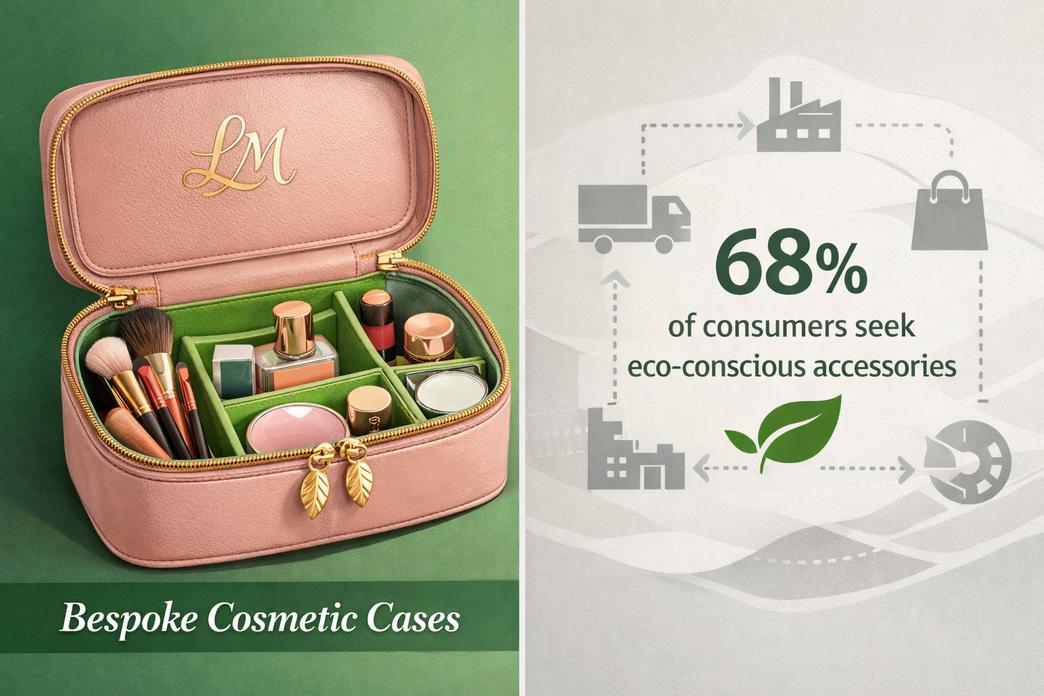
Personalized fashion is booming, and leather handbag manufacturers are riding the wave by offering more custom options than ever before.
Beauty brands demand bespoke cosmetic cases over standard wholesale makeup bags
• Beauty brands are ditching cookie-cutter looks for bespoke cosmetic cases that scream individuality.
• Private labeling allows them to craft their own identity—down to zipper pulls and stitching.
• Vibrant linings, modular compartments, and texture choices all support better product differentiation.
- Brands want packaging that mirrors their aesthetic.
- Custom shapes help products stand out on shelves.
- Limited-edition drops using unique materials build hype.
✧ Instead of blending in with bland wholesale makeup bags, niche cosmetics labels now push for exclusive custom design features.
These days, even indie players expect tailor-made packaging solutions from their go-to bag makers—and they’re willing to pay more for it.
From PU leather to vegan leather: Material sourcing shaped by ethical manufacturing
- The shift from traditional synthetics like PU leather to innovative alternatives like vegan leather reflects a deeper demand for transparency.
- Gen Z shoppers care about what’s behind the bag—not just its look.
- Suppliers now vet every yard of material under stricter sustainability criteria.
“According to McKinsey’s 2024 Fashion Sustainability Pulse Report, over 68% of consumers said they actively seek eco-conscious accessories when shopping.”
That means manufacturers who once focused only on aesthetics must now prioritize traceability and reduced carbon footprints in their supply chain—a challenge that companies like Topfeel have embraced head-on through responsible sourcing strategies.
Custom logo application drives stronger brand identity for cosmetics companies
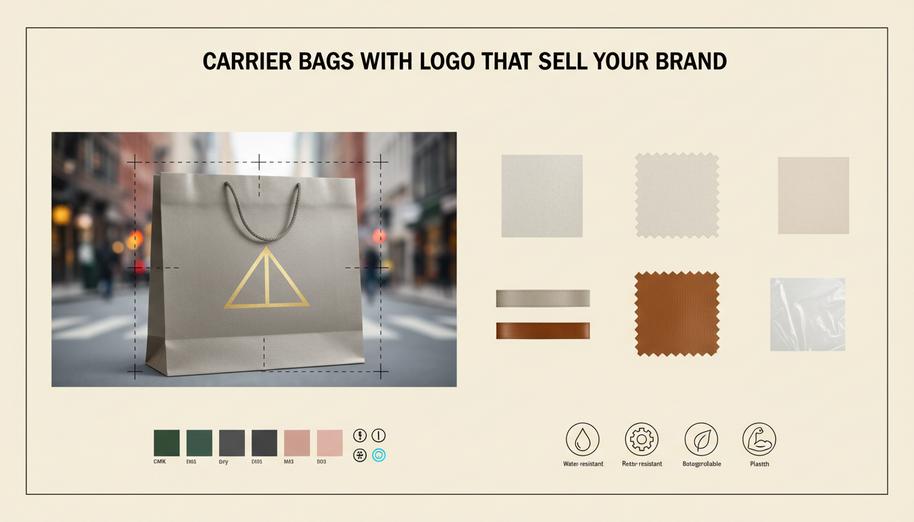
- Embossed finishes add tactile flair while reinforcing premium positioning.
- Screen printing offers color flexibility across collections and seasons.
- Heat stamping ensures durability—even after heavy use during travel or daily wear.
→ A sharp custom logo application turns a plain pouch into a portable billboard for your brand.
Multiple short descriptive segments:
• For emerging cosmetics companies, consistent branding builds trust fast.
• A well-placed logo boosts recall without saying a word.
• Bold or minimalist—either way, it creates an emotional connection with users.
By integrating these branding strategies into every pouch or organizer, modern-day private label partners help clients scale faster—and smarter—in an increasingly saturated beauty space.
Let’s be real: nobody wants their product lost in the clutter anymore… especially not when better options exist through today’s forward-thinking leather handbag manufacturers.
Customization Methods For Leather Handbag Manufacturers
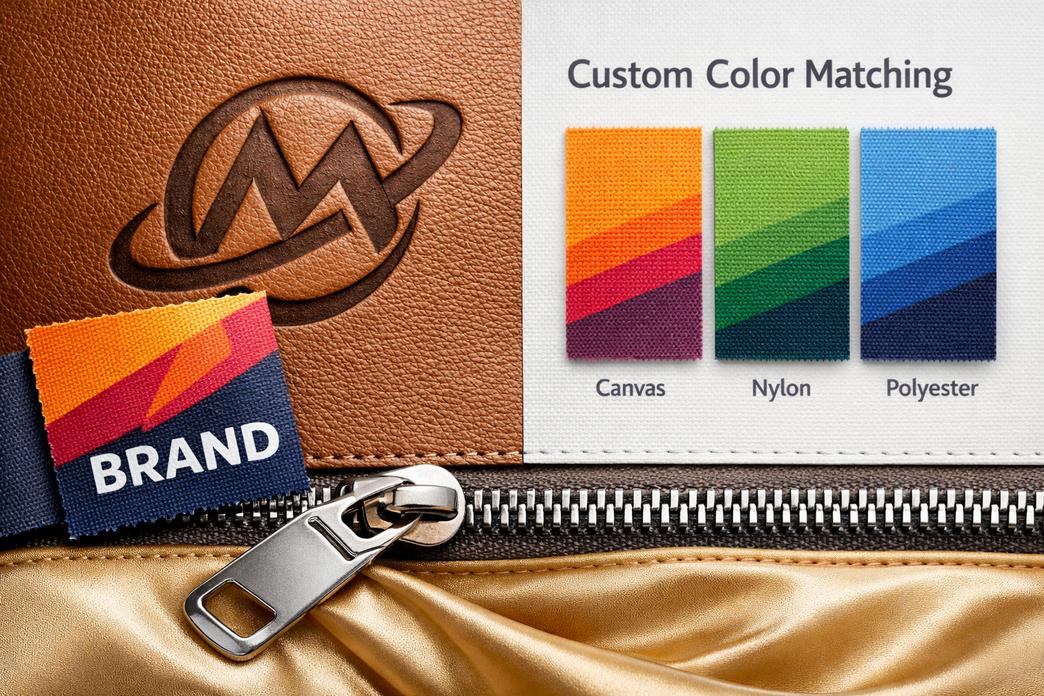
Tailored touches can make or break a bag’s appeal. These customization techniques help leather handbag manufacturers create standout pieces with lasting brand impact.
Logo embossing and screen printing for branded toiletry kits
• Add texture with embossing, giving your logo a tactile, upscale finish on leather or faux leather.
• Use screen printing for bold, vibrant branding on fabric-based toiletry kits—it pops under bright lights.
• Combine both methods to balance subtlety and visibility depending on the product line.
Custom cosmetic bags benefit from visual branding that sticks—literally and figuratively. Whether it’s a raised mark or printed ink, these techniques let handbag makers elevate their identity without saying a word.
Custom color matching across canvas textiles, nylon fabric, and polyester material
Matching colors across different materials isn’t just a flex—it’s branding done right. Here’s how top-tier handbag manufacturers pull it off:
- Identify the base Pantone shade desired by the client.
- Apply lab dips to test dye absorption across varied materials like canvas textiles, nylon fabric, and polyester material.
- Adjust chemical formulas per fabric type to maintain tone consistency.
- Run pre-production swatches through natural light tests for real-world accuracy.
| Fabric Type | Absorption Rate | Color Deviation (%) | Adjustment Time (hrs) |
|---|---|---|---|
| Canvas | High | 2% | 4 |
| Nylon | Medium | 5% | 6 |
| Polyester | Low | 8% | 8 |
Getting those hues aligned across surfaces is what separates amateur from pro in the world of custom bags.
Interior pocket configurations for private label makeup pouches
The inside of your pouch should work as hard as the outside looks good:
Include mesh-lined interior pockets for breathability—great for sponges or brushes that need airflow.
Add zippered compartments to separate liquids from powders—no mess guaranteed!
Slide-in slots help organize lipsticks or eyeliner pens neatly.
When brands go private label, they want their makeup pouches to feel personal yet practical. Smart internal layouts give users that “someone thought of me” feeling while keeping everything tidy.
Zipper pull customization and satin lining details that elevate perceived value
Zippers aren’t just functional—they’re fashion statements too:
Step 1: Choose high-shine metal finishes like matte gold or brushed nickel for your custom zipper pull design.
Step 2: Mold logo shapes into pulls using die-casting techniques—it adds character fast!
Step 3: Line interiors with soft-touch fabrics like premium satin lining, which instantly boosts perceived luxury.
Together, these small upgrades turn basic into boutique—giving customers something they’ll remember every time they unzip their bag from Topfeel’s lineup of custom creations.
3 Key Customization Factors For Leather Handbag Manufacturers
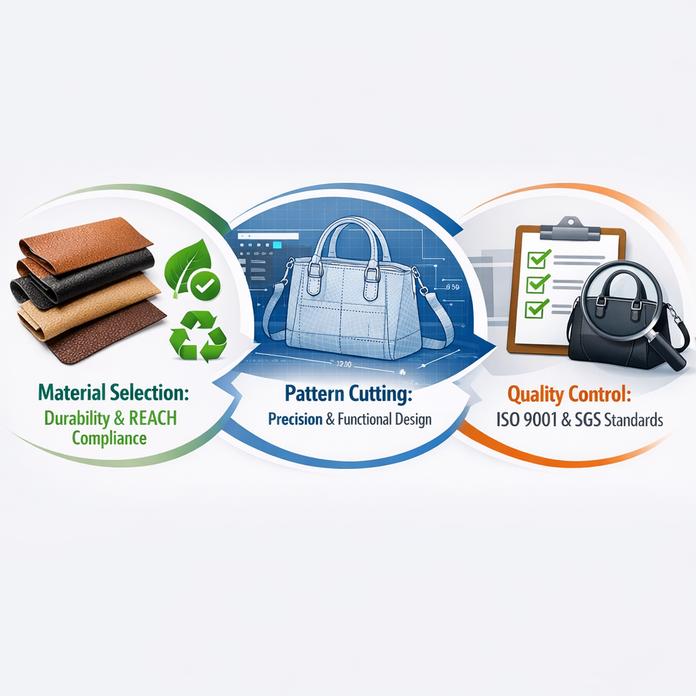
Understanding what makes or breaks custom bags starts with three key things: materials, design precision, and quality checks. Let’s break each one down.
Material selection impacts durability and REACH compliance
• Picking the right stuff isn’t just about looks—it’s about how long your bag lasts and if it plays nice with EU laws.
• Leather types like full-grain or top-grain bring different levels of toughness and texture to the game.
• If you’re leaning eco, eco-friendly materials such as plant-based PU or recycled canvas help meet modern consumer demands without sacrificing style.
- Full-grain leather = Premium durability + natural patina over time
- PU leather = Lower cost + lighter weight, but less breathable
- Vegan leather = Animal-free + often REACH-ready
✦ Always check for REACH regulations compliance—especially when selling in Europe.
Long story short? Your choice of material shapes everything from lifespan to legal risk. Smart sourcing backed by proper chemical compliance ensures your product doesn’t just look good—it holds up under pressure.
Pattern cutting and size and dimension adjustments for functional design
Precision here is everything—it’s where form meets function:
Using advanced CAD software, manufacturers can tweak every curve before cutting even begins.
Proper pattern design ensures no wasted fabric while maintaining symmetry across mass production.
Here’s how it usually goes:
- Designers sketch out functional needs based on client input.
- Engineers translate sketches into digital templates using CAD.
- Prototypes are built using accurate dimension specifications.
- Feedback leads to tweaks in shape, zipper placement, or strap length.
- Final designs are then cut using laser-guided or die-cutting methods for consistency.
Each step ensures the final bag isn’t just pretty—it works like a charm for end users who need space, comfort, and easy access.
Quality control checks aligned with ISO 9001 and SGS audited standards
Every solid bag starts with tight quality control—and that means following strict global rules:
| Quality Step | Certification Standard | Responsible Entity | Frequency |
|---|---|---|---|
| Incoming Material Check | ISO 9001 certification | QC Team | Per shipment |
| In-Process Inspection | Internal SOPs | Line Supervisors | Every 2 hours |
| Pre-shipment Audit | SGS auditing | Third-party Inspectors | Every batch |
| Defect Tracking & Review | Continuous Improvement | QA Department | Monthly Reports |
No shortcuts here: these inspections follow tested inspection protocols, ensuring each unit meets international expectations before leaving the floor.
Toss in smart use of real-time defect logs and you’ve got a system where mistakes get caught early—and customers stay happy longer.
By sticking closely to these three customization factors, any skilled team of leather handbag makers can crank out bags that don’t just meet client specs—they exceed them every time.
Leather Handbag Manufacturers Vs. Third-Party Customizers
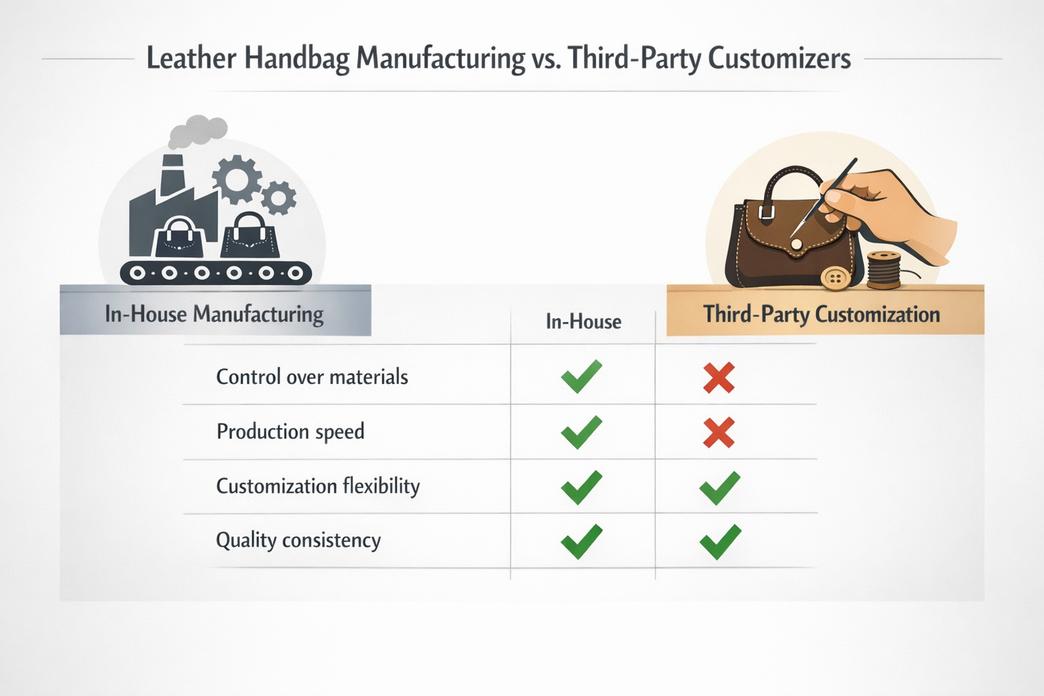
A quick dive into how making bags in-house compares with outsourcing to customizers—materials, control, and creativity all come into play.
Leather handbag manufacturers
When it comes to producing stylish accessories at scale, leather handbag manufacturers often take the cake. Why? Because they hold the reins from start to finish:
- They manage their own material sourcing, ensuring leather quality stays consistent.
- Their internal design process syncs with production timelines—no waiting on emails or third-party delays.
- In-house teams master specialized production techniques, which means fewer errors and tighter turnarounds.
Now let’s break it down even more:
- ✅ Consistency: Owning the entire chain leads to better quality control.
- ✅ Speed: No back-and-forth approvals slow things down.
- ✅ Innovation: Teams can experiment with new materials and designs quickly.
Here’s a quick peek comparing in-house vs outsourced production:
| Factor | In-House Production | Outsourced Customization |
|---|---|---|
| Control over materials | High | Medium |
| Production speed | Fast | Slower |
| Customization flexibility | Moderate | High |
| Quality consistency | Very High | Varies by partner |
This tight-knit setup lets manufacturers push boundaries in craftsmanship, leading to standout pieces that feel premium without breaking the bank. Some brands like Topfeel even use this model to keep their signature styles intact while scaling up.
Third-party customizers
Working with third-party customizers feels like hiring a tattoo artist for your favorite bag—it adds flair but also complexity. These artisans specialize in:
- Offering niche personalization services
- Using clever modification techniques
- Integrating unexpected elements through advanced accessory integration
But here’s where things get tricky:
- ✦ Communication gaps can delay projects
- ✦ You may lose some grip on your original design vision
- ✦ Managing multiple suppliers eats up time
Still, if you’re after bold changes or want deep customer involvement via direct customer input, third-party customization is gold.
They bring serious artisan skills to the table—think hand-painted panels, stitched initials, or rare material overlays through expert-level material alteration.
Not every brand needs full-scale manufacturing muscle; sometimes it’s about letting creativity shine through small-batch magic and close-knit design collaboration instead of mass output.
How Can Leather Handbag Manufacturers Offer Personalization?
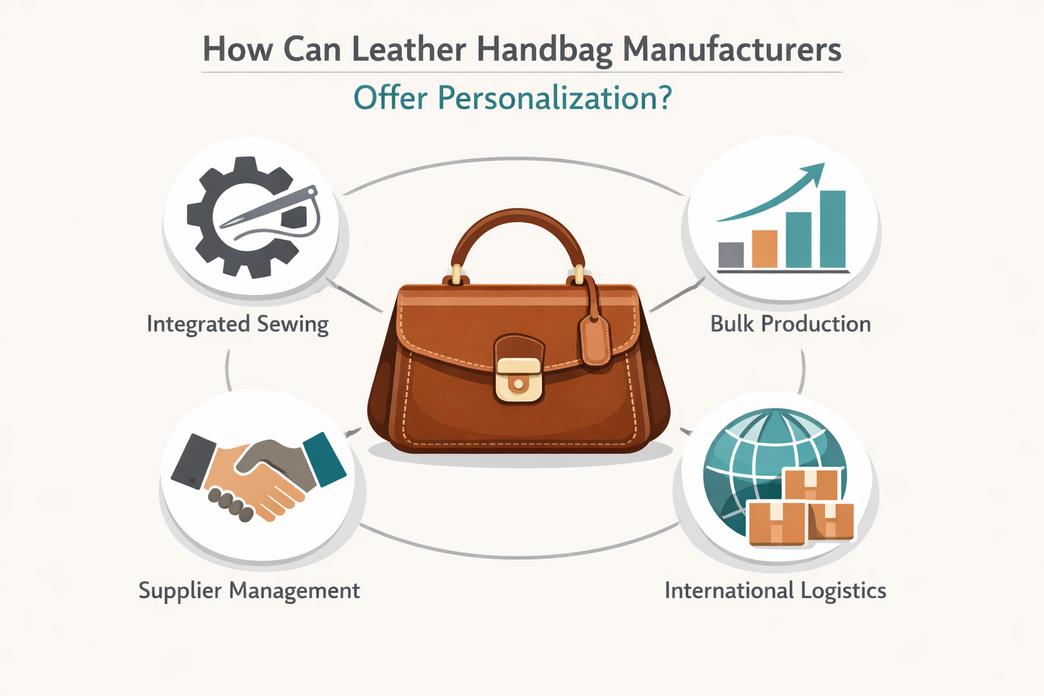
Personalized bags are more than a trend—they’re a promise. Here’s how smart makers keep that promise real.
Integrated sewing and assembly enables consistent bespoke cosmetic cases
To stay consistent while offering custom styles, most leather handbag manufacturers rely on tightly connected processes:
- Design Alignment
- Digital templates ensure every stitch matches the customer’s design.
- CAD files are synced across departments to avoid misinterpretations.
- Fabrication Stage
- Automated cutters shape materials precisely before human hands take over.
- Craftsmen then use synchronized tools for accurate stitching and edge painting.
- Final Assembly
- Specialized teams handle zippers, linings, and embellishments in fixed sequences.
- Quality checks occur at each junction to maintain output consistency.
This full-circle system keeps even the most detailed bespoke cosmetic cases looking sharp and professional, batch after batch.
Bulk production capabilities supported by production capacity planning
Scaling up without slipping up? That’s where smart planning kicks in for many top-tier handbag manufacturers:
• Forecasting demand helps allocate machines, labor shifts, and raw materials ahead of time.
• Real-time dashboards track workflow bottlenecks so managers can pivot fast.
• Inventory buffers absorb sudden spikes without stalling delivery timelines.
By balancing flexibility with scale, these teams can push out thousands of customized units without breaking stride or sacrificing quality.
Supplier relationship management ensures ethical sourcing practices
Ethical sourcing isn’t just about feel-good marketing—it’s about control:
- Direct Vendor Audits• Many leading leather handbag manufacturers conduct quarterly audits.• These include checks on wages, working hours, and material origin tracking.
- Long-Term Contracts• Locking in agreements with vetted suppliers ensures traceability of leather goods.• It also encourages partners to invest in sustainable practices like water-saving tanning methods.
- Transparent Procurement Systems• Blockchain logs now help track every hide from field to factory.• These systems reduce fraud risks while building consumer trust around sustainability claims.
When done right, strong supplier management, combined with tech-savvy tools, keeps both ethics and efficiency intact across the supply chain.
Packaging solutions optimized for international shipping logistics
Moving personalized bags globally? That takes more than bubble wrap:
Step 1: Choose lightweight but sturdy protective shells that won’t crush during transit. Many firms now use biodegradable molded inserts that hug each item snugly.
Step 2: Optimize box sizes using AI-based packing algorithms—this slashes freight costs per unit dramatically.
Step 3: Coordinate with freight partners who specialize in fashion cargo handling—temperature swings or humidity can ruin leather fast if mishandled en route.
With clever use of modern packaging tech and solid freight know-how, global delivery becomes smoother—even for delicate custom pieces like high-end pouches or monogrammed totes.
Corporate Gifts: Personalized Leather Tote Solutions
Smart gifting isn’t just about handing out free stuff—it’s a branding opportunity. Here’s how custom beauty organizers, consistent retail branding, and tight quality assurance come together to make it work.
Corporate gifting services sourcing promotional beauty organizers at scale
• Customization is king—brands want their promotional products to reflect their identity down to the zipper pull.
• Bulk orders need fast turnarounds, so manufacturing partners must be ready with reliable timelines.
• Logistics can’t lag; smooth delivery is part of the brand experience.
- Brands often request unique layouts for internal compartments in beauty organizers.
- Materials like vegan leather or recycled fabric are trending due to sustainability demands.
- Color schemes must align with seasonal campaigns, especially for fashion-forward industries.
★ The ability to scale without losing quality defines strong corporate gifting partnerships.
Every detail matters—from stitching precision to foil-stamped logos. Topfeel works closely with top-tier leather handbag manufacturers, ensuring every bag is not only branded but also functional and stylish.
Retail chains and hospitality sector demand branded consistency
- Retailers expect strict adherence to brand guidelines—logo spacing, font size, and even zipper color must match across all units.
- Hospitality groups use coordinated sets of bags across hotels globally, demanding uniformity in both material and design.
- Both sectors prioritize long-term supplier relationships that guarantee repeatable results.
“According to Mintel’s 2024 Global Gifting Trends Report, 72% of corporate buyers say visual consistency across locations directly impacts customer trust.”
Visual repetition builds memory—when guests see the same sleek black tote in Paris as they did in Tokyo, it reinforces brand reliability.
Lead time management and quality assurance protocols for high-volume orders
To hit tight deadlines without sacrificing quality:
Step 1 – Forecasting demand early using historical order data helps suppliers prep raw materials on time.
Step 2 – A solid production scheduling system ensures each batch meets its ship date without overloads or backlog issues.
Step 3 – Built-in checkpoints during production help enforce ISO-certified quality assurance standards before final packaging.
Nested within this process:
- Pre-production samples are approved by clients.
- Color swatches
- Embossing styles
- Material feel
- Mid-line inspections catch flaws early.
- Stitch alignment
- Hardware integrity
- Label placement
- Final QC before shipment ensures brand-ready presentation.
Topfeel collaborates with seasoned leather handbag manufacturers, ensuring every bulk order meets exacting standards while keeping things on schedule—even during peak gifting seasons.
FAQs
1. How do leather handbag manufacturers support large custom orders for beauty brands?
Each order begins with material sourcing audits aligned to ethical standards and REACH compliance. Pattern cutting and sewing lines are scheduled to meet bulk production timelines without losing detail in bespoke cosmetic cases or private label makeup pouches.
- Digital checkpoints under ISO 9001 maintain consistency through layered quality control checks.
- Packaging solutions adapt to global delivery needs, balancing production capacity and lead time management for repeat campaigns by international cosmetics companies.
2. Which materials bring the best balance between elegance and durability in custom cosmetic bags?
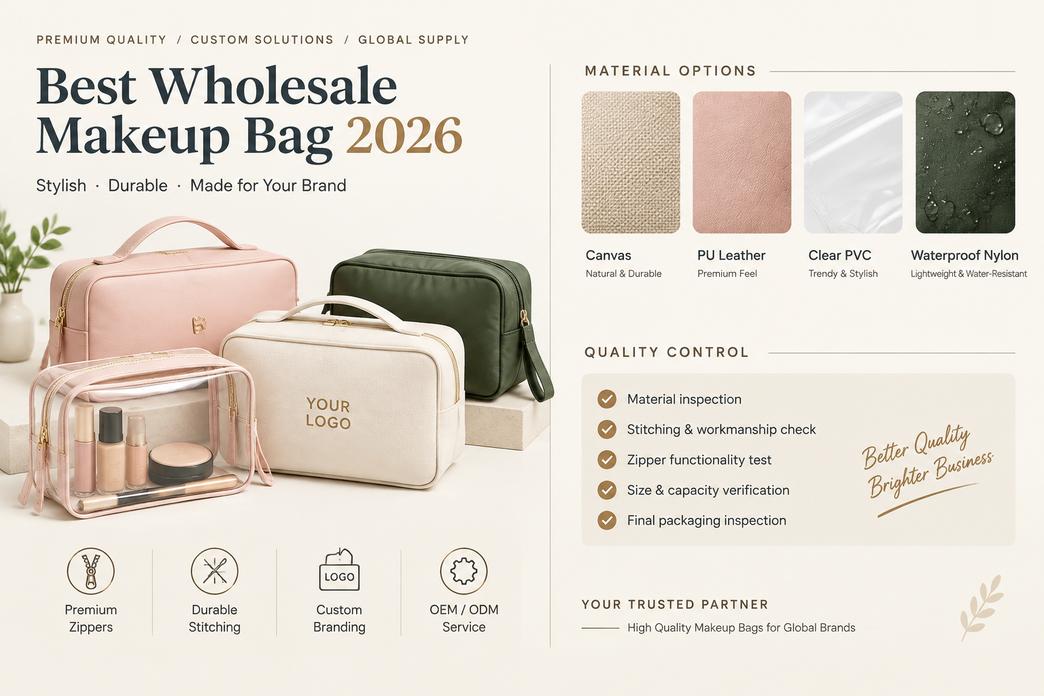
From resilient PU leather to soft-touch vegan leather, selection depends on brand tone and intended texture experience. Some beauty brands choose:
| Material Type | Core Traits | Common Use |
|---|---|---|
| Nylon fabric | Light, water-repellent | Promotional beauty organizers |
| Polyester material | Smooth finish, durable print surface | Private label makeup pouches |
| Canvas textiles & satin lining | Natural feel with luxurious interior glow | Branded toiletry kits |
These combinations allow flexible customization—logo embossing outside, satin shimmer inside—while sustaining a long-wearing structure favored by travel-focused buyers.
3. What design choices add meaningful value to promotional beauty organizers?
Every little feature carries storytelling power: how a zipper opens, where brushes rest, how color meets touch. Leather handbag manufacturers guide brands toward visible yet subtle charms that attract attention at retail counters:
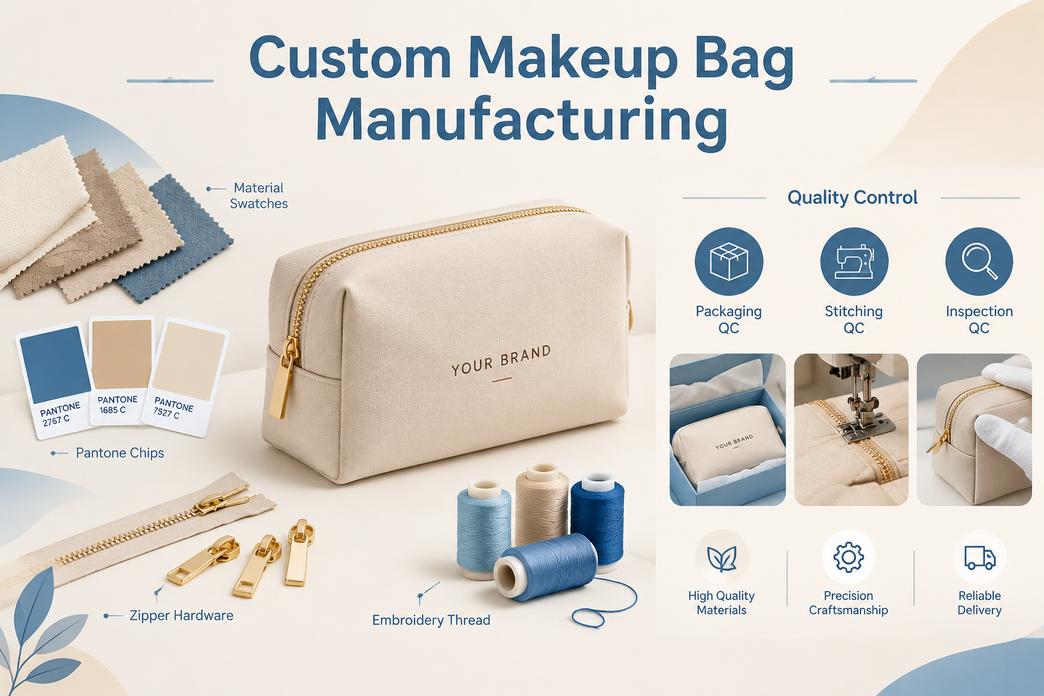
- Custom color matching tied precisely to Pantone references of existing packaging lines;
- Zipper pull customization echoing seasonal themes;
- Interior pocket configurations refined through pattern cutting insight;
- Screen printing or embossed logos calibrated after final sewing tests for perfect alignment.
Such touches turn typical wholesale makeup bags into distinct identity pieces trusted by corporate gifting services and stylish hospitality programs alike.
References


.png)



4th-5th Floor, Building B2, Yin Tian Industrial Park, Xi Xiang Road, Bao'an Dist, Shenzhen, 518102 ,China