
 English
  Korean
  French
  German
  Hungarian
  Japanese
  Russian
How to Choose the Best Cosmetic Bag Supplier for Your Business Needs
You ever scramble to prep a product launch, only to find out your cosmetic bag supplier ghosted you halfway through sampling? Or worse—delivered 10,000 bags that look like they were stitched together during a blackout. Yeah… not cute.
For businesses ordering big and bold—be it for beauty kits, hotel amenities, or promo swag—the stakes are high. One delay can throw off entire marketing campaigns; one cheap zipper turns into hundreds of customer complaints. It’s not just about aesthetics—it’s about trust.
“Consistency isn’t optional in B2B,” says Lila Zheng, Senior Production Manager at Topfeel (2024). “Buyers need guarantees—not guesses—that their specs will be met every time.”
This guide spills the real tea on choosing the right supplier—from certifications that protect your brand to custom touches that keep clients coming back with heart-eyes emojis.
Why Choose a Reliable Cosmetic Bag Supplier
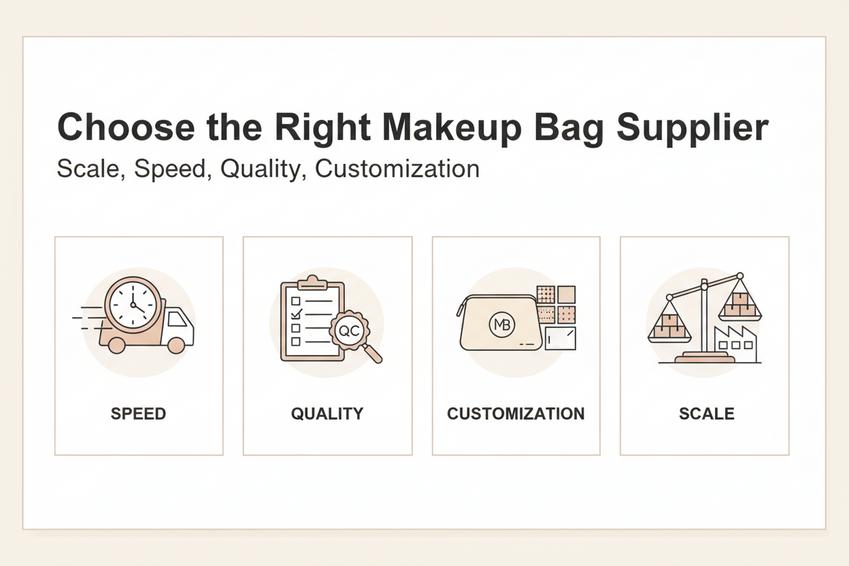
Choosing the right cosmetic bag supplier isn’t just about price—it’s about consistency, speed, and protecting your brand’s reputation.
Guarantee uniform product quality with ISO and ethical certifications
- Consistent quality comes from strict material selection, reliable stitching, and standardized fabric types.
- ISO 9001-certified factories follow clear procedures that reduce errors and defects.
- Ethical sourcing ensures no shortcuts are taken when it comes to worker safety or environmental impact.
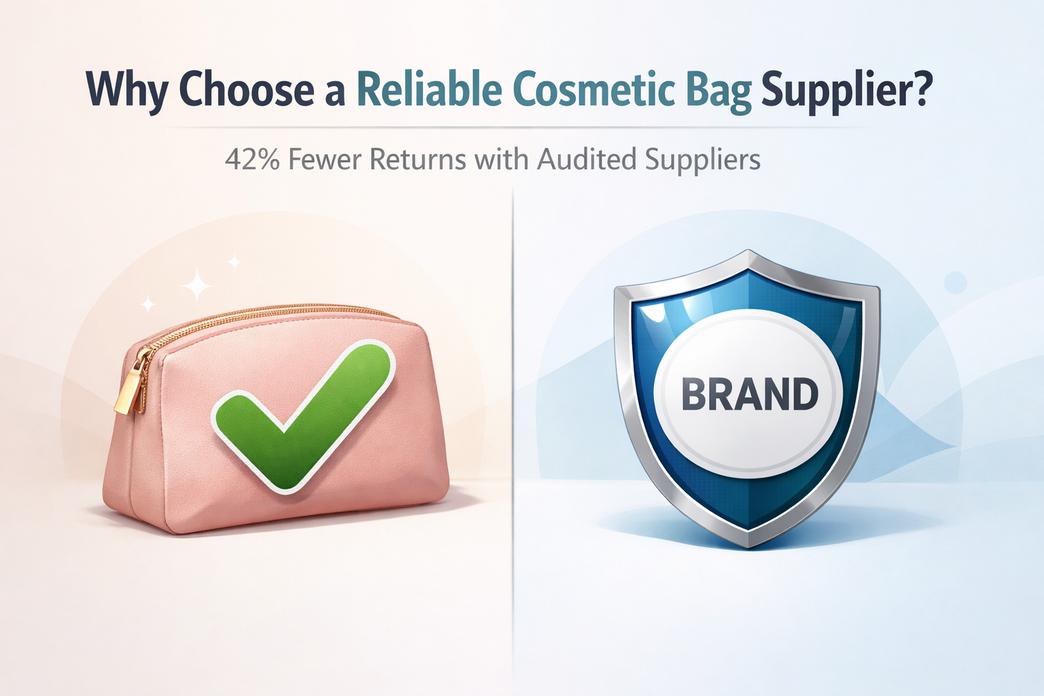
According to the 2024 Global Sourcing Integrity Index by SGS, “brands that source from audited suppliers see up to 42% fewer returns due to product faults.” That’s not just savings—it’s peace of mind.
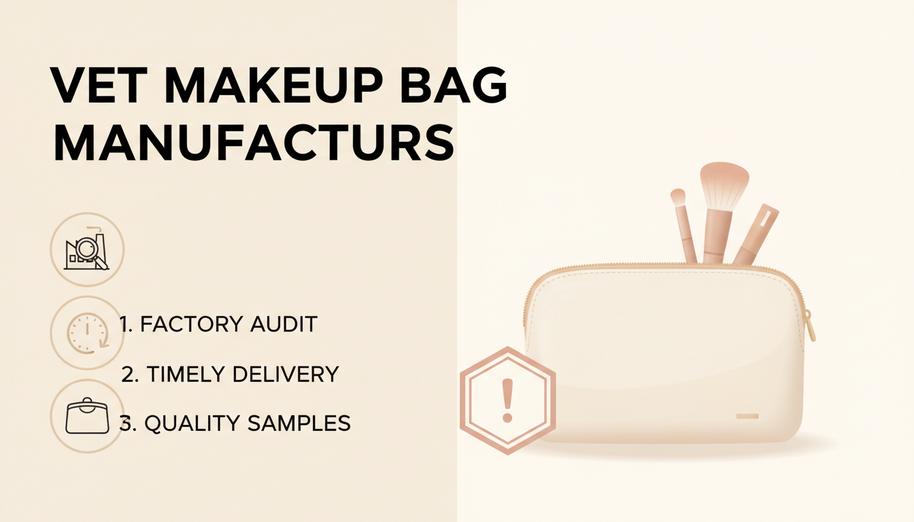
Topfeel works only with manufacturers that pass annual audits for both ethical sourcing and material durability. This means your cosmetic pouches won’t fall apart after two uses—and your customers will notice.
Prevent costly delays through effective supply chain management
- Sampling is streamlined—designs are approved faster, reducing go-to-market time.
- Lead times are predictable thanks to real-time inventory systems.
- Logistics planning slashes freight costs while ensuring on-time delivery windows.
A dependable cosmetic bag supplier like Topfeel doesn’t leave you guessing about timelines or stuck paying for emergency air freight. Their tight control over production volume, warehouse coordination, and shipping means less stress for your team—and happier customers at launch.
Protect your brand image with socially accountable sourcing
• Consumers care where their products come from—especially Gen Z buyers who value transparency.
• Working with a socially responsible partner helps align your brand with fair labor practices and low-impact manufacturing processes.
• Certifications in social responsibility aren’t just paperwork—they’re proof of commitment.
Poor working conditions or shady labor practices can tank a brand overnight. A good supplier avoids this risk entirely by investing in verified compliance programs around labor standards, environmental controls, and community support initiatives—all of which Topfeel prioritizes when selecting partners across its supply chain.
When your cosmetic bag manufacturer does things right behind the scenes, it shows up front where it matters most: in customer trust.
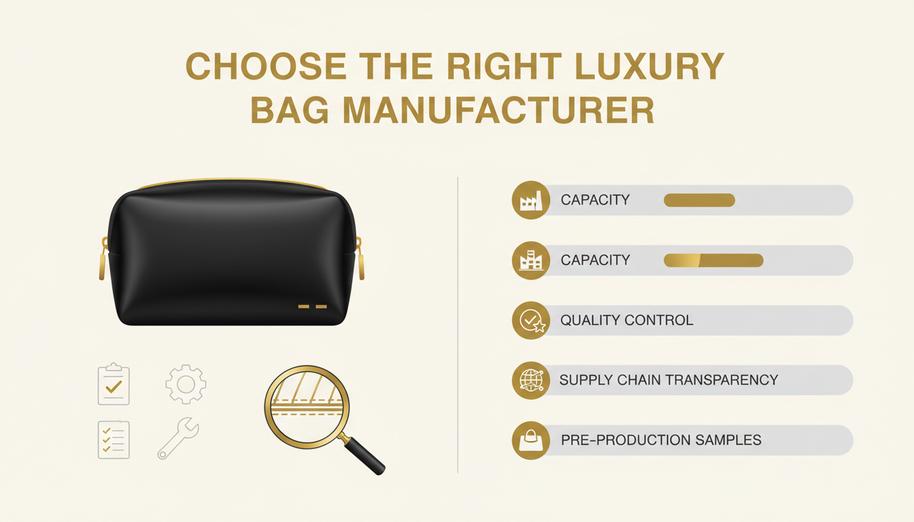
5 Key Factors for Picking a Cosmetic Bag Supplier
Finding the right cosmetic bag supplier can make or break your product line. Here’s what actually matters when you’re choosing one.
What product features guarantee long-term performance?
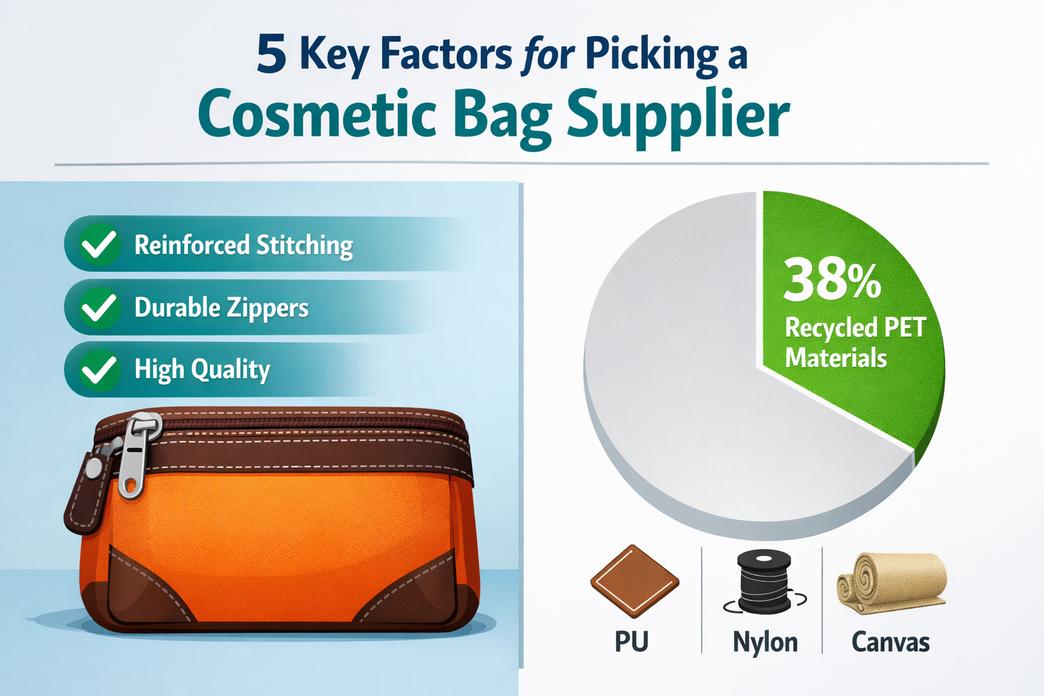
- Reinforced stitching keeps seams intact even with daily use.
- Waterproof linings stop spills from becoming disasters.
- Durable zippers don’t jam or snap after a few months.
- Quality zipper quality directly affects customer satisfaction—cheap ones ruin bags fast.
- Multiple compartments improve usability and organization, especially for travel kits.
- A strong inner lining material protects against leaks and wear.
Don’t overlook the basics. A bag may look great, but if it lacks structural strength or has shoddy zippers, it’s going straight to the trash.
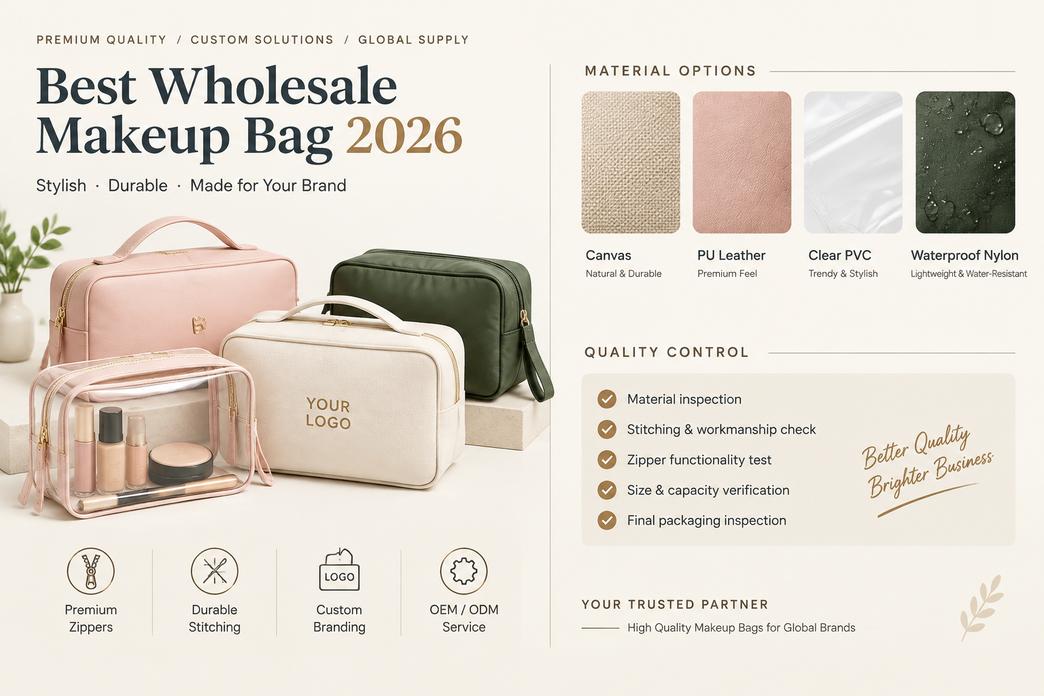
Comparing PU, nylon, canvas and recycled PET materials
Each fabric type brings something different to the table:
- PU: Sleek finish, affordable; not ideal in high heat.
- Nylon: Lightweight and great for water resistance.
- Canvas: Tough and breathable but heavier.
- Recycled PET: Eco-friendly with rising demand among green shoppers.
PU might win on looks, but nylon often takes the crown in durability tests—especially when paired with reinforced seams and coated interiors.
“In 2024, over 38% of buyers chose recycled PET materials due to sustainability concerns,” according to Greenline Market Trends Report.
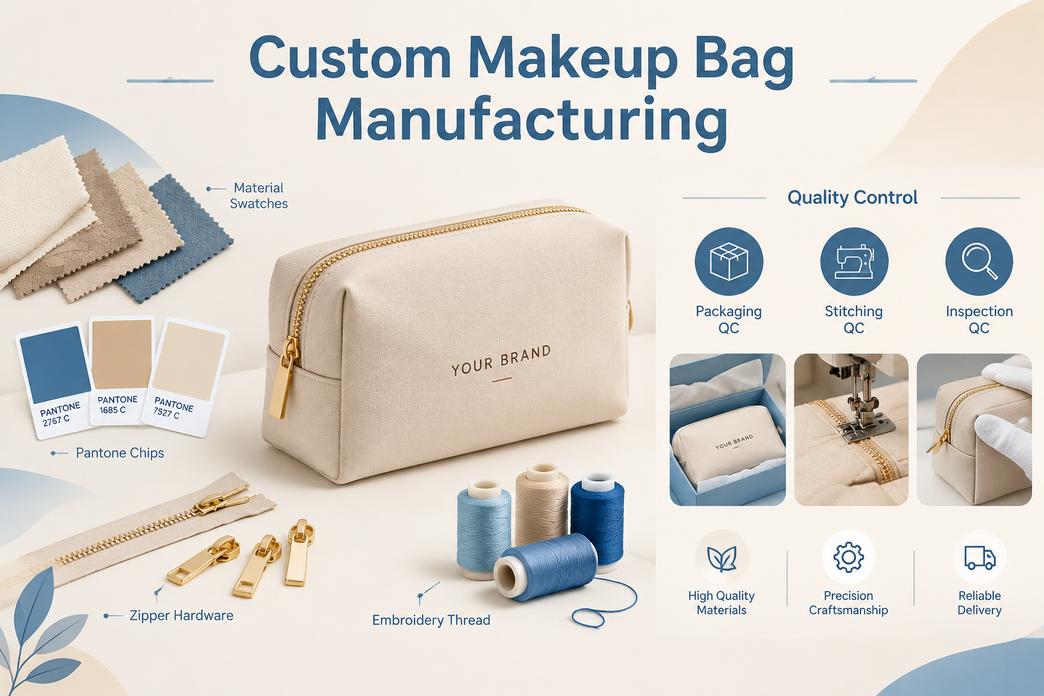
Customization services from logo printing to zipper pull design
Customization goes way beyond just slapping on a logo:
- Embroidery vs screen printing—depends on your brand vibe.
- Color matching ensures consistency across SKUs.
- Unique zipper pulls add personality that sticks in customers’ minds.
• Want full control? Ask about sample production before committing to bulk orders.
• Check how flexible their design flexibility is when it comes to compartment layout or hardware swaps like gold-tone vs matte black zippers.
Short answer? If your cosmetic bag supplier limits options, it’s probably time to switch lanes.
Avoid production delays by vetting lead times and sampling
Here’s how you keep things moving:
Step 1: Request detailed production timelines upfront—don’t assume they’re fast just because they say so.
Step 2: Always get pre-production samples; this lets you test quality early without surprises down the line.
Step 3: Ask about their capacity for rush orders, especially during peak seasons like Q4 holidays.
Late shipments hurt your reputation more than you think—and once trust breaks with retailers or customers, it’s tough to patch up again.
Ensuring ISO, REACH and Prop 65 compliance
It’s not just red tape—it’s protection for your brand:
- ISO certification shows solid internal processes.
- REACH compliance guarantees safer chemical usage in materials.
- Prop 65 ensures products don’t contain harmful toxins—crucial if selling in California or EU markets.
Suppliers that meet these standards usually have better quality control, stronger ethics around sourcing, and smoother customs clearance—all signs of a reliable partner in the long run.
Picking a cosmetic bag supplier isn’t just about price—it’s about finding someone who gets your goals and can deliver every time without drama or delay.
Local vs. Overseas Cosmetic Bag Supplier Comparison
Finding the right cosmetic bag supplier can make or break your brand’s vibe—let’s compare local and overseas options to see what fits your business best.
Local cosmetic bag suppliers
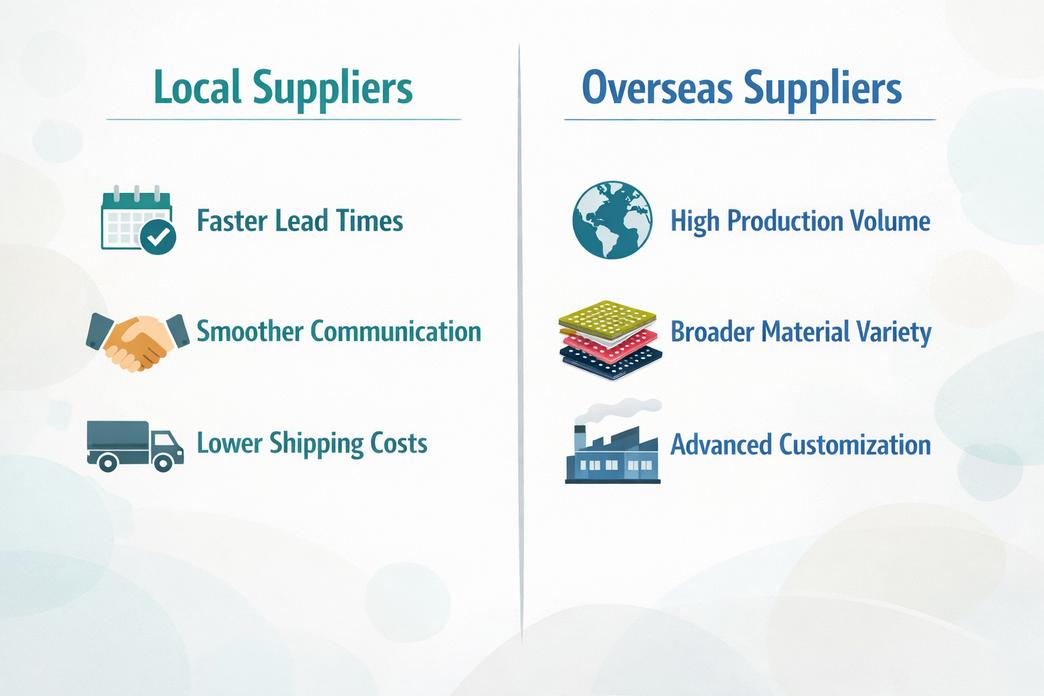
- Faster lead times mean you’re not stuck waiting weeks for stock.
- You can drop by for in-person quality control checks.
- Lower risk of miscommunication thanks to shared language and cultural alignment.
- Communication is smoother. You talk, they get it—no translation needed.
- Shipping costs are lower, especially if you’re selling locally.
- Returns and adjustments? Way easier when your supplier’s just a drive away.
But here’s the catch:
• Limited access to exotic materials or advanced manufacturing tools.
• Higher labor costs often push up unit prices.
Local suppliers are great when you want more control over production and don’t need ultra-high volumes. They’re ideal for boutique brands or those prioritizing ethical sourcing and tight deadlines.
You might sacrifice some flexibility in terms of design complexity, but you gain speed, trust, and face-to-face collaboration that keeps surprises to a minimum.
Overseas cosmetic bag suppliers
Overseas manufacturers open up a buffet of choices—from wild fabrics to high-tech finishes—and they do it at scale with serious cost advantages.
- They offer massive production volume capabilities at reduced per-unit pricing.
- Access to broader material variety, including sustainable synthetics and premium textiles.
- Advanced customization options, like embossed logos or eco-friendly dyes.
→ But don’t ignore the red flags:
• Longer delivery windows due to cross-border shipping delays
• Riskier logistics, potential language barriers, plus tricky payment terms
“Global sourcing is attractive for its innovation and price competitiveness—but it demands rigorous vetting,” notes McKinsey’s 2024 Global Sourcing Pulse Report.
The key is balance: if your brand needs high-volume output with cutting-edge design at competitive rates, overseas partners may be worth the extra planning effort.
Topfeel has built strong relationships with both local and global factories—so whether you’re scaling fast or crafting something custom, they’ve got your back as a reliable cosmetic bag manufacturer.
FAQs
1. What defines a trustworthy cosmetic bag supplier?
A dependable partner for your brand reveals quality through careful rhythm:
- ISO certification and REACH compliance ensure safe materials like clear PVC or recycled PET.
- Social accountability audits show genuine care for worker fairness.
- Transparent supply chain management keeps delivery schedules real, not promised dreams.
Trust grows when ethics meet craftsmanship — every factory audit becomes proof of human respect behind each stitch.
2. How can I secure durability in bulk cosmetic bags?
Short description + bullet point structure sings the secret of endurance: durable zippers whisper strength; reinforced stitching binds faith; waterproof lining shields beauty essentials against accidental spills; multiple compartments bring order to motioned chaos; customizable dimensions fit branding personalities from travel accessories to hotel amenities collections.
Quality control within production lead time maintains that balance — blending machine precision with artisan’s responsibility so no detail feels rushed yet none delayed.
3. Why are customization options important for beauty brands?
Customization shapes emotion into texture and tone:
• Logo printing glows identity across a velvet finish or PU leather body.
• Embroidery services paint subtle artistry upon canvas material or nylon fabric lines.
• Hardware selection allows playful details — zipper pull customization reflecting elegance inside-out design thoughtfulness.
These touches don’t simply decorate retail packaging; they translate personality into something tangible — turning promotional merchandise into storytelling pieces customers treasure beyond utility.
4. Which industries most often collaborate with large-scale cosmetic bag suppliers?
Beauty brands seeking unified presentation lead this chorus, soon joined by hotels crafting curated amenities and corporate gifting managers designing token warmth wrapped in practical charm.
The supplier’s manufacturing capabilities—bulk production flow, sampling process accuracy, freight forwarding ease—keep such partnerships alive through international shipping harmony and customs clearance clarity.
Every collaboration pulses on emotional consistency: product size may differ, but human expectation stays constant—simple reliability woven beneath eco-friendly materials telling stories bigger than mere storage spaces.
References
11 Benefits of ISO 9001 (For Customers & Your Business) – ReAgent Chemicals
SGS – When You Need To Be Sure
Recycled PET Market Size, Growth, Trends and Forecast – Global Insight Services
Understanding REACH – ECHA
About Proposition 65 – OEHHA
Supply chain risk pulse 2025: Tariffs reshuffle global trade priorities – McKinsey


.png)



4th-5th Floor, Building B2, Yin Tian Industrial Park, Xi Xiang Road, Bao'an Dist, Shenzhen, 518102 ,China