
 English
  Korean
  French
  German
  Hungarian
  Japanese
  Russian
How to Design the Perfect Carrier Bags With Logo for Retail
In retail, carrier bags with logo extend the brand experience beyond checkout. Specify substrate, artwork, construction, and inspection.
Smart design starts with load and reuse, then aligns materials, printing, and construction.
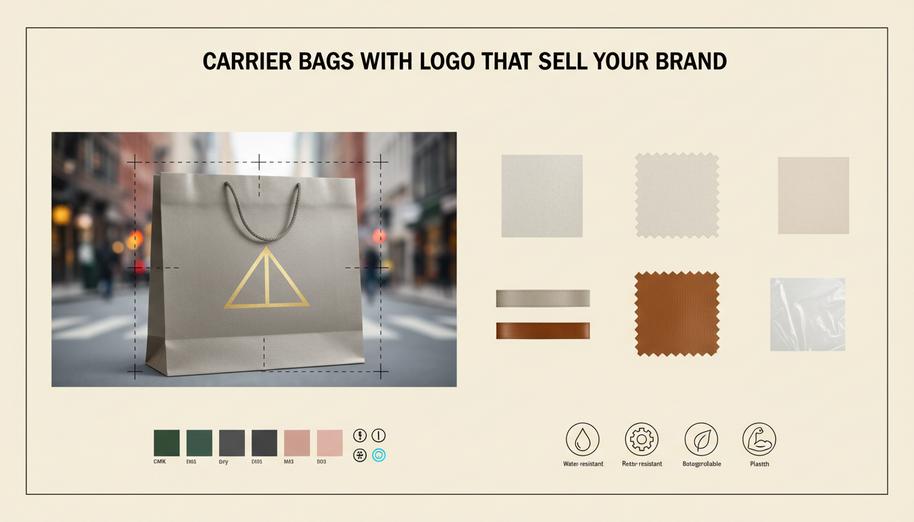
Quick Answers: Street-Level Billboards—Carrier Bags with Logo
- Select Materials: Choose canvas, cotton, PU leather or recycled polyester for durability, texture and eco-credentials.
- Logo Placement: Follow branding guidelines to balance visibility, spacing and printing method (screen, digital or embossing).
- Style & Function: Match tote, pouch or travel kit to use case; add sturdy handles, zippers and interior pockets for longevity.
- Color Consistency: Proof artwork with calibrated profiles; test mock-ups to ensure high-contrast logos and batch-to-batch uniformity.
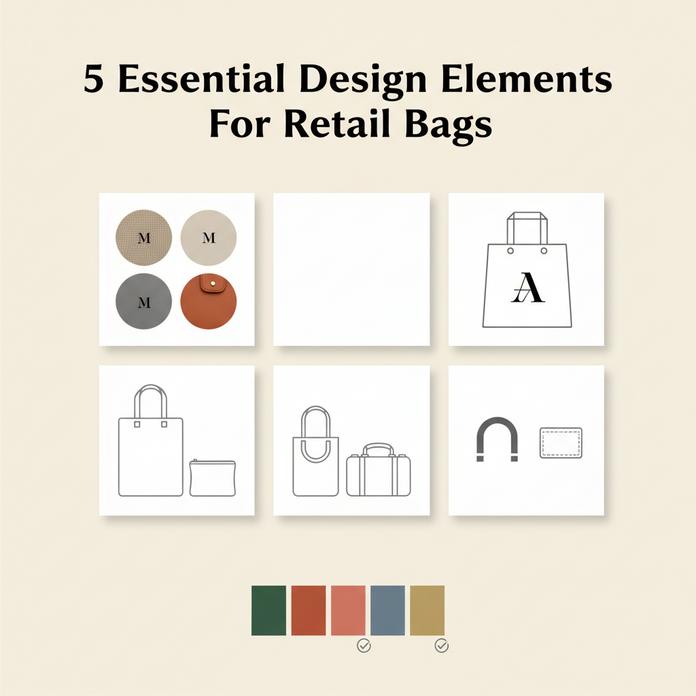
5 Essential Design Elements For Retail Bags
Treat material, branding, format, function, and color as one retail specification.
Bag Material and Texture
- Material choice
- Canvas
- Soft grip, woven construction, printable surface
- Cotton
- Breathable, soft hand; specify fabric thickness
- Polyester
- Water resistance and crisp artwork
- PU leather
- Smooth finish that can suit embossed or printed branding
- Canvas
- Texture decisions
- Matte vs slight gloss
- Emboss-friendly surfaces
- Performance check
- Print adhesion
- Wear resistance and care
- Skin comfort
Logo Placement & Branding Guidelines
Clean logo placement keeps the mark readable. Balance size with clear space and choose a substrate-compatible process. This screen-printing overview explains one available option.
Choosing the Right Bag Style
- Style match
- Tote
- Daily errands; review the tote format
- Pouch
- Small goods, compact carrier bag with logo
- Travel kit
- Organized storage
- Tote
- User habits
- Grab-and-go vs planned packing
- Display impact
- Hanging vs folded retail view
Functional Features like Handles and Interior Pockets
- Pick handles: short for grip, long for shoulder carry
- Add zippers to secure items
- Build interior pockets for sorting
- Reinforce stress points for durability
- Test a defined load on each production batch
Perfect Color Matching for Logos
Short runs still need controlled color matching.
Digital proofs set expectations.
Fabric dye and ink must align.
Consistent tones protect the brand palette.
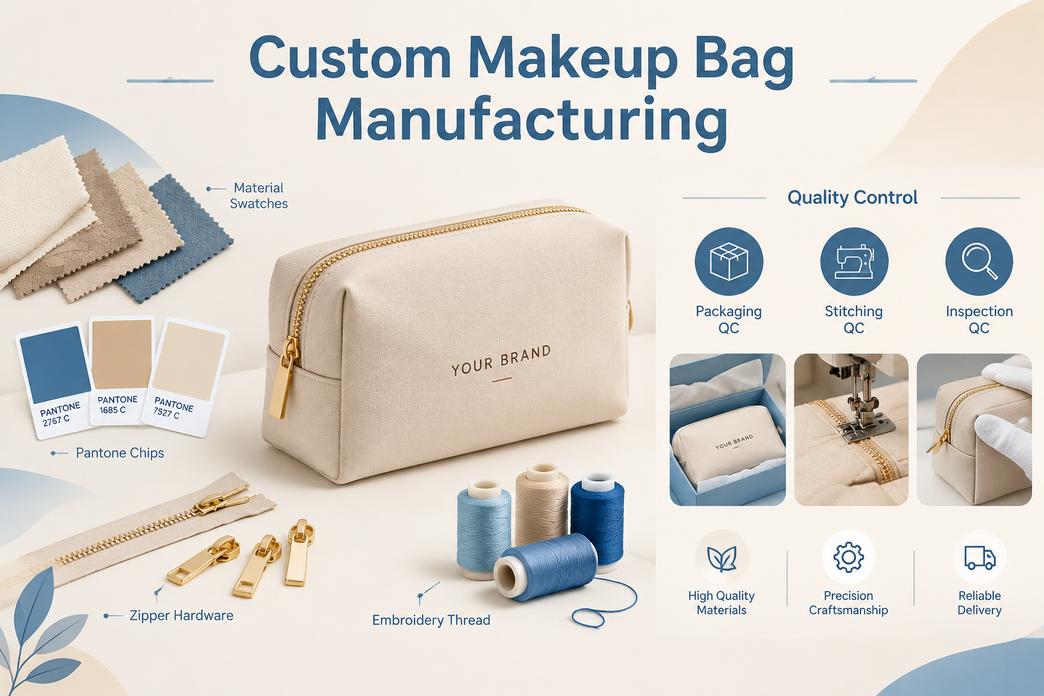
Topfeel Bag checks batch color against a physical sample under agreed lighting.
🎯 Complete the retail design: Let material choice govern logo placement and functional performance within the retail style. Topfeel Bag provides Pantone or swatch color matching, giving the sample a measurable approval point before production.
Compare the tote route and screen-print guide to decide what the sample must validate.
How To Choose Eco-Friendly Bag Materials
Material selection should account for reuse, decoration, sourcing evidence, and end-of-life systems.
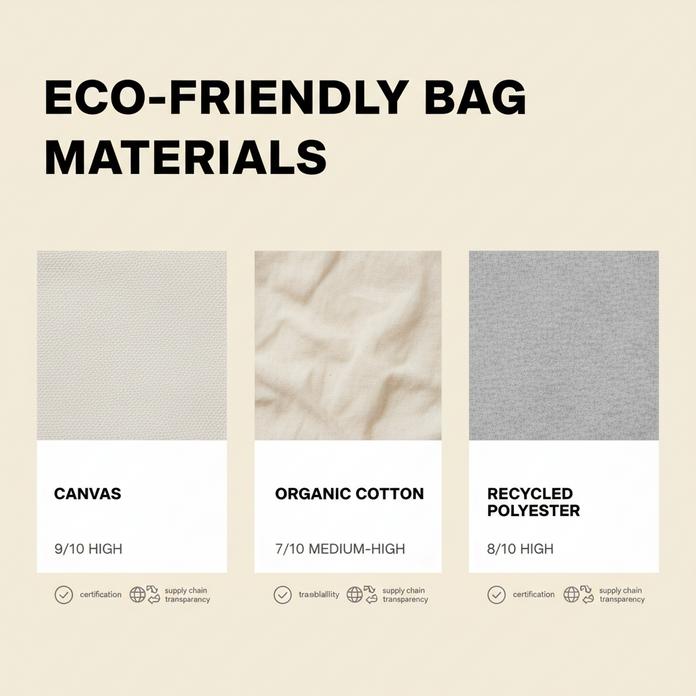
Sustainable Material Options: Canvas, Organic Cotton, Recycled Polyester
- Core picks for logo carrier bags:
- canvas
- sourced with documented canvas composition, weight, and finish
- strong grades should be prototyped for repeated use
- organic cotton
- grown under claims verified through the GOTS standard
- softer texture; verify end-of-life claims
- recycled polyester
- made with a documented recycled-content claim
- resists moisture, stable printing surface
- canvas
- How to match material to use:
- Retail totes → canvas for durability
- Promo carrier bags with logo → organic cotton for feel
- Outdoor use → recycled polyester for resilience
| Material | Durability Score | Print Compatibility |
|---|---|---|
| Canvas | 9/10 | High |
| Organic Cotton | 7/10 | Medium-High |
| Recycled Polyester | 8/10 | High |
Assessing Material Certifications and Compliance Standards
- Quick checks:
- material certification should match the exact sourcing claim; FSC chain-of-custody certification tracks forest-based material through a supply chain
- compliance standards must match the market; EU buyers can check REACH restrictions
- Dig deeper:
- Review eco-labels and scope, such as STANDARD 100
- Validate certificate numbers and scope through the scheme owner; review the Global Recycled Standard
- Track certified inputs and production batches through traceability records
Good bags need proof.
Material Sourcing and Supply Chain Considerations
- Start with raw material origin—know where fibers begin
- Evaluate ethical sourcing and responsible production practices
- Map manufacturing processes for waste and energy use
- Improve supply chain management with supplier transparency
- Refine shipping through logistics optimization
Smooth sourcing connects supplier, claim, specification, sample, and batch. Review language against the FTC Green Guides and UK carrier-bag charge guidance.
Paper Vs. Plastic: Carrier Bags Compared
Compare material, handles, inks, coatings, expected reuse, and disposal route for each format.
Paper Bags
- Core build
- Kraft base with recycled fibers
- supports claims only when recycled content and sourcing are documented
- boosts recovery potential only when coatings and adhesives are compatible
- Handles
- twisted or flat for comfort
- tuned for retail packaging weight
- Kraft base with recycled fibers
- Brand impact
- Printability
- crisp printing when ink, coating, and substrate are compatible
- easy customization for campaigns
- Premium feel
- works well for boutique retail packaging
- Printability
- Limits to watch
- Moisture
- weakens structure fast
- Load
- not ideal for heavy items
- Moisture
“Paper-based retail packaging demand continues rising as shoppers link fiber materials with responsible sourcing,” notes a 2025 update from Smithers.
For paper bags, consult the European Commission’s packaging-waste overview for EU-bound programs.
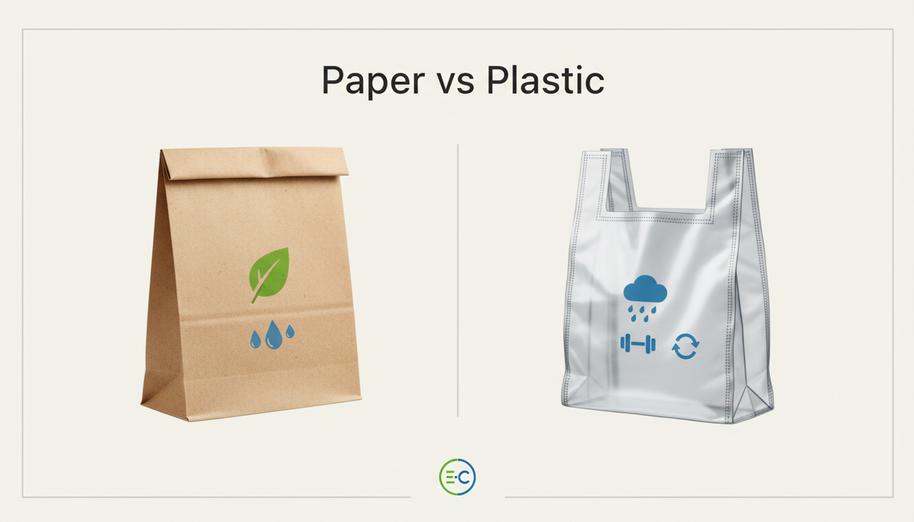
Plastic Bags
Quick take:
- Polyethylene construction is lightweight; compare plastic definitions
- Naturally water-resistant at the material level; seams and construction still matter
- Designed for reusability only when handles and seams suit the intended load
Short notes:
- Better for heavy retail packaging
- Flexible customization keeps branding clear
- Improved recyclability depends on local systems
Symbols of use:
- wet conditions
- bulk goods
- repeat carry
Plastic-bag outcomes depend on reuse, collection, and processing. UNEP describes a shift toward circular plastics.
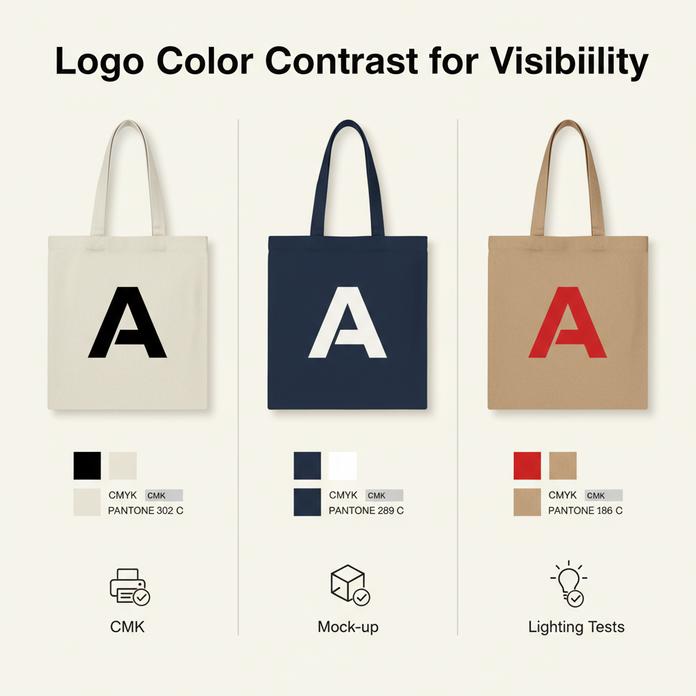
Logo Color Contrast For Visibility
Contrast, scale, substrate, and lighting determine whether a logo remains readable in use.
Choosing a High-Contrast Color Palette
- Core idea: push contrast between foreground and background to boost readability and legibility on carrier bags with logo.
- Define the palette using basic color theory
- Check light vs dark against actual bag material
- Test quick swaps (ink vs substrate)
- Candidate pairs: black/cream, navy/white, red/kraft—confirm each on the real substrate
Nested checks:
- Material
- Matte → softer edges, needs stronger contrast
- Gloss → reflections reduce legibility
- Environment
- Indoor retail
- Outdoor glare
Topfeel Bag often prototypes two palettes per SKU so custom carrier bags stay readable across settings.
Ensuring Accurate Color Matching in Artwork Files
Short notes: screens use RGB; print process control uses CMYK or spot specifications. Keep profiles consistent.
Multi-step:
- Build files in correct file format (AI/PDF)
- Assign profiles (CMYK/Pantone)
- Run a physical proofing step on the selected material
Data check:
| Mode | Use Case | Risk | Control |
|---|---|---|---|
| CMYK | bulk print | dull reds | profile |
| Pantone | brand match | cost | spot ink |
| RGB | previews | mismatch | convert |
| Mixed | hybrid runs | drift | proofing |
Repeat tests on carrier bags with logo and logo on bags to keep tone consistent.
Mock-Up Testing for Optimal Logo Visibility
Test the mock-up under the lighting conditions in which the bag will be seen. Gather feedback during design review and record the approved viewing conditions.
Nested flow:
- Prototype
- Paper, non-woven, coated
- Testing
- Distance read at agreed near and far viewing points
- Motion blur (carry swing)
- Lighting / Environment
- Warm retail
- Cool office
- Outdoor sun
Use W3C contrast guidance for a logo screen precheck, then approve print.
Step-By-Step: From Concept To Prototype
Getting a concept to sample requires controlled files, approvals, and acceptance criteria.
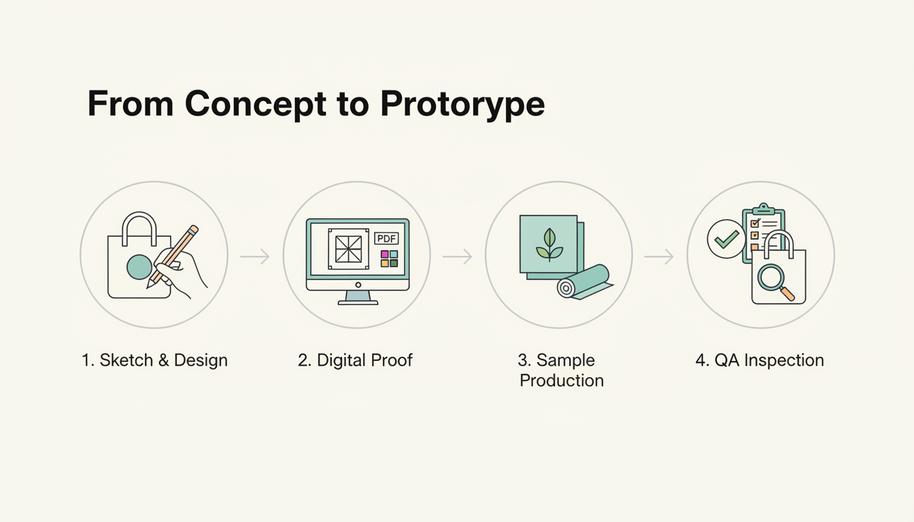
Initial Sketches & Logo Placement Layout
- Core sketches and design concept
- Define size, gusset, handle drop, load
- Test logo placement on front/back/side
- Start with visual ideation
- a. Rough mock-up for tote, shopper, drawstring
- b. Check proportion vs. product size
- Placement logic
- a. Eye-line zones for carrier bags with logo
- b. Print-safe margins and bleed
- Brand fit
- a. Align colors and tone
- b. Approve layout for logo bags
Short passes tighten details; a clean layout avoids rework later.
Digital Artwork and Proofing Process
- Build digital artwork in design software
- Convert to vector graphics
- Set color profiles
- File prep
- a. CMYK/Pantone for print-ready files
- b. Scale for custom carrier bags sizes
- Proofing loop
- a. Soft proof, then hard proof
- b. Quick revisions on edges, stroke, fill
- Output check
- a. Compatibility with screen print or embroidery
- b. Final sign-off for carrier bags with logo
Use one controlled file version for the approved artwork, dimensions, color references, and print process.
Sample Production with Material Prototyping
- Run sample production
- Select fabrics and trims
- Validate bag structure
- Material prototyping
- a. GSM, coating, and finishes
- b. Handles, stitching density
- Make a physical sample
- a. Apply printing techniques
- b. Inspect seams and stress points
- Testing
- a. Load, drop, rub abrasion
- b. Compare against bags with logo brief
Topfeel Bag’s documented workflow moves from brief and specification to sampling, pre-production approval, bulk production, final QA, packing, and shipping.
Pre-Production Quality Assurance Inspection
- Set quality standards
- Plan pre-production inspection
- Lock final approval
- Criteria
- a. Defect identification list
- b. Consistency checks across units
- Lab & floor
- a. Durability testing
- b. Color and print adhesion for carrier bags with logo
- Gate
- a. Fix issues fast
- b. Release for bulk after approval
Record QA acceptance criteria before approval. Sampling typically takes 7–10 days after the specification and artwork are locked with stock materials.
🧭 Approve with fewer surprises: Treat sketches, artwork, the physical sample, and pre-production inspection as one controlled approval path.
Topfeel Bag’s sampling workflow typically takes 7–10 days after specification lock and artwork confirmation with stock materials, followed by PP-sample approval and in-process QC. Review custom cosmetic-bag formats to define what the prototype must prove before bulk production.
Scenario: Luxury Boutique—Premium Bag Finish
A polished boutique result depends on coherent material, surface, hardware, lining, and construction.
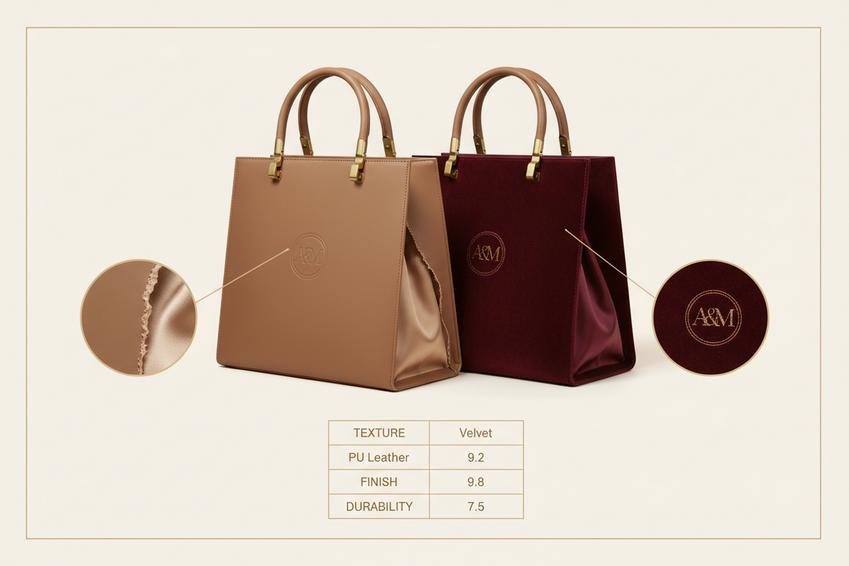
Choosing PU Leather and Velvet Fabrics
Compare the core material for hand feel, wear, decoration, and structure.
- Key fabric choices
- PU leather: smooth synthetic finish, easy to emboss
- velvet: soft textile depth, rich color hold
- Performance comparison
| Material | Texture Score (1–10) | Durability Index | Cost Level |
|---|---|---|---|
| PU leather | 8.5 | High | Medium |
| velvet | 9.2 | Medium | Medium-High |
| Mixed fabric | 9.0 | High | High |
- Selection flow
- Define brand tone
- Minimal → PU material
- Opulent → velvet textile
- Match with carrier bags logo placement
- Test wear resistance
- Define brand tone
Topfeel Bag lists PU, satin, flocked fabric, cotton, and cotton linen; read the velvet guide, then confirm the choice in a sample.
Incorporating Embossing and Debossing Techniques
A clean logo can use embossing or debossing for tactile identity.
- Technique layering
- Base surface prep
- Smooth texture ensures crisp impression
- Method choice
- Raised: embossing
- Pressed-in: debossing
- Base surface prep
Steps that keep it sharp:
- Align design depth with material thickness
- Control pressure for even impression
- Finish edges to avoid distortion
Approve tactile logo branding depth, edges, and placement on the selected material.
Luxury Components: Metal Handles and Satin Lining
Evaluate interior and hardware together.
- Exterior component upgrades
- Polished metal handles
- Cool touch
- Strong grip
- Polished metal handles
- Interior satin lining
- Smooth interior glide
- Protects contents
Nested build approach:
- Outer accessory system
- Handle anchors
- Reinforced hardware plates
- Handle anchors
- Inner luxury finish
- Soft satin lining
- Hidden seams
- Structured pockets
- Soft satin lining
Short notes: clean edges. No loose threads. Balanced weight.
For a premium format, evaluate the material, tactile logo, hardware, lining, handle anchors, pockets, and overall weight as one system.
✨ Make the finish coherent: Coordinate PU or velvet, embossing or debossing, and luxury components such as handles and lining in one sample.
Topfeel Bag supports material-dependent embossing/debossing and metal plates, plus reinforced construction at handle joins. Use the handheld-bag collection to prepare a premium construction brief, then submit the specification and artwork for a physical sample and PP approval.
References
- Chain of Custody Certification — Forest Stewardship Council
- Global Recycled Standard — Textile Exchange
- Green Guides — U.S. Federal Trade Commission
- Packaging waste — European Commission
- Plastic pollution — UNEP
- Substances restricted under REACH — ECHA
- Carrier bag charges: retailers’ responsibilities — UK Government
- OEKO-TEX STANDARD 100 — OEKO-TEX
- Understanding Success Criterion 1.4.3: Contrast (Minimum) — W3C
- Global Organic Textile Standard — Global Standards
- ISO 12647-2:2013 — ISO
- ASTM D5264-98(2019) — ASTM International


.png)



4th-5th Floor, Building B2, Yin Tian Industrial Park, Xi Xiang Road, Bao'an Dist, Shenzhen, 518102 ,China