
 English
  Korean
  French
  German
  Hungarian
  Japanese
  Russian
Professional Makeup Bag Manufacturer: Custom Designs for Your Brand
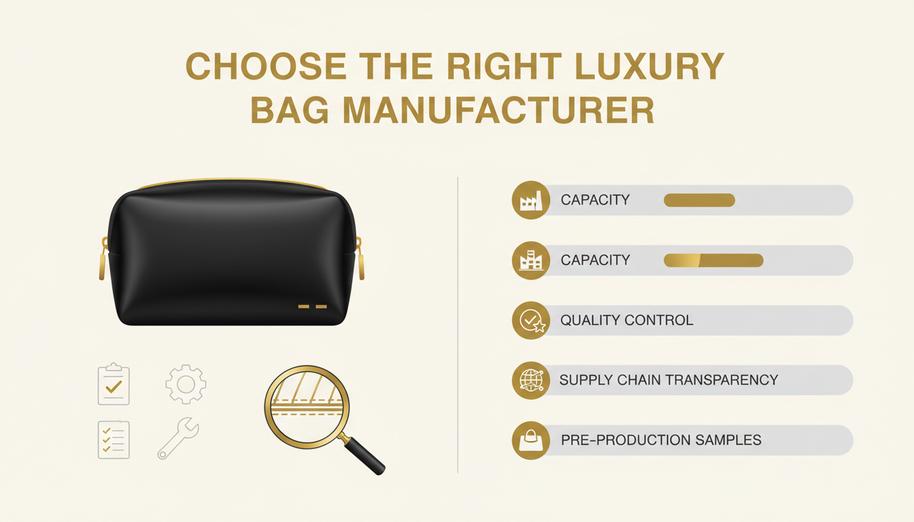
A makeup bag manufacturer can make or break a bulk launch: mismatched color, crooked logo, or flimsy zipper creates an expensive headache. Brands need production that aligns specifications, quality, packaging, and repeatability.
From dimensions to Pantone colors and private-label details, sourcing starts with a clear specification.
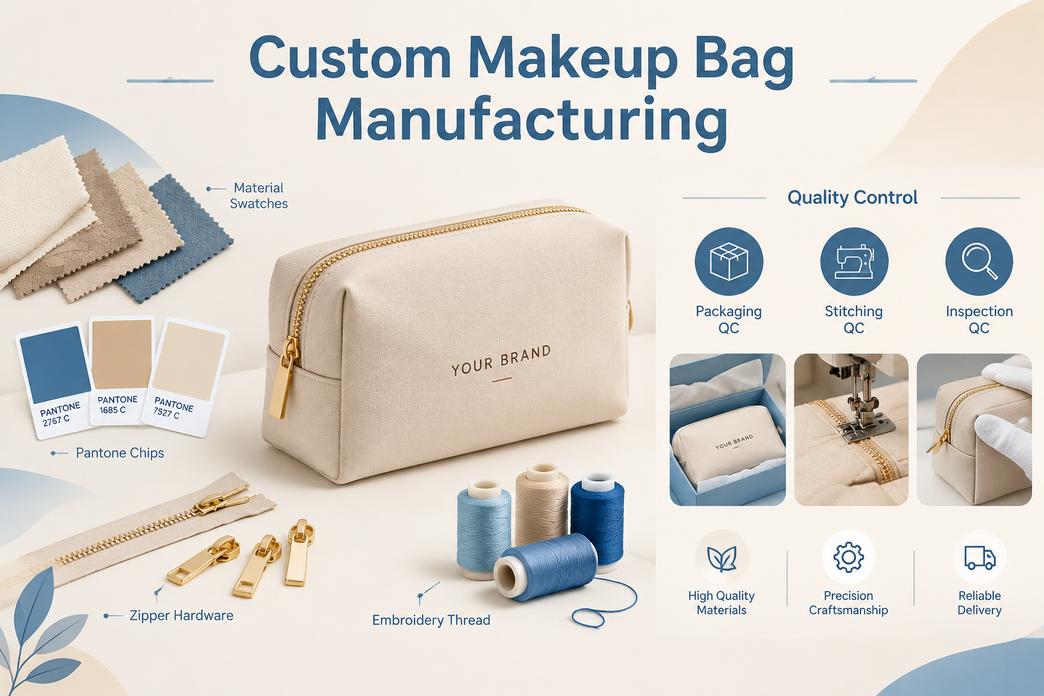
Key Insights for Makeup Bag Manufacturer Partnerships
→ Ideal Materials: Match material and lining to the brief.
→ Custom Design: Define dimensions, colors, compartments, and holders.
→ Hardware Selection: Specify pullers, D-rings, snaps, and reinforcement.
→ Production Techniques: Match logo process and construction method.
→ Packaging & QC: Set protection and inspection requirements.
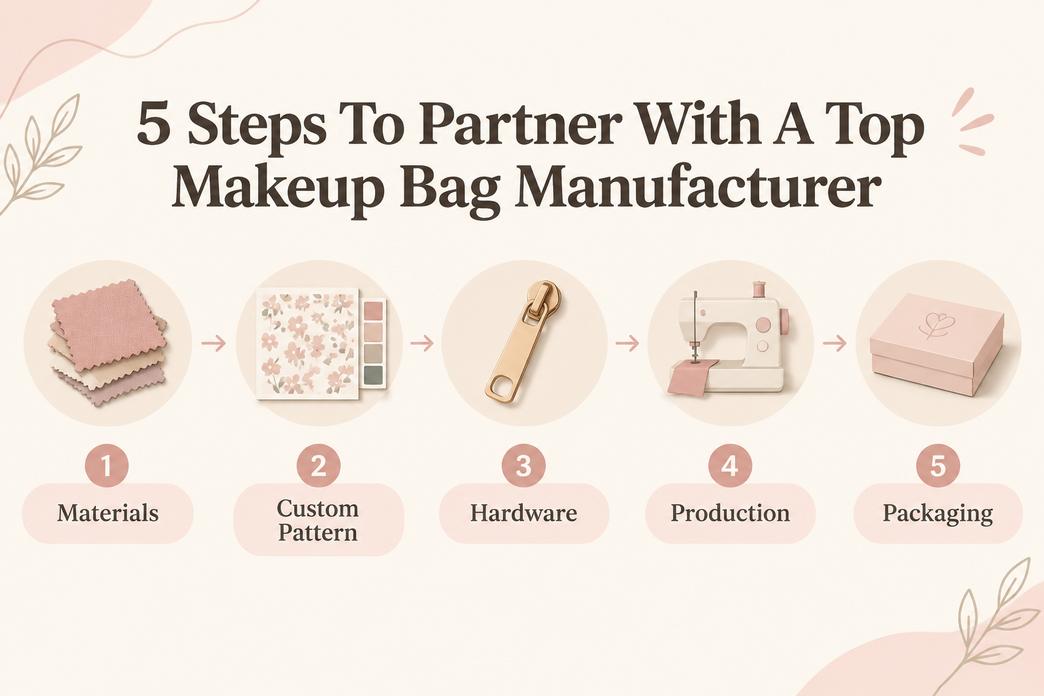
5 Steps To Partner With A Top Makeup Bag Manufacturer
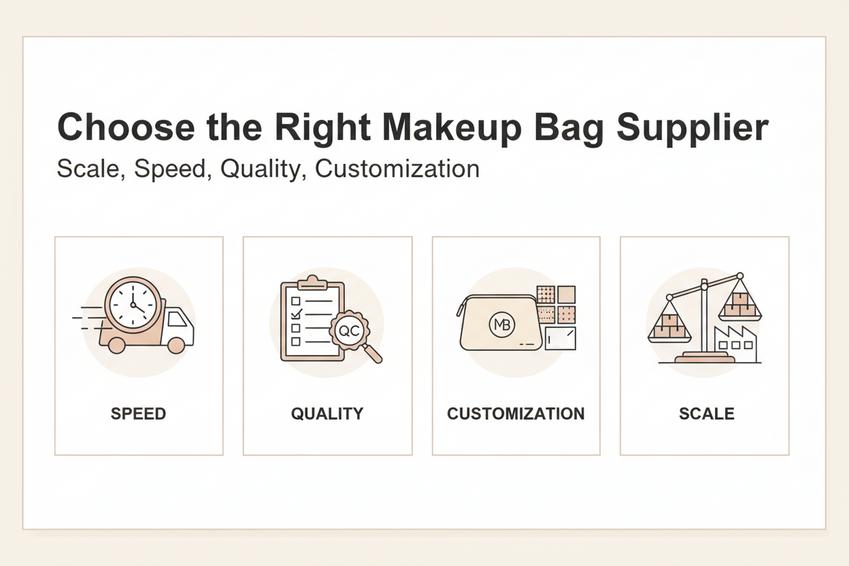
Choosing a makeup bag manufacturer gets easier when specifications are settled before sampling. Materials, branding, hardware, production, and shipping protection shape the makeup bag. Turn them into instructions.
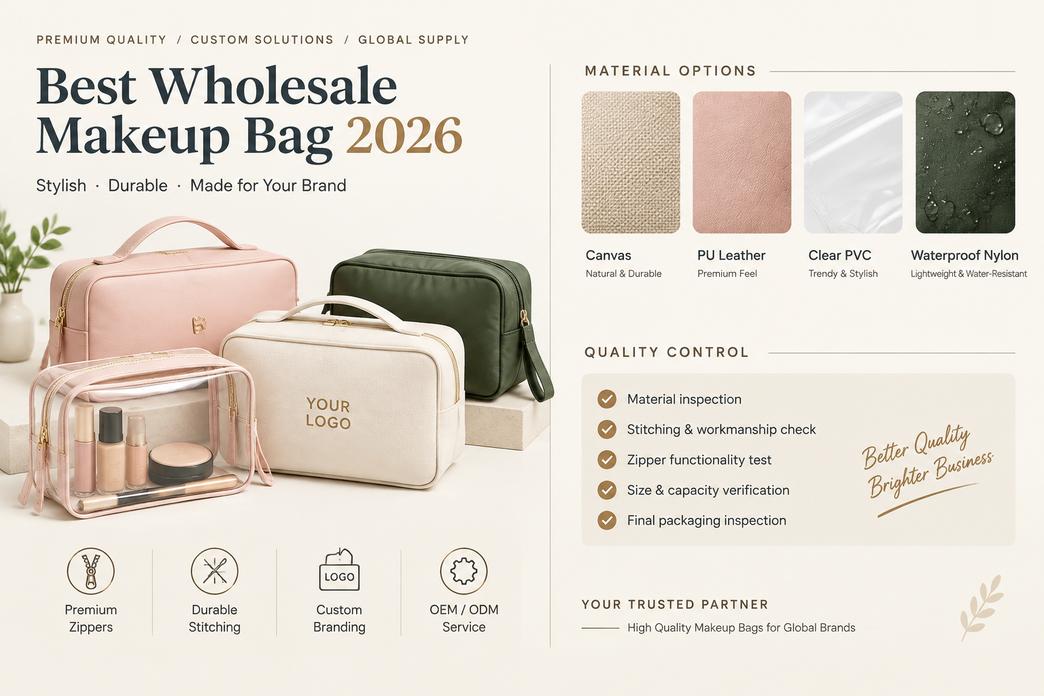
Identify Ideal Materials: Polyurethane Leather vs Water-Resistant Canvas
Match the material to customers and daily use:
- Premium look
- Polyurethane leather offers smooth texture and easy wiping.
- Transparent TPU suits display bags.
- Tough everyday use
- Water-resistant canvas feels casual and handles frequent wear.
- Ballistic nylon raises durability for travel.
- Easy cleaning
- Food-grade silicone washes quickly; chosen lining material should resist stains; canvas-care guidance helps shape care notes.
Ask for material composition and claim documentation rather than a broad green label. The FTC’s Green Guides explain why environmental marketing language should be clear and substantiated.
Map Your Custom Pattern Layout for On-Brand Appeal
A recognizable pattern starts with layout design. Give the factory an artwork vector, exact color references, and clear logo placement. Use Pantone color-system guidance when a shade travels from artwork to sample.
Inside, bespoke dimensions can accommodate compartments, detachable brush holders, and elastic retention straps. Confirm print technique on a sample.
Select Functional Hardware Like Brass D-Rings and Metal Zipper Pullers
Hardware needs its own specification sheet.
- Closure system
- Metal zipper pullers should feel comfortable.
- An alloy slider should run smoothly.
- Attachment points
- Brass D-rings support straps.
- Reinforced metal rivets strengthen load points.
- Finishing details
- Magnetic snap closures offer access.
- Match the hardware finish, buckle, and alloy component.
Review opening, closing, attachment points, and hardware interaction.
Evaluate Production Techniques from High-Frequency Welding to Precision Embroidery
Construction choices should follow the material and intended use.
- Use high-frequency welding or heat sealing where suitable plastics need waterproof seam bonding.
- Set precision embroidery and stitch density for crisp fabric logos.
- Choose screen printing when the artwork needs clean graphic coverage; this screen-print process guide can help organize the artwork discussion.
- Apply laser cutting where accurate edges matter.
For sewn designs, quilting can add shape, while edge painting creates a tidier finish. Request trial pieces before approval.
Confirm Packaging Methods with Individual Polybag Sealing and Protective Corner Guards
Shipping protection should match the bag’s shape and surface. UPS packaging guidance and FedEx packaging guidance support suitable packaging.
- Individual protection
- Polybag sealing limits dust and handling marks.
- A dust bag helps protect delicate finishes.
- Protective corner guards suit structured designs.
- Export preparation
- Add desiccant where humidity presents a storage risk.
- Apply a scannable barcode label.
- Load units into a suitable carton box.
- Freight handling
- Secure cartons with palletized cargo bundling for steadier international transport.
Confirm the export packaging setup before shipment.
🧭 Make the brief production-ready: The five-step manufacturer partnership path—materials, pattern, hardware, production, and packaging—gives your team one approval route instead of disconnected sample comments. Topfeel Bag’s cosmetic bag collection supports a focused comparison of forms, and sampling is typically 7–10 days after spec lock and artwork confirmation.
Use that route to prepare the specification sheet and sample-review checklist.
3 Key Features Brand Owners Demand
Brand owners need more than a good-looking bag. A practical program combines organized storage, suitable materials, and recognizable branding.
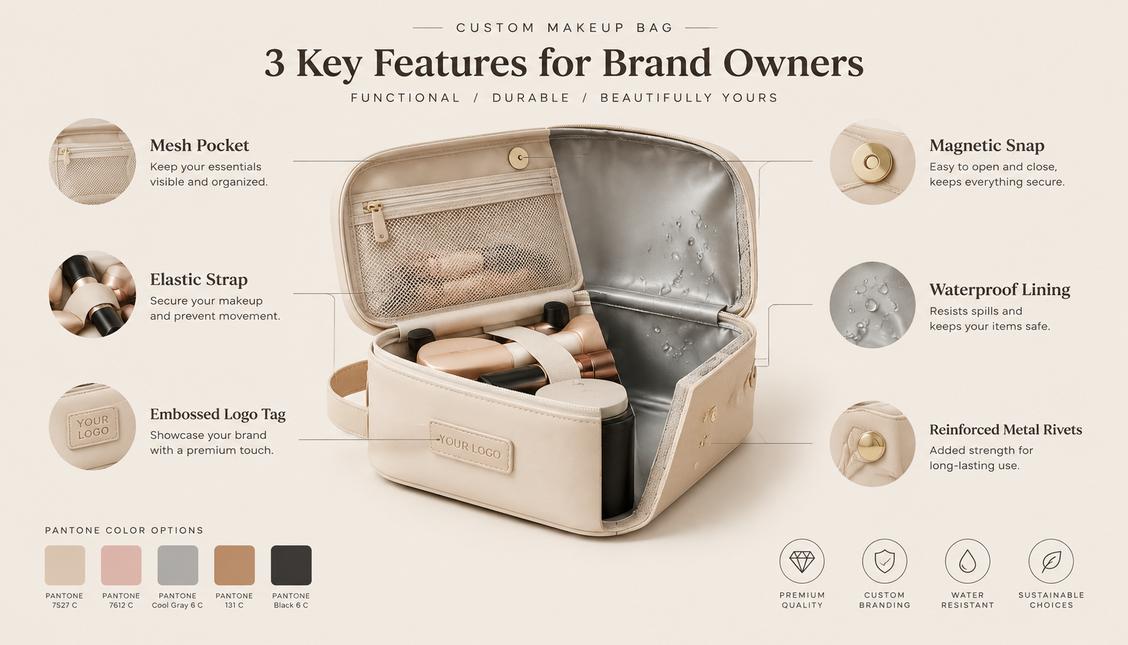
Durable Interior Mesh Pocket Combined with Waterproof Lining Layer
Good storage starts inside, where spills and loose items become a headache.
- Organization
- An interior mesh pocket adds storage for brushes, lipstick, and small tools.
- An elastic retention strap keeps bottles secure.
- Protection
- Waterproof lining helps contain spills and simplifies cleanup; structured designs can specify a PP base where support is needed.
- A padded divider adds cushioning; the insert plan supports organized packing.
A practical layout should connect pocket, retention, lining, and divider choices.
Seamless Private Label Tagging and Custom Logo Embossing
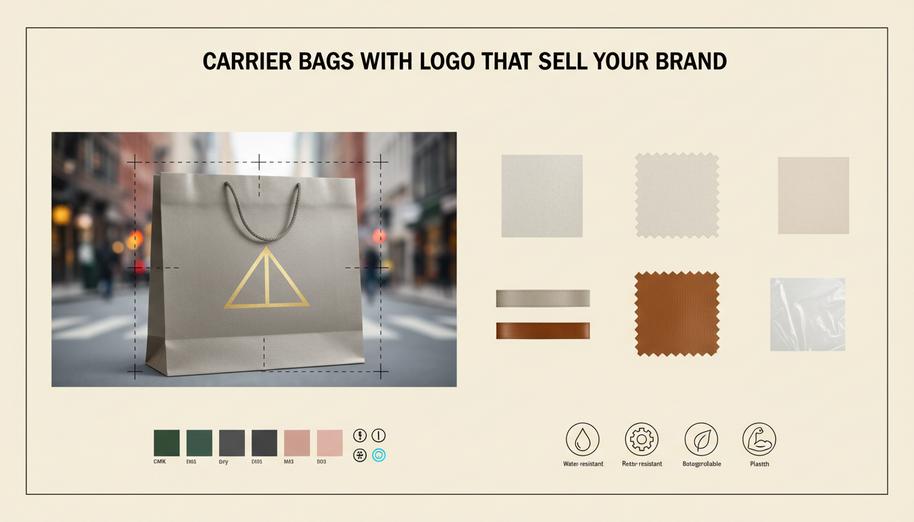
Brand consistency should continue from packaging to the finished bag. Carry identity through material, logo, and label placement.
- Match exterior materials to approved color references.
- Apply a custom logo using logo embossing or silk-screen printing.
- Add brand tagging that fits naturally with the bag construction.
That mix supports tailored branding without looking overdone. A clear artwork file and physical sample keep the signature design consistent; woven-fabric guidance can help with woven labels.
Enhanced Security via Magnetic Snap Button and Reinforced Metal Rivets
Closures take daily wear, so hardware choices matter.
- A magnetic snap creates an easy, tidy closure mechanism.
- Quick access suits daily cosmetic use.
- Secure contact helps keep contents contained.
- Metal rivets reinforce high-stress areas.
- Reinforced hardware supports structural stability.
- Heavy-duty fasteners support longer service life and a more premium hand feel.
Together, storage, branding, and closure choices create a coherent product brief.
🧩 Design the full user experience: Pocket storage, lining protection, private-label branding, and magnetic-snap hardware should work together.
Topfeel Bag documents multi-layer trays as the organizing core of its train-case options. Its brush bags provide a separate route for segmented brush storage. Compare those formats to decide which feature set belongs in a retail or professional assortment.
Inconsistent Quality? ISO-Certified Manufacturing Process
Quality decisions become clearer when the approved sample, material documents, and inspection records stay connected. ISO’s ISO 9001 overview frames quality management around consistent processes and customer requirements. Use a defined specification and review path.
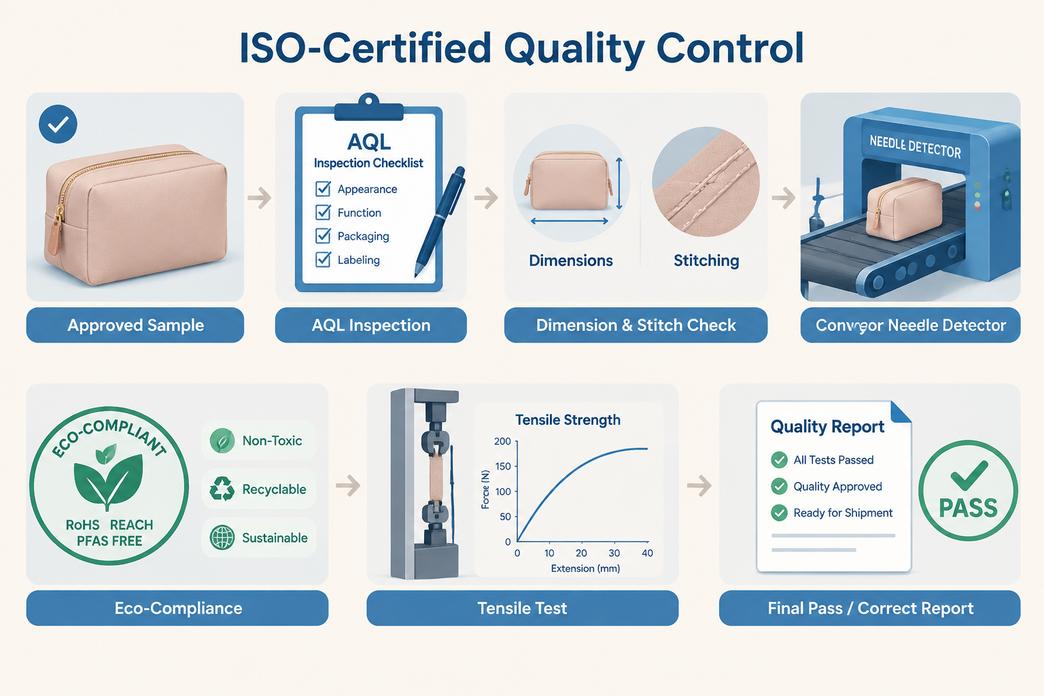
AQL Quality Inspection: Ensuring Every Bag Meets Your Specs
A sampling plan gives buyers a way to inspect part of an order. ISO 2859-1 covers sampling systems indexed by acceptance quality limit; see its standard summary.
- Inspection starts with the approved sample and sampling plan.
- A dimension check confirms length, width, and gusset measurements.
- Stitch density, colors, hardware, and logo position are checked against specifications.
- Findings follow a clear defect classification.
- Critical, major, and minor issues are recorded against the agreed workmanship standard.
- The final inspection report gives buyers a practical pass-or-correct decision.
That record keeps bulk review tied to the sampling brief.
Needle Detector Testing for Flawless Ballistic Nylon and Canvas Goods
For stitched goods, define safety or contamination checks before production. Scope them to materials, process, destination, and compliance requirements.
- Finished bags pass through the required safety check at the agreed inspection stage.
- Metal detection identifies possible ferrous contaminants when specified.
- Flagged goods are isolated, checked again, and documented for release approval.
This makes the quality file easier to review across formats.
Eco-Friendly Compliance and Material Tensile Test Protocols
Environmental and performance requirements should be measurable and product-specific.
- Compliance checks
- Screen restricted substances against the required environmental standard.
- Confirm composition and claim documentation for specified biodegradable materials; the EU REACH explanation outlines chemical-management responsibilities.
- Performance checks
- Measure any required tensile strength and tear resistance before sampling.
- Apply stress testing to seams, straps, and key components when those requirements are part of the product brief.
Topfeel Bag’s workflow runs from brief and sampling through PP approval, in-process QC, final QA, packing, and shipping. Attach checks to that sequence.
✅ Close the quality loop: A reliable launch needs one file connecting the specification, approved sample, material documents, inspection plan, and shipment release. Inspection, needle detection, safety checks, and material compliance should all point back to that file. Topfeel Bag’s makeup clutch route and handheld bag route let you compare checks for compact versus mid-volume formats.
Share your target style, required materials, logo method, and order quantity with Topfeel Bag to begin a product-specific review.
References
- Green Guides — ftc.gov
- REACH explained — europa.eu
- ISO 9001 quality management — iso.org
- ISO 2859-1 sampling standard — iso.org
- Pantone color system — pantone.com
- Packaging guidance — ups.com
- Packaging resources — fedex.com


.png)



4th-5th Floor, Building B2, Yin Tian Industrial Park, Xi Xiang Road, Bao'an Dist, Shenzhen, 518102 ,China