
 English
  Korean
  French
  German
  Hungarian
  Japanese
  Russian
Expert Tips for Partnering With Elite Luxury Bag Manufacturers
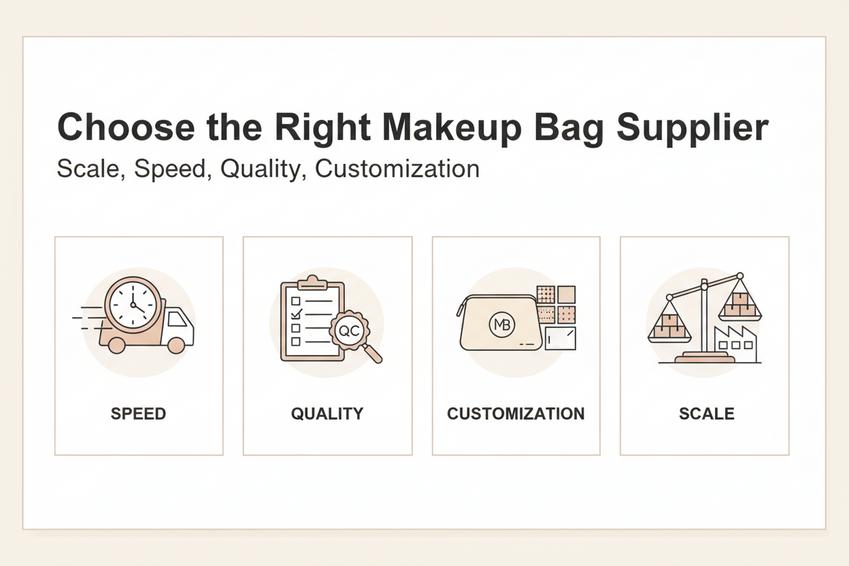
Choosing a bulk cosmetic-bag partner affects timing and finish. Qualification should connect the approved design to a controlled production plan.
Reliable partners document capacity, materials, quality gates, and delivery responsibilities. Examine those systems before bulk approval.
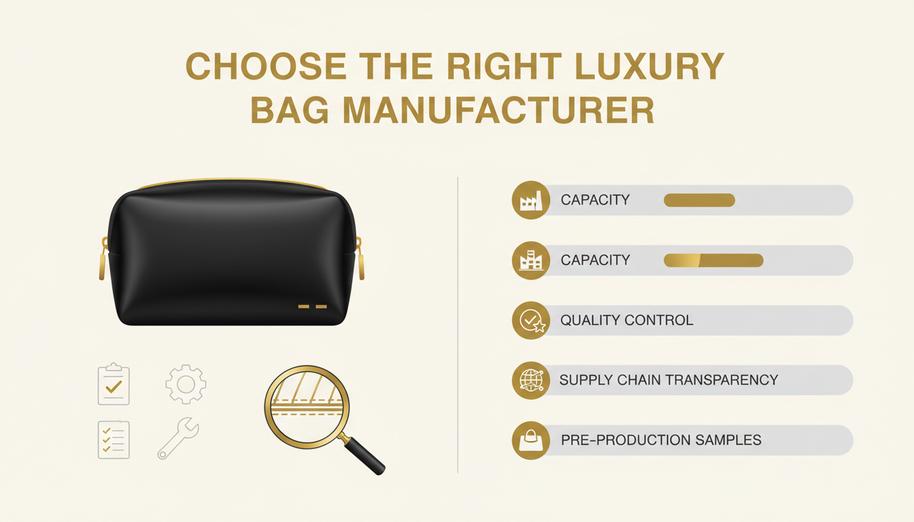
Key Notes on Luxury Bag Manufacturers
- Assess Production Capacity & Lead Time: Confirm output and timelines.
- Audit Quality Control Processes: Verify tests, stitching, colorfastness, and the screen-print process.
- Verify Supply Chain Transparency: Trace materials, freight, and warehousing records.
- Insist on Pre-Production Samples: Compare leather alternatives and canvas construction, then approve tests and components.
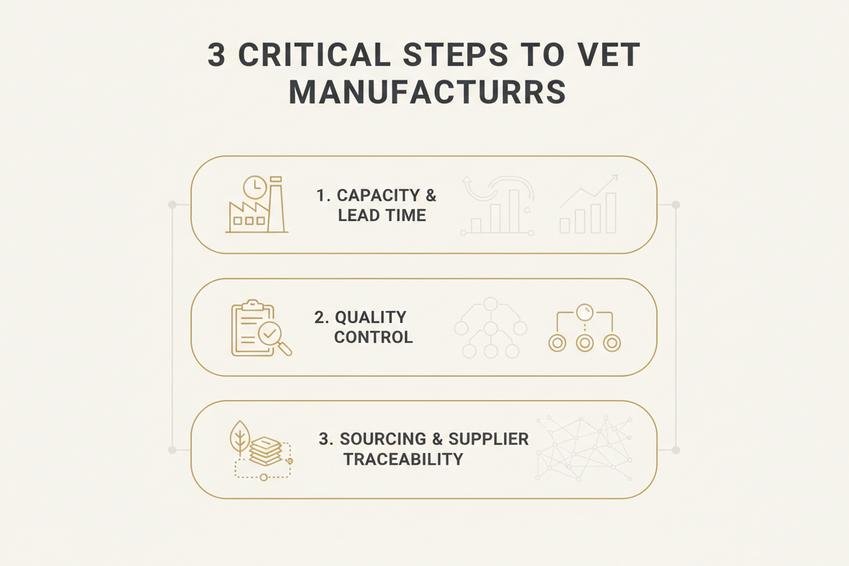
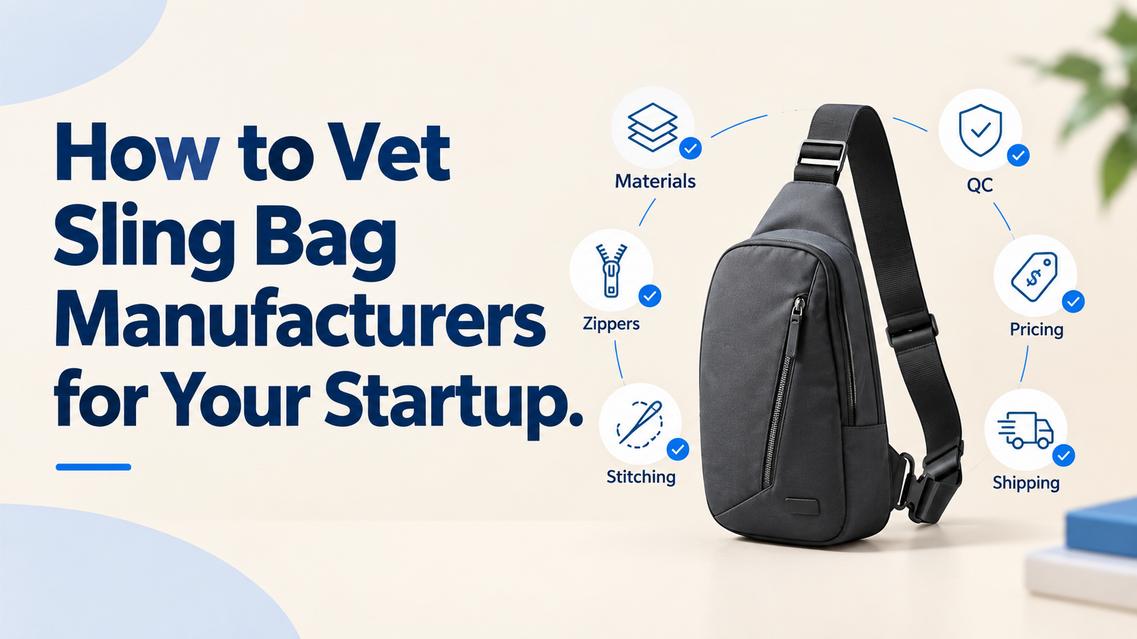
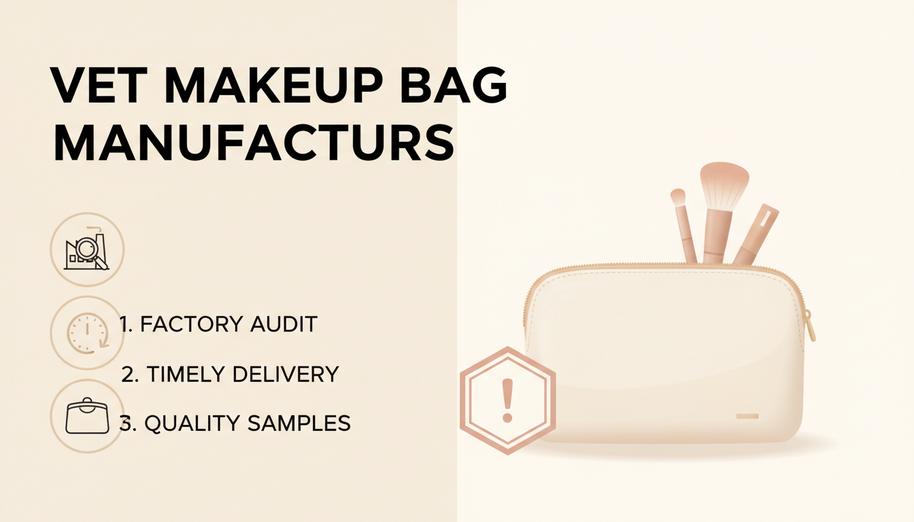
3 Critical Steps to Vet Manufacturers
Compare luxury bag manufacturers with one evidence template covering the specification, order profile, and escalation process.
Step 1: Assess Production Capacity and Lead Time
- Production volume needs records for comparable construction.
- Manufacturing capabilities should identify automation and handwork.
- Delivery schedules should separate production milestones.
- Map production planning to peak seasons
- Test throughput with a controlled pilot order
- Review resource allocation during overload
Short takes:
Tie capacity to construction and approvals. Topfeel Bag states a 7–10 day sampling window after specification and artwork approval; document sampling and delivery separately.
Step 2: Audit Quality Control – Inspection to Defect Rate
- Check inspection protocols against the purchase specification.
- Compare defect analysis with corrective-action records.
- Validate testing procedures, specimens, and pass criteria.
Quick flow:
Input checks → in-line pulls → final acceptance sampling → shipment release
Multiple angles:
Quality assurance needs records and owners. ISO 9001 addresses quality processes. Ask how the inspection plan applies to your lot. Topfeel Bag reinforces vulnerable points and performs final inspection.
Step 3: Verify Sourcing – Raw Material Suppliers & Vendor Management
- Trace material procurement to its approved source.
- Audit supplier vetting for critical materials.
- Confirm raw material quality records match the batch.
Nested view:
- Supply chain visibility
- Tier-1 vendors
- Supplier audits frequency
- Traceability docs
- Tier-2 inputs
- Consistency checks
- Tier-1 vendors
- Vendor relationships
- Contract terms
- Corrective actions
- Ethical sourcing signals
- Certifications
- Spot checks
Connect approved material identity, shade, hand, and finish to each batch. The OECD garment guidance provides a risk-based framework for evidence and remediation. ISO 14001 specifies an environmental-management-system framework. For U.S. textile products, the FTC textile-labeling law addresses fiber-content identification.
🧩 Turn checks into a system: These three critical steps to vet manufacturers connect capacity, quality gates, and sourcing records. Topfeel Bag’s brief-to-sampling workflow carries the resulting approval plan into controlled production.
🛠️ Use the cosmetic bag range and project route to prepare a supplier scorecard.
How Transparent Is Their Supply Chain?
Visibility should show material origin, lot movement, responsible parties, and the record linking approved components to finished goods. It also makes exceptions easier to assign and close.
Traceability of Raw Material Suppliers
- Raw materials should be tracked to origin.
- Supplier vetting should record provenance and approval.
- Ethical sourcing claims should identify scope.
- Map each input, such as microfiber, nylon, or velvet composition
- Link batches to supplier IDs
- Store audit files for compliance checks
The GS1 traceability framework defines identification principles for traceable parties, locations, and objects.
Visibility into Logistics Partners and Freight Forwarding
- Logistics network records should identify responsible parties.
- Shipping routes should connect milestones to tracking.
- Customs clearance should have named owners.
Short freight updates matter. The WCO Data Model standardizes cross-border data requirements. Align shipment information and owners before handoff.
Warehousing and Distribution Reporting Standards
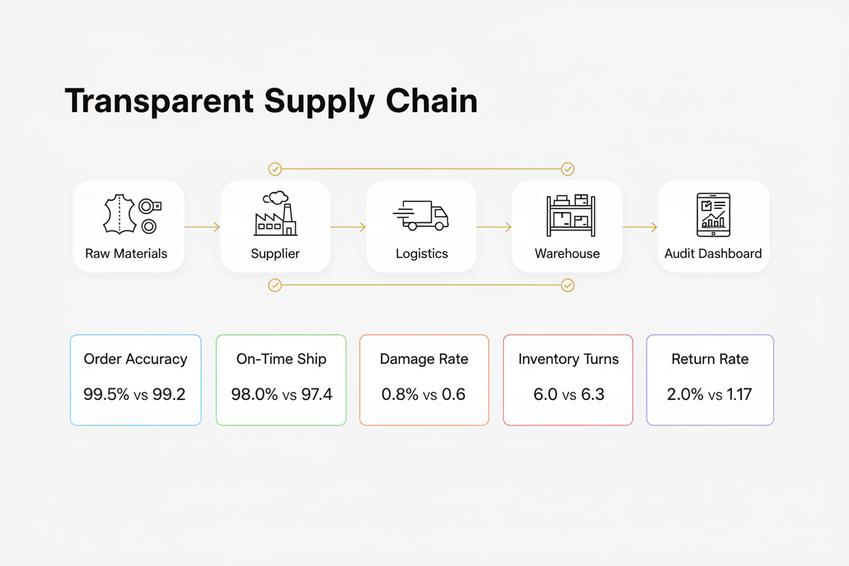
Define every inventory measure and reporting window. Link storage and distribution events to quality holds, release status, and fulfillment records.
| Metric | Target | Actual | Variance | Notes |
|---|---|---|---|---|
| Order accuracy (%) | 99.5 | 99.2 | -0.3 | Pick errors |
| Damage rate (%) | 0.8 | 0.6 | +0.2 | Improved packing |
| On-time ship (%) | 98.0 | 97.4 | -0.6 | Port delay |
| Inventory turns | 6.0 | 6.3 | +0.3 | Faster flow |
| Return rate (%) | 2.0 | 1.7 | +0.3 | QC gains |
Ongoing Vendor Management and Sourcing Audits
- Vendor performance should be reviewed on an agreed schedule.
- Audit protocols should connect findings to compliance checks and owners.
- Risk assessment should feed corrective action and follow-up.
Use evaluate → audit → correct → re-score with closure records. Topfeel Bag’s workflow gives reporting a clear production sequence.
🔎 See every handoff: Connect approved materials, shipment milestones, warehouse status, and corrective actions in one order file.
📍 Topfeel Bag’s outdoor bag route helps frame construction needs. Use the project route to validate traceability fields, logistics owners, warehouse reports, and corrective-action cadence clearly before supplier approval.
Leather Variability? Insist on Pre-Production Samples
Before bulk production, handle representative samples and connect observations to the specification. Review material behavior, tests, and the complete prototype before approving scale.
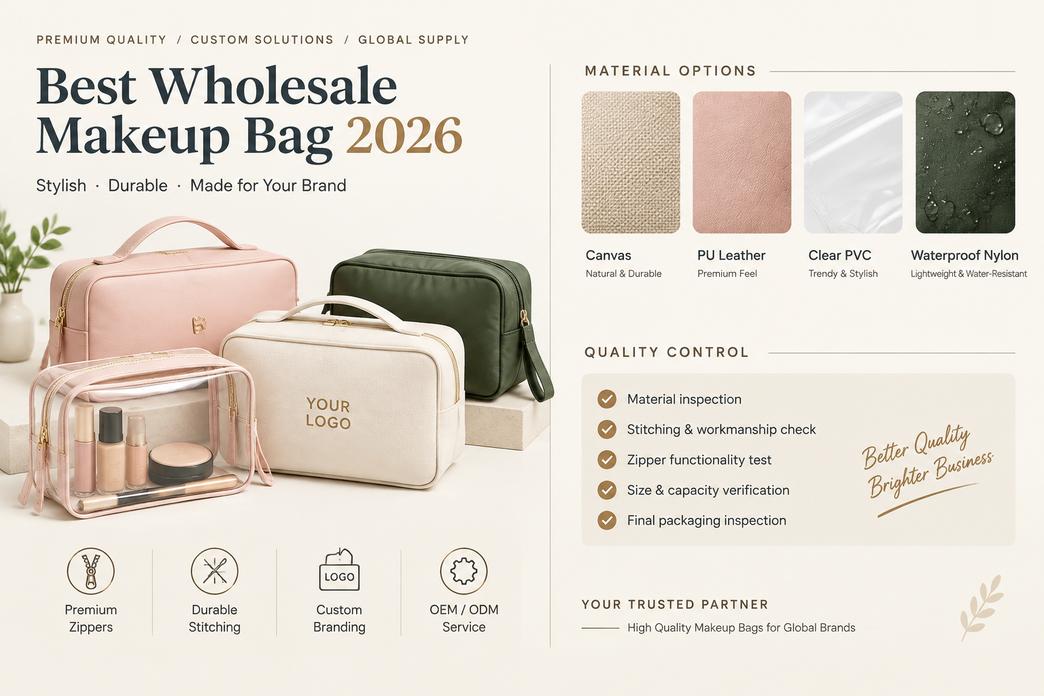
Comparing Vegan Leather, PU Leather and Canvas Samples
- Touch and flex:
- Vegan Leather: record thickness, hand feel, and crease recovery
- PU Leather: examine coating, backing, and edge behavior
- Canvas: inspect weave, weight, fraying, and finish
- Cut tests → compare edge cleanliness and fraying
- Stitch trials → compare needle response and hole recovery
- Finish checks → compare emboss depth and print adhesion
- Material Samples under the approved viewing conditions: record gloss, texture, and shade.
Short notes:
- Fabric Comparison should cover machine behavior and hand feel.
- Textile Properties belong in the specification; references on woven structure and cotton thickness support precise terms.
- Good Sample Assessment records approval, revision, or rejection.
Testing Colorfastness, Stitching Integrity, and Durability
Nested checks for Quality Control and product reliability:
- Colorfastness
- Rub test (dry/wet)
- UV exposure
- Stitching Integrity
- Seam pull
- Needle heat impact
- Durability Testing
- Strap load cycles
- Zipper runs
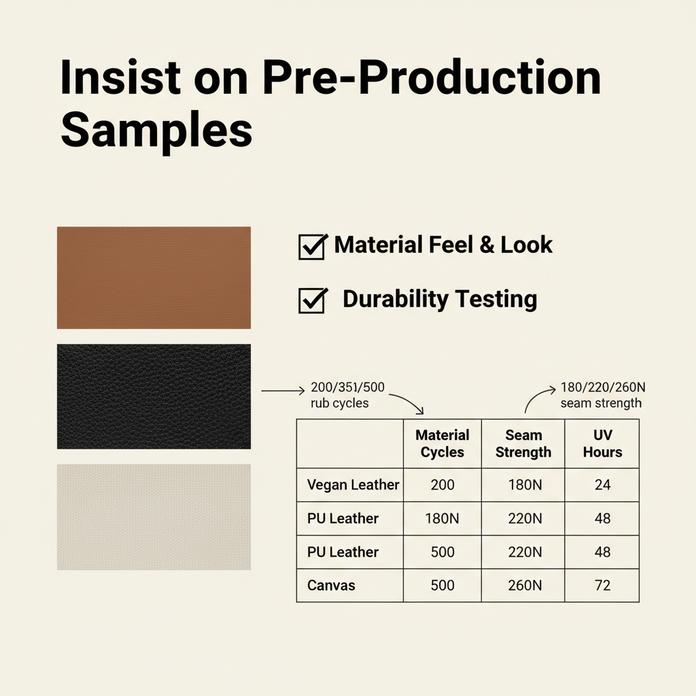
Data snapshot:
| Material | Rub (cycles) | Seam Strength (N) | UV Hours | Failure Rate % |
|---|---|---|---|---|
| Vegan | 200 | 180 | 24 | 6.2 |
| PU | 350 | 220 | 48 | 3.1 |
| Canvas | 500 | 260 | 72 | 2.4 |
| Blend A | 420 | 240 | 60 | 2.9 |
| Blend B | 380 | 230 | 54 | 3.3 |
Test protocols should name the specimen, method, conditions, and criteria. AATCC TM61 addresses laundering colorfastness; ASTM D1683 covers seam failure in woven fabrics.
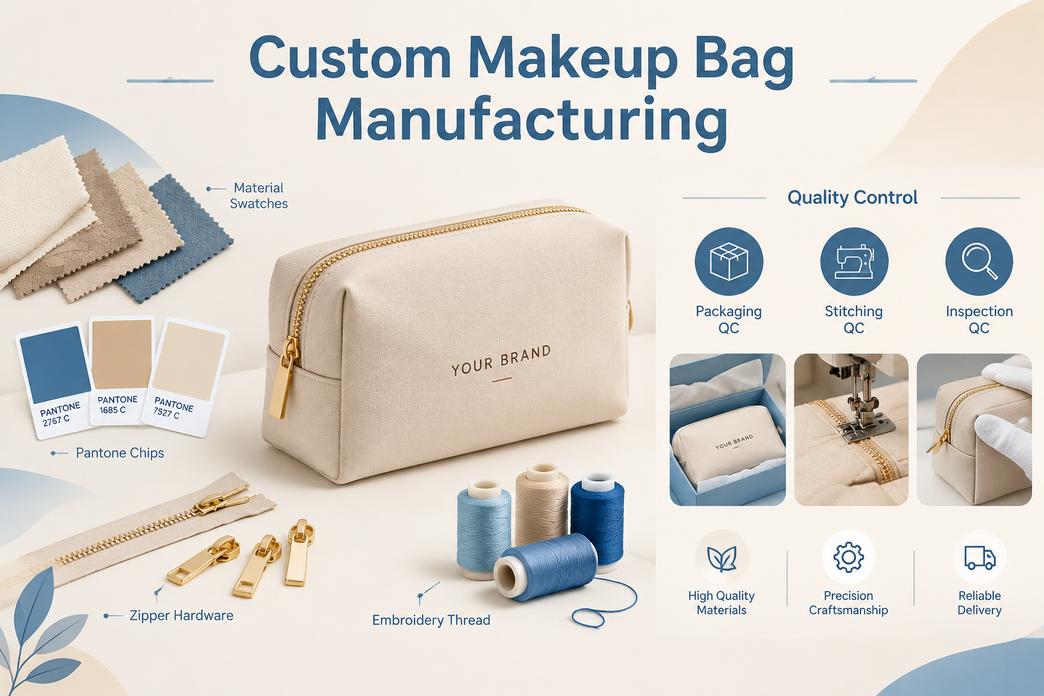
Prototyping Interior Lining, Hardware Selection, Bespoke Sizing
Build → review → tweak → repeat:
- Prototype Creation
- Fit Interior Lining to the pocket map
- Check access angles and edge binding
- Component Selection
- Hardware Components: zippers, pulls, and D-rings
- Finish match and the agreed corrosion test
- Custom Specifications
- Bespoke Sizing for the intended contents
- Balance weight, protection, and structure
Quick passes:
- Alignment looks right.
- Function feels right.
- Cost stays within the approved specification.
Mark the drawing, record revisions, and update approval status. Topfeel Bag describes PP support for three-dimensional forms.
🎯 Approve evidence, not impressions: Topfeel Bag typically samples in 7–10 days after specification and artwork lock, creating a checkpoint for material comparison, colorfastness, stitching integrity, durability testing, lining, hardware, and bespoke size.
📩 Compare the train-case construction route, then submit project requirements with your sample checklist and acceptance criteria.
References
- ISO 9001:2015 Quality management systems — ISO
- ISO 14001:2026 Environmental management systems — ISO
- Due Diligence Guidance for Responsible Supply Chains in the Garment and Footwear Sector — OECD
- Traceability — GS1
- WCO Data Model — World Customs Organization
- TM061 Colorfastness to Laundering: Accelerated — AATCC
- ASTM D1683/D1683M-22 — ASTM International
- Textile Fiber Products Identification Act — Federal Trade Commission


.png)



4th-5th Floor, Building B2, Yin Tian Industrial Park, Xi Xiang Road, Bao'an Dist, Shenzhen, 518102 ,China