
 English
  Korean
  French
  German
  Hungarian
  Japanese
  Russian
What Is the Best Cosmetic Bag Fabric?
Choosing the right cosmetic bag fabric isn’t just picking a pretty face—it’s picking the backbone of your product. One weak stitch or cheap-feeling material, and your brand looks like it cut corners. Buyers notice. Retailers notice. Your margins feel it.
The global beauty market topped $400 billion in revenue, according to Statista. In a crowded aisle, details decide who wins.
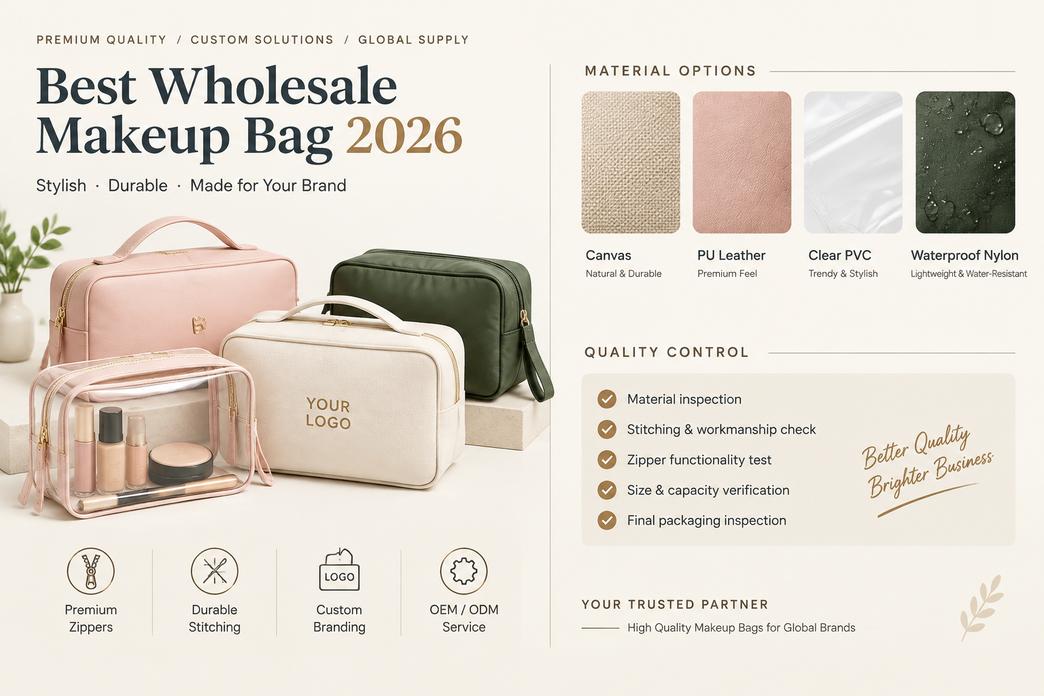
Fabric is that detail. Nylon handles rough travel like a carry-on veteran. PU leather whispers “luxury” without screaming cost. Canvas speaks to eco-minded shoppers. Pick wrong, and it’s money down the drain. Pick right, and your bag works as hard as your brand does.
Types of Cosmetic Bag Fabrics Explained
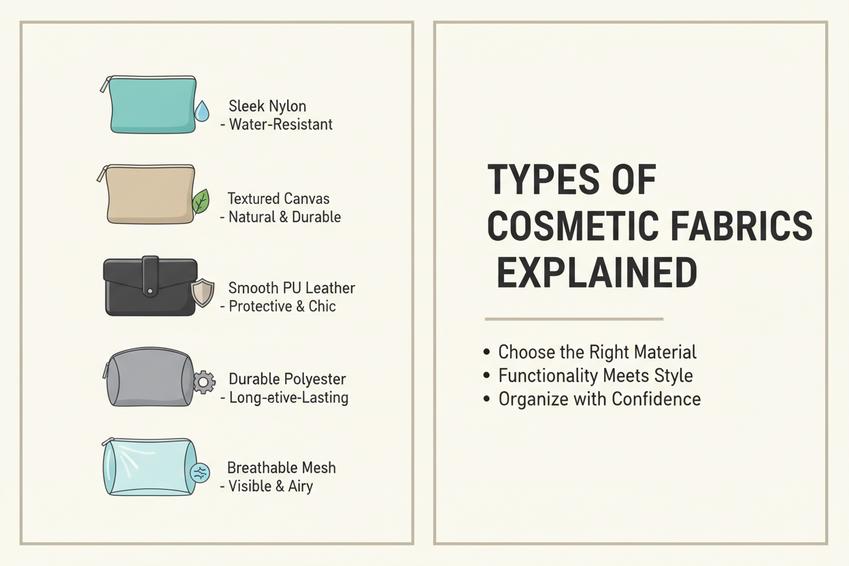
Choosing the right cosmetic bag fabric isn’t just about looks. The feel, weight, and care routine all matter. From travel makeup pouch material to daily beauty bag fabric, smart picks make life easier.
Nylon: Lightweight and Water-Resistant Choice for Everyday Bags
When selecting cosmetic bag fabric, nylon stands out for lightweight comfort and real water-resistant performance.
- Core traits
- Durability for daily toss-in-your-tote use
- Smooth surface that simplifies cleaning
- Reliable for everyday use
- Why brands like Topfeel choose it
- Easy lining pairing
- Stable zipper stitching
- Travel-friendly weight
For active users, nylon cosmetic bag material handles spills fast and dries quickly.
PU Leather: Scratch-Resistant Style Meets Easy-to-Clean Convenience
For a polished cosmetic pouch textile, PU leather brings that sleek vibe.
- Surface benefits
- Scratch-resistant finish
- Easy-to-clean coating
- Naturally stylish appeal
- Practical value
- Strong durability
- Low maintenance effort
- Works well with logo stamping
As a cosmetic bag fabric, it balances fashion and function without fuss.
Canvas: Durable Fabric with Classic Appeal and Reinforced Seams
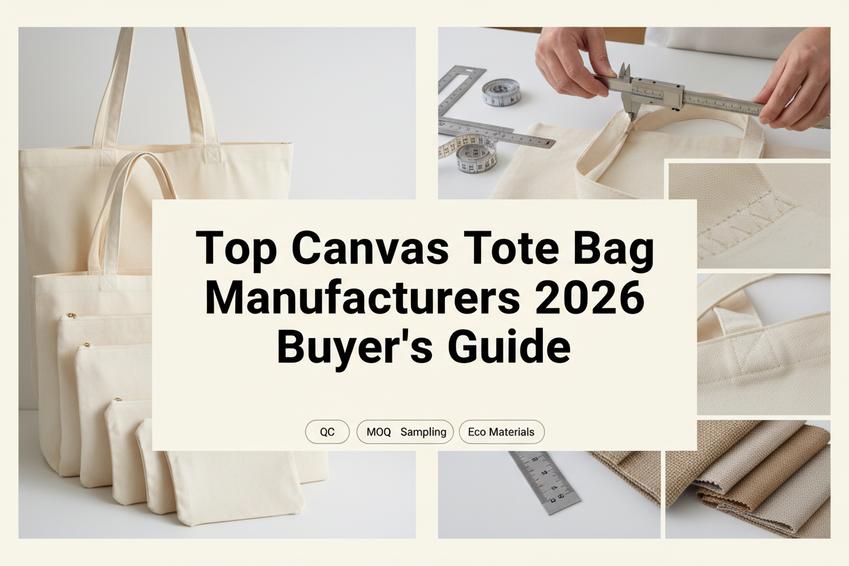
Some buyers prefer canvas cosmetic bag fabric for its classic appeal.
- Material character
- Durable weave
- Visible texture from natural fibers
- Solid sturdiness
- Construction focus
- Reinforced seams
- Structured body
- Easy embroidery
Canvas beauty bag fabric feels grounded and dependable.
Polyester: Tear-Resistant Option for Long-Lasting Cosmetic Bags
If strength is the goal, polyester earns attention.
- Performance layer
- Tear-resistant strength
- Strong abrasion resistance
- Flexible versatility
- Production edge
- Consistent quality
- Color stability
- Long-lasting results
Topfeel often recommends polyester cosmetic bag fabric for large-volume runs.
Microfiber & Mesh: Versatile Materials for Breathable, Lightweight Bags
Blending microfiber and mesh creates flexible cosmetic bag fabric options.
- Microfiber
- Gentle texture
- Lightweight feel
- Soft structure
- Mesh panels
- Breathable airflow
- Quick-drying function
- Easy visibility
Together, this makeup bag material mix suits gym kits, travel sets, and custom cosmetic bag fabric designs that need comfort without bulk.
4 Reasons Cosmetic Bag Fabric Matters for Custom Orders
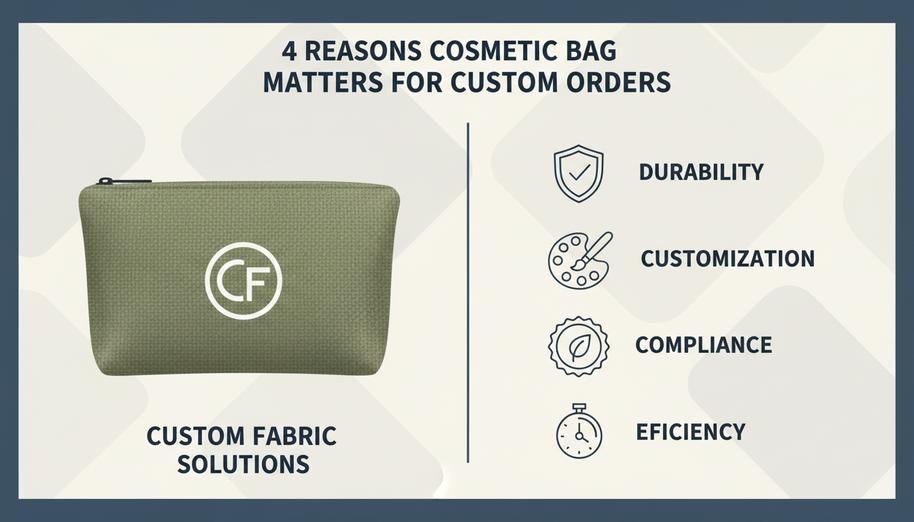
Choosing the right cosmetic bag fabric is not just about looks. It affects durability, branding, safety, and shipping costs. From fabric texture to zipper pull, every detail shapes how a cosmetic bag performs in real life and bulk orders.
Enhances Durability Through High-Quality Stitching and Zippers
When selecting cosmetic bag fabric, durability starts at the fiber level and flows through construction.
- Fabric Foundation
1.1 Fabric quality determines base wear resistance.
1.2 Dense weaves protect overall material integrity.
1.3 Strong yarn structure supports long-term longevity. - Stitching Performance
2.1 High tensile cloth improves stitching strength.
2.2 Balanced thread tension reduces seam tearing.
2.3 Reinforced corners prevent stress-point cracks. - Zipper Integration
3.1 Thick cosmetic bag material stabilizes tape alignment.
3.2 Quality sliders increase zipper durability.
3.3 Clean edge binding avoids fraying near closures.
A weak beauty bag textile may look fine on day one, but after 3 months of daily use, flaws show up fast. Solid cosmetic bag fabric keeps returns low and customers happy.
Supports Customization Options Like Logo Printing and Color Matching
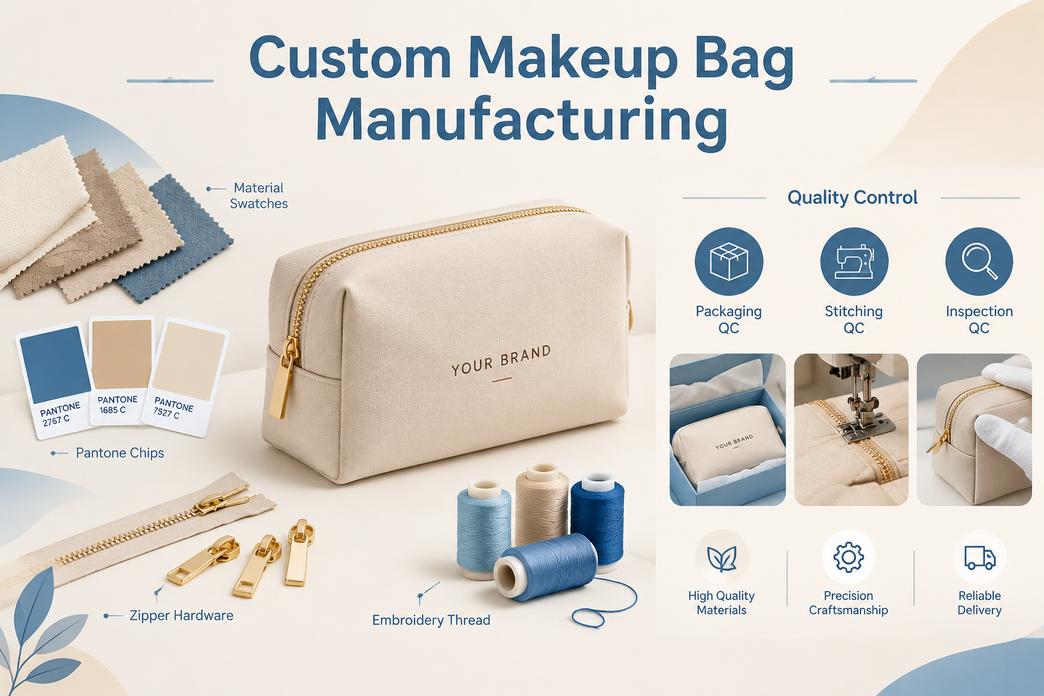
Branding lives or dies on surface performance. The right cosmetic bag fabric makes logos pop instead of fade out.
- Surface Preparation
1.1 Smooth fabric texture improves ink adhesion.
1.2 Even surface finish reduces patchy prints. - Printing & Embroidery
2.1 High printability supports silk screen and heat transfer.
2.2 Stable material compatibility prevents logo cracking.
2.3 Tight weave supports fine embroidery details. - Color Control
3.1 Balanced dye absorption ensures accurate Pantone matching.
3.2 Strong color fastness avoids washing fade.
3.3 Consistent cosmetic bag fabric batches protect brand identity.
For custom cosmetic bags orders, even slight shade shifts can mess up a full campaign. Good fabric for cosmetic bags keeps every unit consistent, from sample to mass production.
Ensures Compliance With REACH and OEKO-TEX Standards
Safety is not optional. Buyers now check fabric documents as closely as design drafts.
- Chemical safety reports confirm restricted substance limits.
- Verified textile certification supports export approval.
- Tested allergy-friendly components protect sensitive users.
According to the 2025 Textile Exchange Market Report:
“Global brands are increasing demand for certified and traceable materials, with over 68% prioritizing verified chemical compliance in accessory sourcing.”
That shift pushes suppliers to choose eco-friendly materials and maintain strict regulatory compliance. Reliable cosmetic bag fabric suppliers provide MSDS files, proof of sustainable sourcing, and updated REACH documentation. Without these, customs delays and rejected shipments become very real headaches.
Improves Supply Chain Efficiency With Easy-to-Handle, Lightweight Materials
Lightweight cosmetic bag fabric directly impacts cost and speed.
- Production Handling
1.1 Lower material weight increases cutting efficiency.
1.2 Better handling ease speeds stitching lines.
1.3 Flexible foldability simplifies semi-finished storage. - Warehousing
2.1 Compact stacking reduces required storage space.
2.2 Faster packing improves production speed. - Transportation Impact
| Fabric Type | Avg. GSM | Shipping Cost per 10,000 pcs (USD) | Handling Rating (1–5) |
|---|---|---|---|
| Heavy PVC | 420 | 4,800 | 2 |
| PU Leather | 320 | 3,900 | 3 |
| Nylon | 210 | 2,600 | 5 |
| Polyester | 190 | 2,300 | 5 |
Lower transportation cost adds up quickly in bulk cosmetic bags production. A smart cosmetic bag fabric choice trims freight bills, improves container loading, and keeps timelines tight. In large-scale custom orders, that efficiency can make or break profit margins.
Canvas vs. Cotton: Which Cosmetic Bag Fabric?
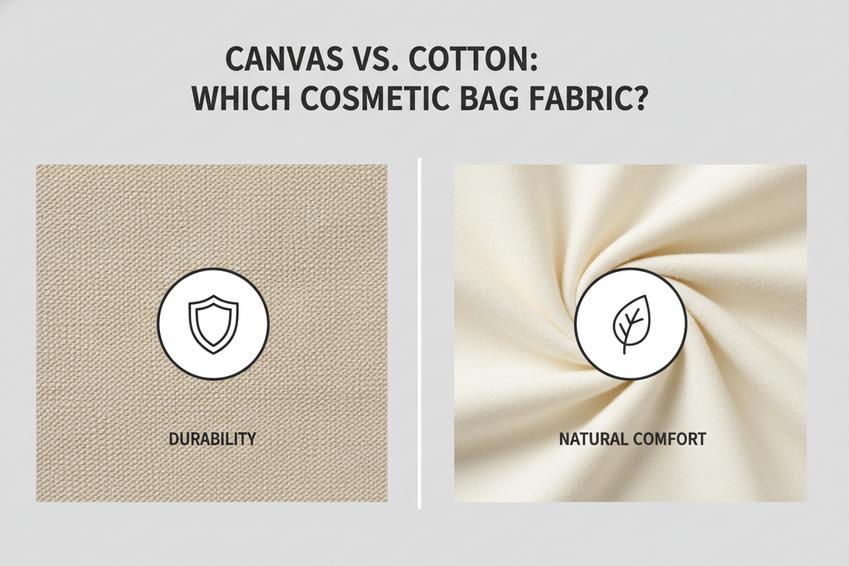
Choosing the right cosmetic bag fabric can totally change how your beauty line feels in hand. From daily toss-in totes to travel kits, fabric decides vibe, lifespan, and cost control.
Canvas
When brands compare cosmetic bag fabric options, canvas often stands out for its durability and solid build. For cosmetic bag fabric used in travel kits or pro makeup cases, that strength really matters.
- Core Performance of Canvas Cosmetic Bag Fabric
- Structural Features
- Thick weave boosts sturdiness
- Firm texture supports boxy shapes
- Medium-to-heavy weight improves stability
- Protective Qualities
- Light water resistance with coating
- Moderate breathability for stored products
- Production & Brand Fit
- Reinforced stitching handles long production cycles.
- Stable fiber structure keeps cosmetic bag fabric quality consistent.
- Ideal for custom printing with bold logos.
For brands like Topfeel, canvas cosmetic bag fabric works great in structured collections where shape retention and long-term wear are non‑negotiable. It’s the go-to bag material when customers want something tough, not flimsy.
Cotton
Cotton cosmetic bag fabric feels relaxed and easy, perfect for everyday pouch lines. In the world of cosmetic bag fabric, cotton wins hearts through comfort.
- Sensory & Material Traits
- Fiber Nature
- Pure natural fiber appeal
- Soft hand feel with gentle softness
- Functional Benefits
- High absorbency for minor spills
- Strong breathability in warm climates
- Flexible versatility in prints
- Practical Advantages
- Lightweight cosmetic bag fabric lowers shipping costs.
- Simple washing improves ease of cleaning.
- OEKO-TEX sourcing supports eco-focused branding.
Topfeel often recommends cotton cosmetic bag fabric for minimalist or eco lines. It’s softer, lighter, and easygoing—great for brands that want beauty bags to feel natural, not rigid.
Costly Bulk Orders? Durable Fabric Saves You Money
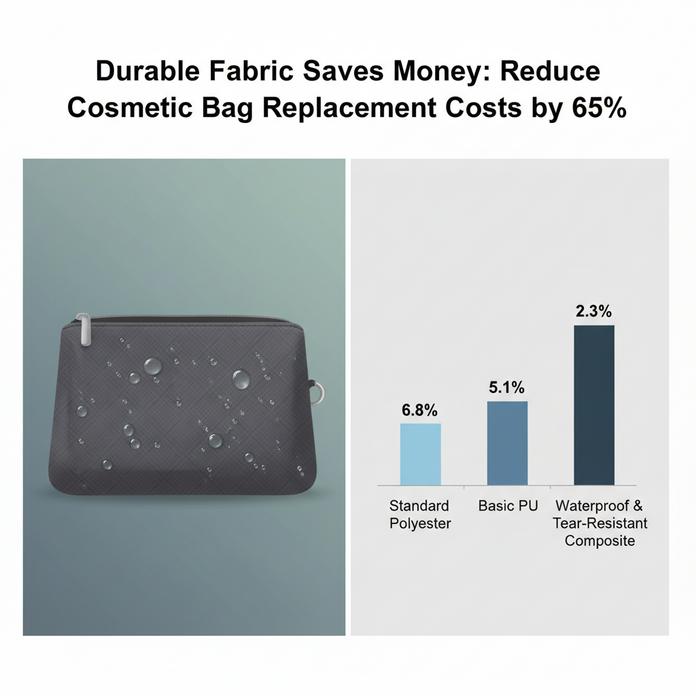
Bulk orders live or die by material choices. When your cosmetic bag fabric fails, replacement costs stack up fast. Smart brands look beyond price tags and focus on fabric durability, seam strength, and tight quality checks. From cosmetic pouch material to makeup bag textile upgrades, the right call today keeps margins safe tomorrow.
How Waterproof and Tear-Resistant Fabrics Reduce Replacement Costs
When selecting cosmetic bag fabric, durability starts at fiber level.
- Material Performance Layer
- Waterproof fabric blocks liquid absorption
- Protects internal lining
- Preserves material integrity
- Tear-resistant fabric limits ripping under stress
- Extends longevity
- Reduces replacement costs
- Cost Comparison by Fabric Type
| Fabric Type | Avg. Return Rate (%) | Replacement Cost per 10,000 Units ($) |
|---|---|---|
| Standard Polyester | 6.8 | 4,200 |
| Basic PU | 5.1 | 3,600 |
| Waterproof & Tear-Resistant Composite | 2.3 | 1,450 |
Lower returns mean fewer refunds and smoother retail feedback. Topfeel tests every cosmetic bag fabric under stress pull and splash exposure to make sure cosmetic fabric for bags holds up in real life, not just on paper.
Reinforced Seams and Hardware Finish for Long-Term Use
Durability is not only about cosmetic bag fabric. Construction matters.
- Stitching System
- Double reinforced seams
- Higher stitching strength
- Reduced seam splitting under wear and tear
- Closure Components
- Premium zipper track
- Stable zipper quality
- Smooth glide after 5,000+ pulls
- Plated sliders
- Rust-resistant durable hardware
- Longer product lifespan
- Real-World Impact
- Fewer after-sales complaints
- Stronger distributor trust
- Better repeat orders
Upgraded cosmetic bag material paired with solid hardware simply lasts longer. That’s money saved, plain and simple.
Quality Control in Manufacturing to Avoid Waste and Delays
Strong quality control keeps cosmetic bag fabric performance consistent.
- Pre-Production
- Raw material inspection
- Thickness tolerance check
- Waterproof rating validation
- Mid-Production
- Inline defect detection
- Seam alignment review
- Zipper stress testing
- Monitoring production efficiency
- Output vs. defect ratio tracking
- Post-Production
- Random sampling audit
- Carton drop testing
- Data review for waste reduction
A stable manufacturing process cuts delays and scrap. Topfeel aligns fabric testing, assembly checks, and shipment audits so every cosmetic bag fabric batch ships on time, with fewer surprises.
FAQs about Cosmetic Bag Fabric
Why does cosmetic bag fabric choice matter in bulk production?
Fabric is not just surface beauty—it shapes the entire manufacturing rhythm.
- Durable & tear-resistant materials like Nylon and Polyester reduce returns and protect stitching quality.
- Lightweight options lower freight forwarding costs and ease warehouse storage pressure.
- Stable fabric texture improves prototyping, speeds up sample approval, and keeps production lead time predictable.
When fabric performs well, the assembly line runs smoother and quality control becomes less stressful.
Which cosmetic bag fabric options offer the best water protection?
Water protection depends on both fabric and construction details.
- PU Leather – Waterproof surface, scratch-resistant finish, ideal for premium logo printing.
- Nylon – Water-resistant, lightweight, pairs well with reinforced seams and smooth zipper type.
- Polyester – Easy-to-clean and tear-resistant, stable for mass production runs.
- Canvas with lining material upgrade – Gains extra spill resistance while keeping structure.
True protection also relies on tight stitching quality and sealed edges, not fabric alone.
How do manufacturers ensure fabric compliance and safety standards?
Compliance is handled step by step to avoid shipment risks and customs delays.
- Material sourcing from certified suppliers
- Review of MSDS files
- Testing aligned with REACH compliance and OEKO-TEX Standard
- Checks for CPSIA regulations, Prop 65 compliance, and flammability standards
- Documentation prepared for export documentation and customs clearance
Clear paperwork keeps the delivery schedule intact and avoids costly hold-ups.
Which fabrics work best for travel-friendly cosmetic bags?
Travel bags demand balance: light in the suitcase, tough in daily use.
Nylon and Polyester lead due to their lightweight feel and easy-to-clean surfaces. Mesh panels improve breathability in compartment design. Microfiber adds a soft yet durable touch for interior lining material. Combined with reinforced seams and solid hardware finish, the bag survives constant packing and unpacking without losing shape.
How does fabric affect customization and brand presentation?
Customization success depends heavily on surface texture and material blend.
| Fabric Type | Best Customization | Visual Effect |
|---|---|---|
| Canvas | Embroidery | Textured, structured look |
| PU Leather | Logo printing | Sharp, luxury finish |
| Nylon | Color matching | Bright, consistent tone |
| Microfiber | Pattern design | Fine detail clarity |
The right cosmetic bag fabric supports precise cutting techniques, stable assembly line work, and confident size customization—so branding feels intentional, not forced.
References
- [The Ultimate List of Beauty Industry Stats (2026) – https://explodingtopics.com/blog/beauty-industry-stats]
- [Materials Market Report – https://textileexchange.org/materials-market-report/]
- [OEKO-TEX® Standard 100 – https://www.oeko-tex.com/en/our-standards/oeko-tex-standard-100]
- [Hazard Communication Standard: Safety Data Sheets – https://www.osha.gov/hazcom/sds]
- [Proposition 65 – https://oehha.ca.gov/proposition-65]
- [Pantone Color Systems – https://www.pantone.com/]


.png)



4th-5th Floor, Building B2, Yin Tian Industrial Park, Xi Xiang Road, Bao'an Dist, Shenzhen, 518102 ,China