
 English
  Korean
  French
  German
  Hungarian
  Japanese
  Russian
How to Choose the Right Custom Leather Bag Manufacturers Today?
Choosing custom leather bag manufacturers can make or break your brand. In 2026, Topfeel executives publicly stress strict material audits and transparent timelines as non‑negotiables. The right factory keeps costs honest, quality steady, and delivery on schedule.
Quick Answers for Custom Leather Bag Manufacturers
- Evaluate Production Capacity: Confirm monthly output, AQL systems, and defect rates to ensure reliable scalability.
- Verify Ethical Certifications: Look for LWG Gold, ISO, or BSCI marks ensuring traceable tanning processes.
- Compare Material Choices: Balance full-grain, top-grain, or eco-alternatives based on structural durability.
- Negotiate Minimums & Costs: Leverage 1,000-piece MOQs and spot hidden customs/tooling fees.
- Plan Realistic Timelines: Factor 30-45 day lead times, rush premiums, and logistics risks.
Ready to partner with a trusted manufacturer? Topfeel Bag offers premium OEM/ODM services with guaranteed AQL 2.5 quality assurance. Explore Topfeel Bag’s Custom Solutions Today.
3 Key Factors To Vet Leather Bag Suppliers
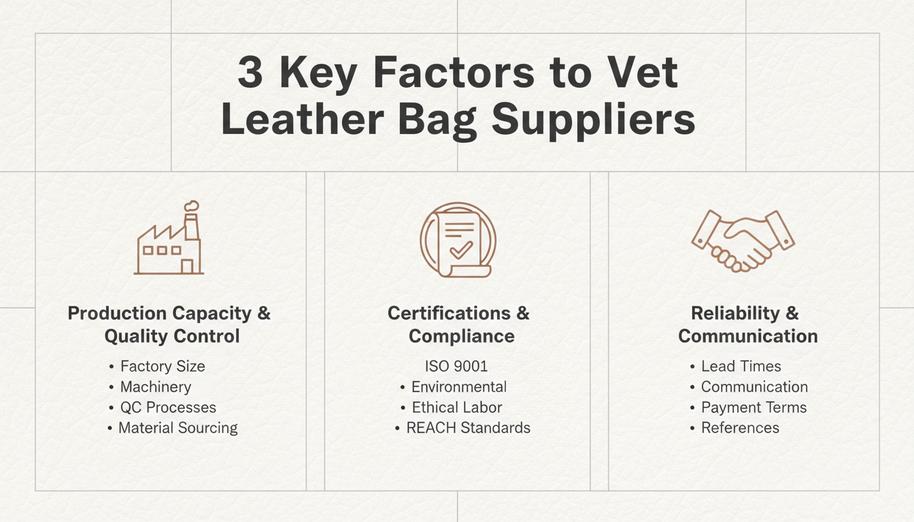
Finding reliable custom leather bag manufacturers means choosing a long-term operational partner. From custom leather sourcing to bulk assembly, here is what truly matters.
Production Capacity and Quality Assurance Practices
When reviewing custom leather bag manufacturers, audit their production capacity and quality control infrastructure.
- Core manufacturing strength
- Factory infrastructure: Cutting, multi-needle sewing, and automated edge-painting lines; dedicated sampling rooms for rapid prototyping.
- Skilled workforce: Pattern makers, senior stitchers, and QC supervisors enforcing AQL 2.5 standards.
- Output and timelines
- Monthly volume aligned with your forecast.
- Stable lead times during seasonal peaks.
- Backup planning for rush leather bag production.
- Quality framework
- Clear inspection protocols (100% inspection before packing).
- Structural reinforcements like PP hard bottom plates and X-stitched handles.
- Traceable batch coding for every custom leather bag.
Strong manufacturing capabilities reduce rework. Topfeel seamlessly integrates structural reinforcements and continuous inline inspections from raw hide skiving to final packaging, guaranteeing consistency.
Ethical Sourcing Certifications and Compliance Checks
Smart brands verify compliance before signing contracts:
- Certification scope
- Supply chain transparency
- Documented material traceability.
- Chemical management aligned with REACH/export rules.
- Updated audit reports.
- Corporate commitment
- Active social responsibility policies.
- Ongoing regulatory adherence reviews.
Serious custom leather bag manufacturers share this paperwork upfront. Topfeel integrates ethical sourcing directly into vendor selection, providing brands a secure foundation for premium collections.
Supplier Reputation: References, Reviews, and Track Record
Reputation is proven through historical data.
- Verify real partnerships
- Ask for client testimonials.
- Request direct industry references.
- Assess consistency
- Review long-term performance history.
- Look for repeat orders showing reliability.
- Test communication
- Clear communication channels.
- Fair dispute resolution handling.
Dependable custom leather bag manufacturers maintain consistent export records. Topfeel’s established global network (North America/Europe/Australia) serves as a benchmark for proven supplier reputation.
Which Materials Do Top Manufacturers Use?
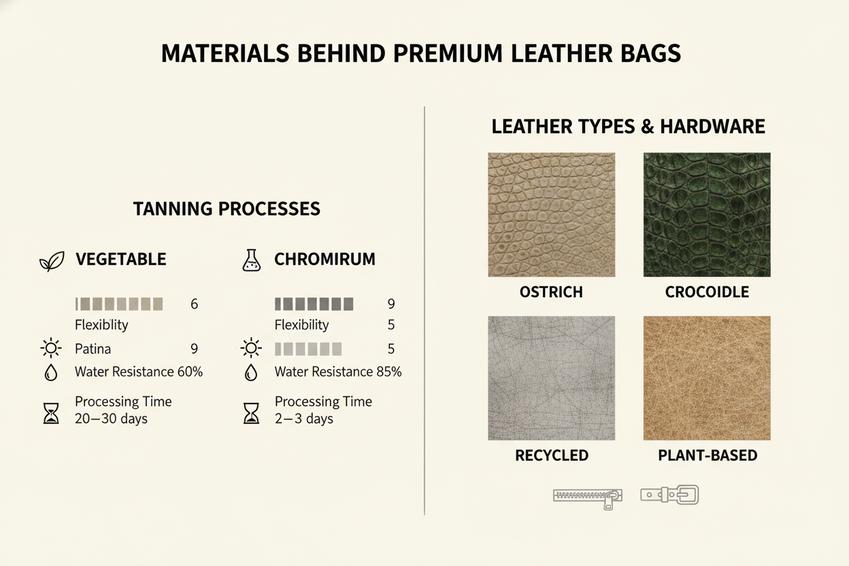
Material selection dictates a bag’s lifespan and market positioning.
Vegetable-Tanned vs. Chromium-Tanned Leather
The tanning method drives performance and cost.
- Vegetable tanning
- Uses natural dyes and plant extracts.
- Encourages rich patina development.
- Builds firm structure and strong leather durability.
- Lower reliance on synthetic chemicals, reduced environmental impact.
- Chromium tanning (Accounts for ~85% of global production)
- Relies on chromium tanning salts.
- Creates high leather flexibility and color uniformity.
- Offers superior water resistance.
- Faster production cycle for scalable bulk orders.
Performance Comparison Table
| Property | Vegetable Tanning | Chromium Tanning | Typical Use Case | Avg. Processing Time (Days) |
|---|---|---|---|---|
| Flexibility Index (1–10) | 6 | 9 | Soft handbags | 2–3 |
| Patina Rating (1–10) | 9 | 5 | Heritage bags | 20–30 |
| Water Resistance (%) | 60 | 85 | Travel goods | 1–2 |
| Chemical Load Score | Low | Moderate | Mass retail | 1–3 |
Exotic Options: Ostrich, Crocodile, and More
Luxury lines utilize ostrich leather, crocodile leather, or alligator skin.
- Python skin brings bold patterns.
- Stingray leather offers immense abrasion resistance.
- All count as luxury materials with striking unique textures.
Reliable custom leather bag manufacturers strictly enforce CITES compliance and ethical sourcing. Topfeel expertly navigates these legal frameworks to protect brand integrity.
Eco-Friendly Alternatives: Recycled and Plant-Based Leathers
Sustainability drives modern retail.
- A. Recycled leather
- Made from reclaimed fibers.
- Reduces overall environmental footprint.
- Retains a natural leather hand-feel.
- B. Plant-based leather
- Utilizes cactus, pineapple, or woven plant fibers.
- Marketed as vegan leather and cruelty-free.
- Offers partial biodegradable options.
- C. PU, TPU, and innovative textiles
- Highly stable pricing and broad custom logo compatibility (e.g., UV Transfer Decal, screen print process).
- Easier color control.
- Must verify sustainable materials certifications.
Sourcing Eco-Friendly or Premium Alternatives? From rich PU leather to sustainable TPU and Tyvek®, Topfeel Bag customizes to your exact specifications. Browse our Custom Cosmetic Bags or Outdoor Bags for material inspiration.
Hardware & Lining Selections for Durability and Style
Premium leather requires robust metal hardware. Specifications must include corrosion-resistant two-way zippers, reinforced buckles, and solid clasps.
Durable interior lining options include:
- Cotton twill for breathability.
- Waterproof polyester or PVC lining for toiletry bags and cosmetic/travel utility.
- High-end EVA foam or PE cotton filling for shock resistance.
Topfeel prioritizes matching hardware durability with structural additions like EPE boards, ensuring the design doesn’t collapse over time.
Full-Grain Vs. Top-Grain Leather Choices
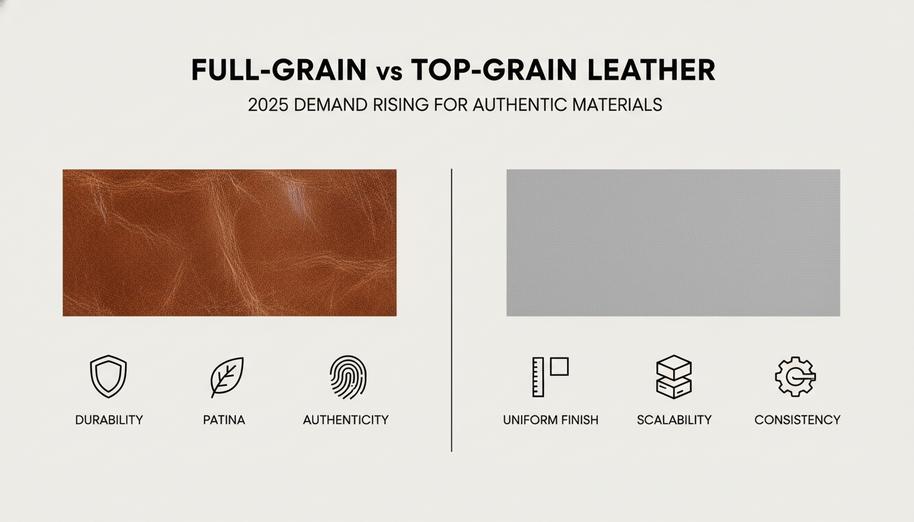
Full-Grain Leather
Full-grain retains the hide’s natural grain with zero sanding, offering maximum tensile strength.
- Core material traits
- Surface: Retains original fibers and natural imperfections.
- Structure: Dense fiber layers support long-term durability and load-bearing strength.
- Performance factors
- Aging: Develops a rich patina through the natural aging process.
- Comfort: Maintains strong breathability.
Grand View Research noted that consumer demand is rising for “authentic materials that age naturally,” projecting the global leather goods market toward $340B by 2030, reinforcing the appeal of full-grain.
Top-Grain Leather
Top-grain offers a uniform, sleek aesthetic.
- Surface refinement
- Sanded surface removes visible flaws.
- Buffed texture improves touch.
- Targeted imperfection removal creates clean lines.
- Finishing process
- Application of pigmented coatings.
- Protective finished layer for stain resistance.
- Improved pliability for softer silhouettes.
- Trade-offs
- Slightly reduced breathability.
- Less dramatic patina development.
It perfectly balances quality and cost for large production runs.
Worried About MOQ? Flexible Order Volumes Explained
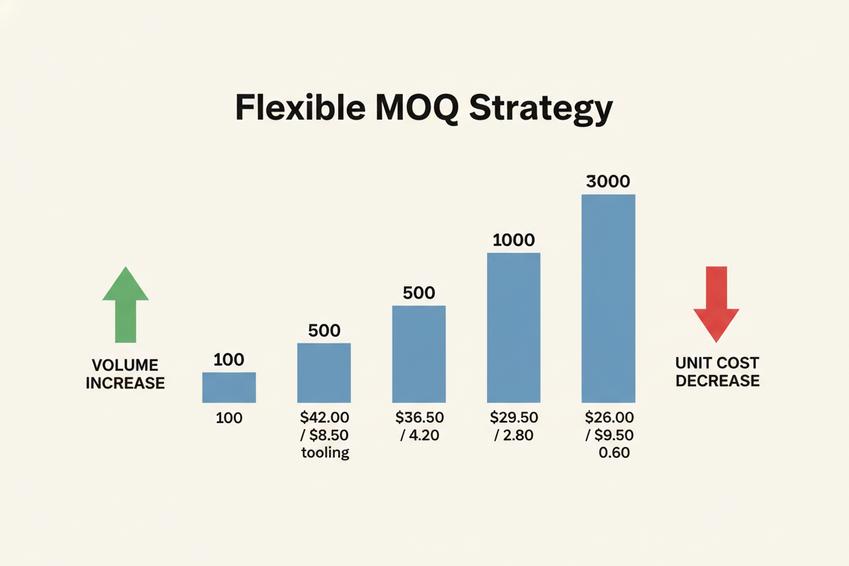
MOQ is a mathematical reality based on fixed factory setups.
How MOQs Impact Unit Costs
MOQ connects directly to cost layers:
- Fixed Costs
- Tooling and Molds: Cutting dies, custom hardware, print plates.
- Setup Labor: Machine calibration, material preparation.
- Variable Costs
- Leather Material
- Hardware Components
- Packaging
Simplified cost spread:
| Order Volume (Units) | Tooling Cost per Unit (USD) | Avg. Unit Price (USD) |
|---|---|---|
| 100 | 8.50 | 42.00 |
| 300 | 4.20 | 36.50 |
| 500 | 2.80 | 33.00 |
| 1000 | 1.40 | 29.50 |
| 3000 | 0.60 | 26.00 |
Negotiation Techniques to Lower Minimums
To negotiate with custom leather bag manufacturers:
- Offer multiple colorways under one material batch.
- Accept standard hardware components instead of custom molds.
- Commit to repeat orders in writing.
Topfeel establishes a baseline MOQ of 1,000 pieces per style for standard materials, scaling to 5,000 for highly specialized custom runs.
Scale smart with flexible minimums. Topfeel Bag supports your brand’s growth with an accessible MOQ of just 1,000 pieces per style and fast 7–10 day sampling. Start your custom bag project with Topfeel Bag today.
When Small Batch Runs Deliver Big Advantages
- Market Testing
- Launch limited designs, such as a makeup clutch or capsule collection.
- Measure sell-through rate.
- Adjust pricing quickly.
- Inventory Control
- Lower storage costs.
- Reduced dead stock.
- Faster cash flow cycles.
- Design Evolution
- Collect real user feedback.
- Improve stitching quality.
- Upgrade lining materials.
Fear Of Hidden Costs? Transparent Pricing Tips
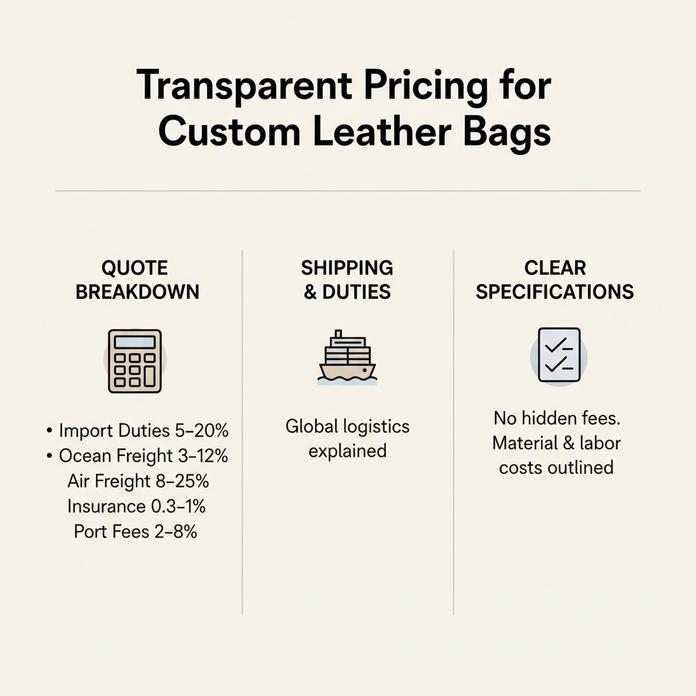
Spotting Extra Fees in Your Quote
Scan every cost component in your quote analysis:
- Core production costs
- Materials: Leather grade, hardware quality.
- Labor & MOQ adjustments.
- Add-on charges
- Tooling molds (embossing/metal plates).
- Sampling rounds.
- Packaging upgrades.
- Compliance costs
- Testing, Certification, Inspection.
Check invoice scrutiny items:
- Currency clauses.
- Late-payment penalties.
- Deposit percentages.
Accounting for Customs, Duties, and Shipping
Global sourcing requires mastering import regulations and tariffs. For example, leather bags under HS Code 4202 face specific US import duties averaging 8-10%.
| Cost Item | Typical Range (%) | Risk Level |
|---|---|---|
| Import Duties | 5–20% | Medium |
| Ocean Freight | 3–12% | Medium |
| Air Freight | 8–25% | High |
| Insurance | 0.3–1% | Low |
| Port & Handling Fees | 2–8% | Medium |
“Trade policy uncertainty remains a top cost driver for importers in 2026,” noting that air freight can cost 4-5x more than ocean transit.
Avoiding Rework Charges with Clear Specs
Strong specification clarity prevents revision costs.
- Technical documentation: Tech packs, stitch density, hardware finish codes.
- Material control: Approved leather swatches, lining references.
- Process checks: Inline quality control, final inspection.
Topfeel requires signed PP (Pre-Production) sample confirmation before bulk runs, protecting your budget.
Which Lead Times Are Realistic Today?
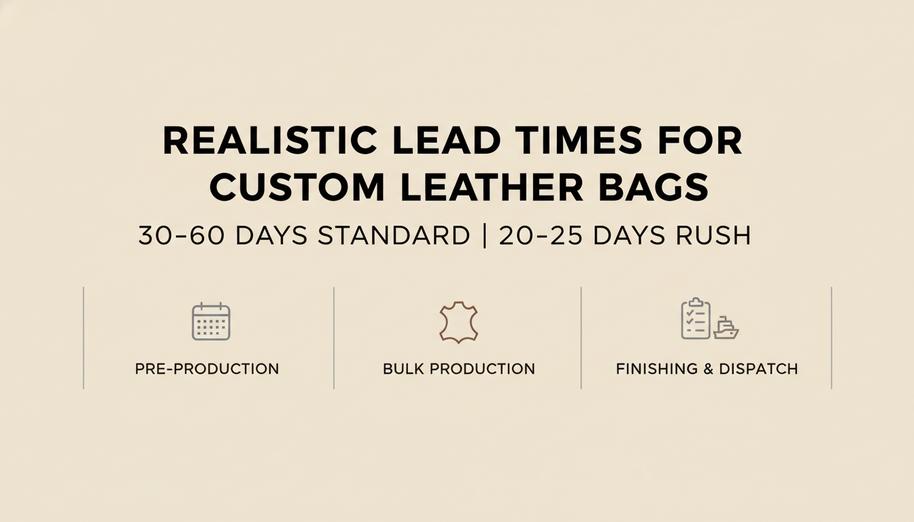
Standard Production Timelines You Can Trust
- Pre-Production Stage
- Sample approval: Topfeel completes sampling in 7–10 days after spec lock.
- Tech pack validation: Final measurements.
- Bulk Production Stage
- Material sourcing: Leather cutting, lining prep.
- Assembly process: Edge painting, hardware installation.
- Quality control: Inline and final AQL 2.5 review.
- Finishing & Dispatch
- Packaging under export regulations.
Topfeel reliably delivers bulk orders of 1,000 units in 25 days, scaling to 35-40 days for 10,000 units.
Rush Orders: Balancing Speed and Cost
- Overtime production increases labor cost.
- Priority material sourcing carries supplier premiums.
- Air freight bypasses sea delays but slashes margins.
To expedite:
- Confirm stock leather availability.
- Simplify hardware choices.
- Approve samples digitally.
- Run parallel cutting and stitching lines.
Key Factors That Affect Delivery Schedules
- Supply Chain Stability: Tannery capacity, hardware backlogs.
- Order Complexity: Multi-pocket structures, custom molds.
- Seasonal Pressure: Peak export months.
- Inspection Outcomes: Rework after failed tests.
FAQs about Custom Leather Bag Manufacturers
How do custom leather bag manufacturers maintain consistent product quality? Through layered discipline: Material screening, in-line inspections (checking stitching tension and hardware alignment), and final AQL carton audits. Consistency requires floor-level management.
Which certifications should buyers request?
- LWG – responsible leather sourcing.
- ISO – controlled production systems.
- BSCI/Sedex – verified labor standards.
How does production capacity influence reliability? It relies on synced machinery, skilled labor, and QC rhythm. If cutting beds outpace stitchers, or inspectors lag, delays ripple.
Why do MOQs and hidden costs matter? Higher MOQs spread fixed mold costs, lowering per-piece pricing. Hidden costs (sampling fees, custom packaging, freight shifts) erode margins. Clear quotations protect long-term trust.
Launch Your Next Collection with Confidence. Whether you need custom Handbags, Tote Bags, or Toiletry Bags, Topfeel Bag guarantees 100% inspection and precise 25-day bulk delivery. Contact Topfeel Bag to request a quote and sample today!
References
- AQL 2.5 standards – intouch-quality.com
- LWG – leatherworkinggroup.com
- ISO 9001 – iso.org
- BSCI – amfori.org
- Sedex – sedex.com
- REACH – echa.europa.eu
- Grand View Research – grandviewresearch.com
- CITES compliance – cites.org
- environmental footprint – epa.gov
- vegan leather – materialinnovation.org
- HS Code – wcoomd.org
- air freight – iata.org
- Material screening – astm.org


.png)



4th-5th Floor, Building B2, Yin Tian Industrial Park, Xi Xiang Road, Bao'an Dist, Shenzhen, 518102 ,China