
 English
  Korean
  French
  German
  Hungarian
  Japanese
  Russian
How to Choose the Perfect Standard Pouch Size for Your Product
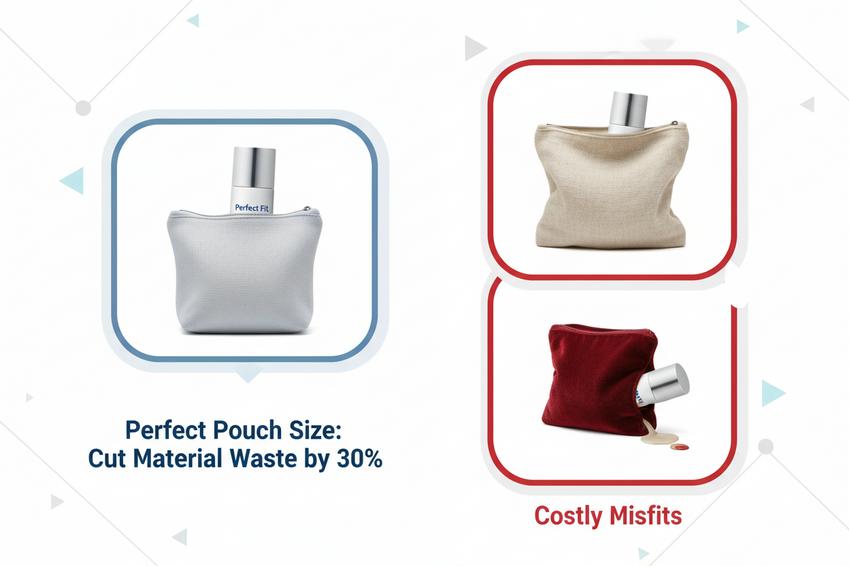
Picking the right standard pouch size sounds simple—until your brand-new cosmetic bags show up and your hero serum sticks out like a sore thumb. Now you’re eating extra freight costs and side-eye from retail buyers. It’s like ordering a suit off the rack: too tight, you can’t breathe; too baggy, you look sloppy. In packaging, size isn’t cosmetic—it’s cash flow, shelf appeal, and customer trust rolled into one.
Topfeel’s senior production manager shared in a 2025 client briefing, “Standardized dimensions can cut material waste by nearly 30% during bulk runs.” That’s not pocket change. Smart sizing keeps die lines efficient and margins healthy.
Get the size right, and everything clicks—fit, finish, freight. Get it wrong, and it’s money down the drain.
Reading Notes on Standard Pouch Size Harmony
➔ Dimension Balance: Match small, medium, or large formats to product volume, allowing space for closures and interior features without wasted bulk.
➔ Interior Layout: Incorporate removable dividers, elastic loops, or single compartments to organize contents and simplify stitching.
➔ Closure Choice: Select zippers for security, snap buttons for promos, or magnetic flaps for premium appeal.
➔ Material Match: Optimize fabric cutting with nylon, polyester, or canvas—upgrade aesthetics with vegan leather or satin.
5 Secrets Professionals Know About Choosing Standard Pouch Size Correctly
Picking the right standard pouch size is not just about looks. It shapes storage, user comfort, shipping cost, and even brand vibe. Get the pouch size wrong, and everything feels off. Nail the standard pouch size, and the whole product clicks.
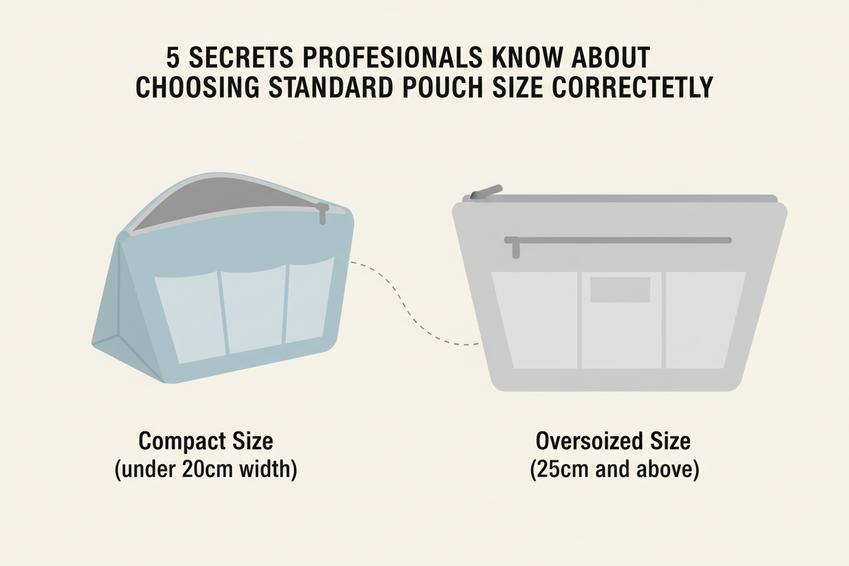
Understand compact vs. oversized pouch dimensions
When comparing compact and oversized options, pros break down pouch dimensions into clear layers:
- External perspective
- External measurements define shelf presence.
- Compact size (under 20 cm width) fits handbags.
- Oversized size (25 cm and above) supports travel kits.
- Internal perspective
- Internal volume determines real storage capacity.
- Depth affects bulky items more than width.
- Shape impacts total product fit.
- Practical match
- Daily carry → small standard pouch size.
- Travel storage → large standard pouch size.
A smart read of standard pouch size avoids wasted space and awkward bulges.
Match interior features like removable dividers to your product
Choosing a standard pouch size without checking inside details is risky. Professionals look at:
- Core layout
- Removable dividers for flexible setups
- Fixed compartments for stable storage
- Smart access points for quick reach
- Organization logic
- Internal organization reduces clutter
- Product separation prevents damage
- Secure storage keeps liquids upright
Small tweaks in a standard pouch size can totally change usability. A medium pouch with a customizable interior often beats a larger empty one.
Choosing the right closure: zipper, snap button, or magnetic
Closure affects both vibe and safety within any standard pouch size.
-
- Zipper closure
- High security level
- Strong durability
- Ideal for toiletry bags
-
- Snap button
- Easy fastening mechanism
- Moderate protection
- Great for giveaways
-
- Magnetic closure
- Smooth ease of access
- Clean finish
- Works well on slim makeup clutch designs
Match closure strength with pouch size standard expectations.
Align exterior elements—handle, logo placement, or transparent panel
External design shapes how a standard pouch size feels in real life.
- Carry factor
- Short exterior handle for quick grab
- Detachable strap for heavier loads
- Balance between weight and carrying comfort
- Branding logic
- Centered logo placement for symmetry
- Side print for subtle style
- Reserved branding area that scales with pouch size
- Visibility and style
- Clear transparent panel boosts product visibility
- Solid fabric highlights design aesthetics
Even a small shift in standard pouch size changes logo proportion and grip comfort.
Selecting materials from nylon and polyester to vegan leather
Material choice locks in performance for any standard pouch size.
- Functional picks
- Nylon material: light, strong, easy to clean
- Polyester fabric: stable shape, good water resistance
- Premium feel
- Vegan leather: smooth texture, polished look
- Satin lining for softer interior touch
- Performance check
- Test material durability with weight load
- Consider climate exposure
- Review long-term sustainability goals
A well-balanced standard pouch size paired with the right fabric creates a pouch size standard that feels intentional, not random.
How Correct Standard Pouch Size Can Reduce Material Waste by 30%
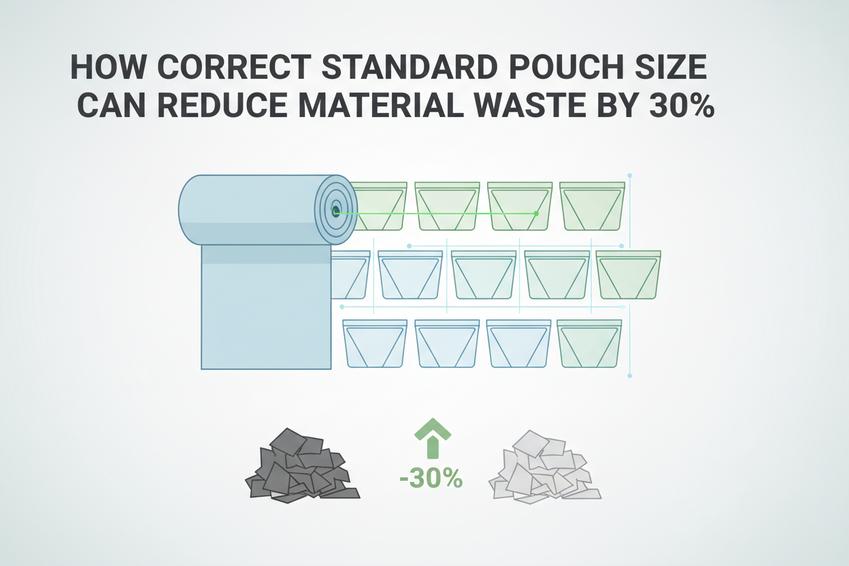
Getting the standard pouch size right is not just a design call; it directly shapes cost, cutting flow, and scrap control. When a pouch size standard is clear, factories waste less fabric and reject fewer units. From standard size pouch planning to smart material picks, small tweaks can trim waste close to 30%.
Optimizing medium and large pouch sizes for efficient fabric cutting
A stable standard pouch size improves fabric cutting logic and boosts material optimization across bulk orders.
- Size Planning
- Define medium pouches and large pouches under one pouch size system.
- Lock a repeatable pattern layout grid.
- Align cutting width with roll width.
- Cutting Execution
- Stack layers by fabric thickness.
- Match grain direction to reduce distortion.
- Track offcuts for measurable waste reduction.
- Factory Outcome
- Lower scrap ratio.
- Faster batching.
- Stable output for brands like Topfeel that rely on consistent standard pouch size runs.
McKinsey’s 2025 apparel sourcing update notes that standardized pattern systems can reduce textile waste by up to 25% in mass production environments.
Why waterproof lining and single compartment designs cut down rejects
Simple sells. A waterproof lining protects material integrity, while a single compartment layout reduces stitching errors.
Key reasons factories prefer this setup:
- Fewer seams mean fewer manufacturing defects.
- Clean internal space improves durability.
- Straightforward design features shorten training time.
In real production:
- Cut outer shell by standard pouch size template.
- Bond lining in one motion.
- Inspect sealing points.
Less complexity equals fewer product rejects. For travel gear programs at Topfeel, this approach keeps the pouch standard sizing consistent and practical.
Cotton canvas vs. PVC: material comparison for minimal waste
Material choice affects scrap rates under the same standard pouch size rule.
- Fabric Behavior
- Cotton canvas
- Stable during fabric cutting
- Easier trimming
- Better for minimal waste targets
- PVC
- Higher rigidity
- Greater scrap risk
- Strong waterproof performance
- Cotton canvas
- Data Overview
| Material | Avg Scrap Rate (%) | Durability (Cycles) | Recut Reuse Rate (%) | Environmental Impact Score (1–5) |
|---|---|---|---|---|
| Cotton Canvas | 8 | 12,000 | 35 | 3 |
| Recycled Canvas | 9 | 11,500 | 40 | 2 |
| PVC 0.3mm | 15 | 18,000 | 10 | 4 |
| PVC 0.5mm | 18 | 22,000 | 5 | 4 |
| TPU | 12 | 20,000 | 15 | 3 |
Under a unified standard pouch size, canvas often wins for material comparison goals tied to waste control. PVC adds lifespan, yet trimming loss is higher. Smart brands balance fabric properties, cost, and eco goals before locking the final standard size pouch spec.
4 Steps to Measure Perfect Pouch Size for Your Product
Choosing the right standard pouch size isn’t just about grabbing a ruler and hoping for the best. A good pouch feels easy to pack, easy to close, and easy to carry. When the pouch size standard fits your product like a glove, customers notice. Let’s break it down in a practical, no-nonsense way.

Step 1 – Determine product dimensions and internal layout
Start with the core: your product dimensions.
- Measure:
- Length
- Width
- Depth
Then go deeper:
- Identify the product shape
- Flat items need less volume allowance.
- Bulky or rounded items demand extra internal breathing room.
- Plan the internal layout
- Single compartment for simple storage.
- Multiple zones for makeup bags or toiletry bags.
Under a proper standard pouch size, the inside should reflect real usage:
- Daily essentials → compact pouch size
- Travel kits → expanded standard pouch size
At Topfeel, designers review length, width, and internal spacing together so the final pouch standard size supports both form and function.
Step 2 – Add allowances for zipper or drawstring closures
Closures eat space. Ignore that, and your pouch feels tight.
Account for:
- Zipper closure
- Add seam allowance
- Consider material thickness
- Ensure smooth track movement
- Drawstring closure
- Reserve channel space
- Leave room for closure overlap
Key checks:
- Is there enough gap for easy pull?
- Does the fabric bunch near the top?
- Is daily ease of use maintained?
A smart standard pouch size includes these invisible margins. Without them, even perfect product dimensions won’t save the fit.
Step 3 – Factor in interior pockets and elastic loops
Organization changes everything.
When adding interior pockets, calculate:
- Extra pocket depth
- Required additional volume
For elastic loops:
- Define proper loop size
- Allow stretch expansion
Nested layout planning works like this:
- Main cavity
- Holds core product
- Secondary storage
- Mesh or zip pocket
- Support features
- Organizational features like loops or dividers
Each layer increases internal pressure. The standard pouch size must grow slightly to avoid bulging and protect structure. Topfeel adjusts structural spacing early so the final pouch size standard stays sleek, not stuffed.
Step 4 – Test prototypes in small, medium, and large sizes
Testing isn’t optional.
Review through:
- Prototype testing
- Compare small, medium, large
- Fit assessment
- Check real product insertion
- Functional testing
- Open, close, pack, unpack
- Ergonomics
- Grip comfort
- Bag portability
- User experience
- Does it feel natural?
Size variations reveal what drawings can’t. A small tweak in pouch size variations can shift comfort dramatically. When the tested standard pouch size feels right in hand and looks balanced on display, production decisions become simple.
Getting the standard pouch size right means thinking beyond numbers. Measure smart, allow space, build structure, and test honestly. That’s how a good pouch becomes a great one.
FAQs about Standard pouch size
How does selecting the right standard pouch size improve production results?
Choosing the correct standard pouch size is not just about looks—it directly affects cost and consistency.
- Material efficiency
- Medium and large formats nest better on polyester or cotton canvas rolls.
- Less offcut waste means smoother bulk production of makeup bags and toiletry bags.
- Quality stability
- Travel-size and compact patterns keep stitching lines balanced.
- Proper spacing reduces seam stress in nylon or PVC with waterproof lining.
When dimensions are stable, defect rates drop and every batch feels dependable.
Compact or oversized: which pouch size works best for different uses?
Size shapes user emotion and function at the same time.
- Compact / small → ideal for event giveaways, minimalist makeup clutch bags, quick daily touch-ups.
- Medium / travel-size → balanced choice for travel organizers with single compartment or multiple pockets.
- Large / extra-large / oversized → perfect for gift with purchase sets, brush holders, and removable dividers inside glamorous vegan leather or satin designs.
A well-matched size feels intentional, not excessive.
Which closures and features suit standardized pouch designs in bulk orders?
Closures define daily experience, while interior structure shapes practicality.
Closures often paired with standard pouch size:
- Zipper: secure and functional for drawstring bags in nylon or mesh.
- Snap button or velcro: practical for promotional items.
- Magnetic closure or flap: clean, modern finish for minimalist collections.
Interior & exterior balance:
- Elastic loops and brush holders organize without crowding medium layouts.
- Transparent panel adds visibility to PVC travel organizers.
- Handle or detachable strap increases comfort for large and extra-large pieces.
- Strong logo placement through printing or embroidery reinforces brand memory.
The right mix turns a simple pouch into a daily companion.
Why is prototype testing crucial before fixing a standard pouch size?
Testing small, medium, and large samples reveals hidden tension.
Cotton canvas may soften and expand; vegan leather can pull at corners near the zipper; satin may require reinforced seams. A single compartment might sit flat, while multiple pockets change internal pressure.
By refining dimensions early, brands avoid bulging edges, uneven stitching, and rejected promotional items. The final standard pouch size then feels functional, classic or trendy—exactly as intended.
References
- Importance of Customer Trust – https://www.google.com/search?q=forbes.com/Forbes
- Designing Effective Die Lines – pulpandpixel.ca/Pulp & Pixel
- UPS Guide to Determining Package Size – https://www.google.com/search?q=ups.com/UPS
- ISO Standard 66031 for Dimensional Coordination – iso.org/ISO
- Climate Impacts on Logistics – https://www.google.com/search?q=nature.com/Scientific Reports
- EPA Data on Textile Waste – epa.gov/EPA
- Scientific Definition of Rigidity – https://www.google.com/search?q=britannica.com/Britannica
- Gore-Tex Durability and Waterproof Standards – https://www.google.com/search?q=gore-tex.com/Gore-Tex
- UNEP Global Waste Management Outlook – unep.org/UNEP
- What is Vegan Leather? – vogue.co.uk/Vogue
- History and Techniques of Embroidery – wikipedia.org/Wikipedia
- Tension and Material Science – https://www.google.com/search?q=merriam-webster.com/Merriam-Webster
- Structural Reinforcement in Sewing – https://www.google.com/search?q=sewingmachinesplus.com/Sewing Machines Plus
- The State of Fashion 2025 – https://www.google.com/search?q=mckinsey.com/McKinsey


.png)



4th-5th Floor, Building B2, Yin Tian Industrial Park, Xi Xiang Road, Bao'an Dist, Shenzhen, 518102 ,China