
 English
  Korean
  French
  German
  Hungarian
  Japanese
  Russian
Is Polyester Good or Bad? Complete Material Guide for Bags
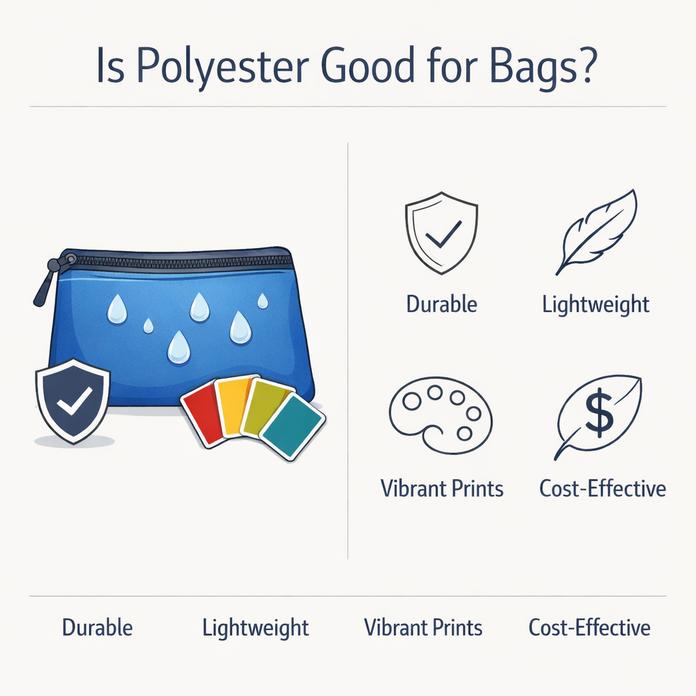
“Is polyester good material?” That question pops up in sourcing meetings like a stubborn popcorn kernel. You want bags that look sharp, survive baggage claim brawls, and don’t torch your budget. Polyester keeps showing up on spec sheets—lightweight, printable, water-resistant—but is it the real deal or just the budget understudy?
Pick the wrong fabric and you’ll feel it in returns, reorders, and awkward client calls. For those looking for structured cosmetic bags, understanding fabric performance is the first step toward a successful product launch.
Think of polyester as the reliable pickup truck of bag materials. It may not flash like leather, yet it hauls logos, color, and bulk orders without blinking. The trick is knowing when it’s the workhorse your brand needs—and when it’s not.
Quick Answers: Is Polyester Good Material?
- Exceptional Durability: Resists stains, wrinkles and tearing for long-lasting use.
- Lightweight & Travel-Friendly: Reduces shipping costs and eases everyday carry without bulk.
- Vibrant Color & Printability: Supports dye sublimation and panel printing for sharp, lasting logos.
- Cost-Effective & Sustainable: Lower production costs, recycled options, and efficient supply chain logistics.
4 Factors That Make Polyester Popular
Polyester shows up everywhere, from travel bags to cosmetic cases, and people keep asking, is polyester good material for daily use? Short answer: yes, and for solid reasons. If you’ve ever wondered “is polyester good,” or “is polyester a good material,” this breakdown keeps it real and practical.
Exceptional Durability and Stain Resistance
When asking is polyester good material, durability usually tops the list. Technical data on polyester fiber strength highlights its high tenacity and resistance to most chemicals.
- Core Performance
- Fiber Strength
- High tear strength reduces splitting at stress points.
- Strong abrasion resistance helps surfaces stay smooth even after heavy use.
- Everyday Wear
- Built-in toughness supports long-lasting structure.
- Natural resilience allows the fabric to bounce back after folding.
- Fiber Strength
- Surface Protection
- Stain Control
- Advanced stain repellency keeps spills from soaking in fast.
- Maintenance
- Quick wipe-down care supports a long-lasting appearance.
- Stain Control
For brands like Topfeel, this balance of strength and easy care answers the big question: is polyester good material for products that travel, get tossed around, and still need to look sharp? This is particularly true for outdoor bags where environmental exposure is a constant factor.
Lightweight Carry Meets Travel-Friendly Needs
People often ask, is polyester good when weight matters? Absolutely. According to shipping logistics standards, reducing material weight directly impacts total landed cost.
- Material Structure
- Low low density fibers reduce bulk.
- Smart weaving supports weight reduction without feeling flimsy.
- Travel Function
- Easy portability makes daily carry less tiring.
- Compact packability fits tight luggage spaces.
- User Experience
- Smooth ease of handling during packing.
- Real travel convenience for work or vacation.
That’s why Topfeel products feel light but not weak. If you’re thinking is polyester a good material for frequent flyers, this is your sign. Compact designs like wrist bags benefit the most from this weight efficiency.
Water Resistance for Everyday Use
Spills happen. Rain happens. Life happens. The hydrophobic nature of polyester makes it a natural candidate for water-resistant applications.
- Protection Layer
- Natural hydrophobic properties create a light moisture barrier.
- Built-in dampness prevention keeps inner items safe.
- Climate Adaptability
- Light weather protection supports daily commuting.
- Surface design encourages quick drying.
- Added mildew resistance improves hygiene over time.
McKinsey’s 2024 State of Fashion update noted that consumers increasingly prioritize “durable, weather-resistant materials” that extend product life and reduce replacement frequency.
So when someone asks again, is polyester good material, especially for toiletry bags or travel gear, water resistance alone makes a strong case.
Vibrant Colorfastness and Surface Finish
Looks matter. Polyester keeps them fresh.
- Color Performance
- Strong dye retention supports bright tones.
- Built-in color stability improves fade resistance.
- Added UV resistance slows sun damage.
- Visual Appeal
- Clean smooth texture enhances print clarity.
- Subtle surface sheen creates a refined feel.
- Optional glossy appearance boosts shelf impact.
For brands like Topfeel, vibrant panels and consistent prints help products stand out. So yes, is polyester good material? For durability, light weight, moisture defense, and lasting color—it absolutely earns its spot.
Why Is Polyester Good Material For Makeup Pouches?
Makeup bags go through a lot—spills, drops, overstuffing, and daily tossing into totes. So when people ask, is polyester good material for beauty storage, the real question is about durability, print quality, and design freedom. Let’s break down why polyester fabric keeps winning.
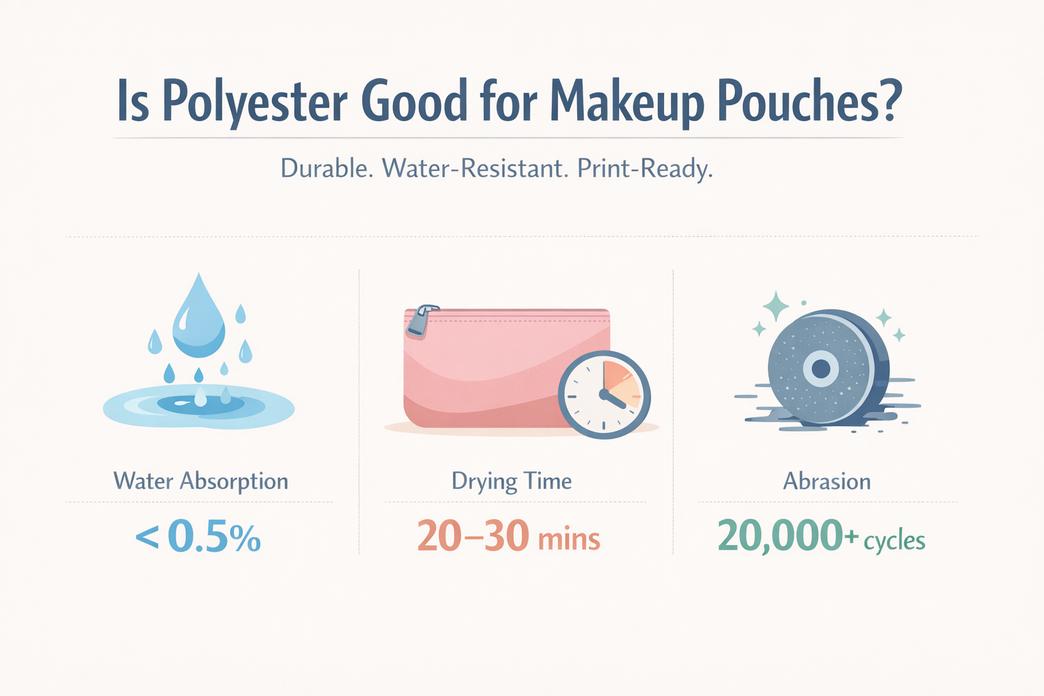
Easy Cleaning and Cosmetic Protection
When asking is polyester good material for beauty bags, protection is usually the deal breaker. Polyester fabric stands out because of its tight fabric weave, built-in water resistance, and strong stain resistance.
- Handles messy makeup spills without soaking through
- Stays easy to wipe with a damp cloth
- Maintains long-term durability even after repeated cleaning
Performance comparison:
| Property | Polyester | Cotton | Nylon |
|---|---|---|---|
| Water Absorption (%) | <0.5 | 7–8 | 3–4 |
| Drying Time (mins) | 20–30 | 60+ | 40–50 |
| Abrasion Cycles | 20,000+ | 8,000 | 15,000 |
| Stain Retention Score* | Low | Medium | Low |
*Based on controlled cosmetic liquid testing.
Protection also depends on structure:
- Outer Layer
- Dense polyester fabric shell
- Surface coating for added water resistance
- Inner Support
- Reinforced protective lining
- Seam sealing around zipper edges
- Daily Use Impact
- Blocks foundation leaks
- Reduces powder dust escape
So, is polyester a good material? For cosmetic protection, yes—plain and simple. This reliability is essential for high-capacity items like tote bags that serve as portable vanities.
Versatile Panel Printing for Logo Application
Branding matters. If you’re wondering is polyester good material for custom makeup pouches, printing flexibility seals the deal. Understanding the screen print process is vital for achieving crisp results on synthetic fabrics.
Key advantages:
- Multiple printing methods supported
- Flexible logo placement on flat panels
- Sharp high-resolution prints
- Strong brand visibility
Production logic often looks like this:
- Fabric Preparation
- Smooth surface texture
- Pre-treatment for ink bonding
- Printing Options
- Panel screen printing
- Heat transfer
- Dye sublimation
- Visual Output
- Clean edges
- Vibrant colors
- Long-term print permanence
Because polyester holds ink evenly, color bleeding is rare. That’s why many suppliers say polyester is a good material for branding-focused cosmetic bags. Topfeel uses panel-based construction to keep graphics aligned and consistent across bulk orders, which helps brands maintain quality control without drama.
Consistent Fabric Texture and Dye Sublimation
Consistency saves time on the production floor. The stable fabric weave and texture consistency of polyester reduce cutting errors and speed up stitching. For a broader look at textiles, comparing this to woven fabric characteristics can help designers choose the right base.
From yarn to final bag:
- Fiber Spinning
- Uniform filament diameter
- Weaving
- Balanced tension control
- Smooth surface finish
- Printing Phase
- Heat-activated dye sublimation
- Deep color saturation
- Strong print permanence
- Visual Result
- Even tone across panels
- High visual appeal
Short version? Polyester keeps batches looking alike. For brands scaling up, that reliability answers the question: is polyester good material for large production? Absolutely. It’s also widely considered a good fabric for drawstring bags that need bold artwork.
Custom Compartment Design and Handle Styles
Design freedom matters just as much as fabric strength. Polyester’s sewability supports detailed internal organization without puckering or distortion.
Functional layout can include:
- Interior zippered pockets
- Brush-holding elastic loops
- Divided panels for skincare bottles
- Structured base inserts
Construction typically flows like this:
- Pattern Drafting
- Size planning
- Weight balance check
- Compartment Assembly
- Stitching layered linings
- Installing reinforced zipper tracks
- Handle Integration
- Soft webbing handle options
- Padded grips for carrying comfort
- Attention to ergonomic design
All these elements support a smart, functional layout. Topfeel focuses on tailoring compartment depth and handle width based on customer feedback, proving again that if you’re asking is polyester good material, the answer ties directly to how well it adapts. For those requiring a more compact solution, a makeup clutch offers refined organization in a smaller footprint.
Polyester Vs. Leatherette: Cost Analysis
Choosing between polyester and leatherette often comes down to one big question people keep asking: is polyester good material for long-term value? Cost, supply stability, and real-world performance all matter. Research into polyurethane versus polyester coatings shows significant differences in production costs and durability.
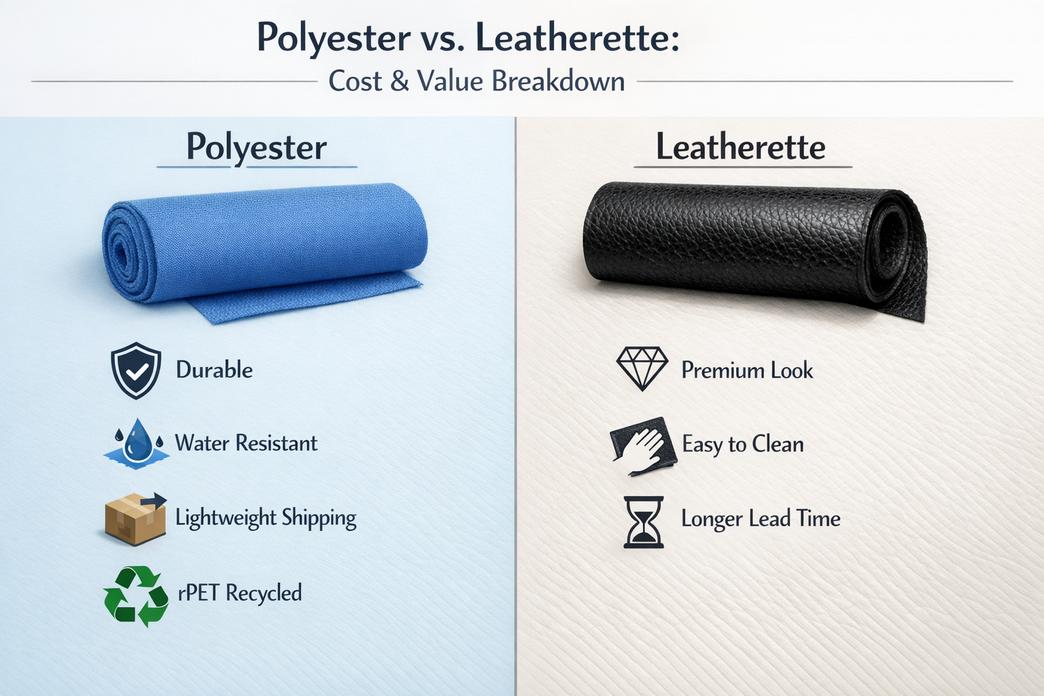
Polyester
When buyers ask, is polyester good material, the answer usually connects to how this synthetic fiber behaves across sourcing, production, and daily use.
- Raw Material & Supply
- Availability
- Widely produced globally, reducing sourcing risk
- Lead Time
- Shorter production cycles support faster turnaround
- Cost Control
- Stable pricing compared to specialty fabrics
- Availability
- Performance Factors
- Core Traits
- Strong durability for repeated wear
- Solid water resistance in treated forms
- Naturally lightweight, lowering freight cost
- Comfort Layer
- Moderate breathability, depending on weave
- Care
- Easy maintenance, machine washable in most cases
- Core Traits
- Sustainability Angle
- Recycled Options
- rPET (Recycled Polyester) reduces waste streams
- Waste Efficiency
- Cleaner cutting processes in bulk production
- Recycled Options
So, is polyester good material for brands scaling fast? In many cases, yes. Topfeel often recommends polyester when clients want balance—price, performance, and manageable environmental impact. If someone wonders, is polyester good material for everyday products, its track record says it holds up. This is why it remains a staple for crossbody bags designed for city use.
Leatherette
Leatherette, often called synthetic leather or a vegan alternative, leans heavily on visual appeal. According to market analysis of synthetic leather, the demand for high-end aesthetics is a major driver despite higher costs.
- Aesthetic & Surface
- Premium appearance close to real leather
- Smooth or textured texture options
- Functional Aspects
- Respectable durability, though surface cracking may occur over time
- Simple cleaning with wipe-down care
- Cost & Production
- Higher processing complexity
- Longer lead times
- Increased environmental impact during coating stages
For brands chasing a luxury vibe, leatherette makes sense. Yet when cost efficiency and supply speed drive decisions, many circle back and quietly ask again: is polyester good material compared to coated alternatives? Often, the numbers and logistics speak for themselves.
FAQs about Is Polyester Good Material
Why is polyester good material for large-scale cosmetic bag production?
Yes—and at scale, it performs with discipline and reliability.
- Stable manufacturing flow
- Consistent fabric consistency improves cutting efficiency and sewability.
- Reliable material availability supports strong production capacity and short lead time.
- Cost-smart logistics
- Lightweight structure reduces shipping volume.
- Durable fabric strengthens quality control during bulk handling.
The result is smooth output, fewer delays, and predictable margins. Leading global trade platforms often cite polyester as the primary export material for the luggage industry due to these efficiencies.
Is polyester good material for daily cosmetic use and travel?
For everyday use, it balances comfort and protection.
- Lightweight carry makes it easy to slip into handbags or luggage.
- Natural water resistance and stain resistance support easy cleaning.
- Strong structural integrity and wrinkle resistance keep the pouch neat in motion.
- Reliable durability enhances cosmetic protection on busy trips.
It feels practical, not precious—ready for daily routines and travel friendly demands. For specialized tools, using brush bags made of polyester ensures hygiene and shape retention.
Is polyester good material for custom branding and design flexibility?
Polyester adapts easily to brand creativity.
① High printability allows detailed panel printing and dye sublimation.
② Sharp logo application stays clear thanks to strong colorfastness.
③ Flexible compartment design, varied zipper types, and diverse handle styles support unique collections.
④ Smooth surface finish and rich texture options enhance aesthetic appeal and color vibrancy.
Design freedom meets dependable production. Graphic design experts often recommend polyester for its high fidelity in transferring complex artworks.
Is polyester good material for sustainable and long-term value?
It supports practical sustainability without sacrificing function.
- Use of recycled polyester promotes waste reduction and better resource efficiency.
- Long material longevity lowers replacement frequency and overall environmental impact.
- Durable performance preserves appearance and function over time.
In short, polyester offers balance: responsible sourcing, steady performance, and lasting visual appeal. Reports from the Sustainable Apparel Coalition confirm that high-quality polyester remains a durable choice that prevents early disposal.
References
- Polyester Fiber Properties – ScienceDirect
- Shipping and Dimensional Weight – UPS
- Water Resistance Testing Standards – AATCC
- State of Fashion 2024 – McKinsey & Company
- Synthetic Leather Market Analysis – Grand View Research
- Recycled Polyester Standards – Textile Exchange
- Polyurethane vs. Polyester Coatings – ScienceDirect
- World Trade Statistical Review – World Trade Organization
- Sustainable Material Impact – Cascale
- Design for Manufacturing Principles – AIGA
- UV Resistance of Synthetic Fibers – ResearchGate
- Textile Printing Permanence – DPI Magazine



.png)



4th-5th Floor, Building B2, Yin Tian Industrial Park, Xi Xiang Road, Bao'an Dist, Shenzhen, 518102 ,China