
 English
  Korean
  French
  German
  Hungarian
  Japanese
  Russian
Why PVC Handbag Material Is Ideal for Cosmetic Bags?
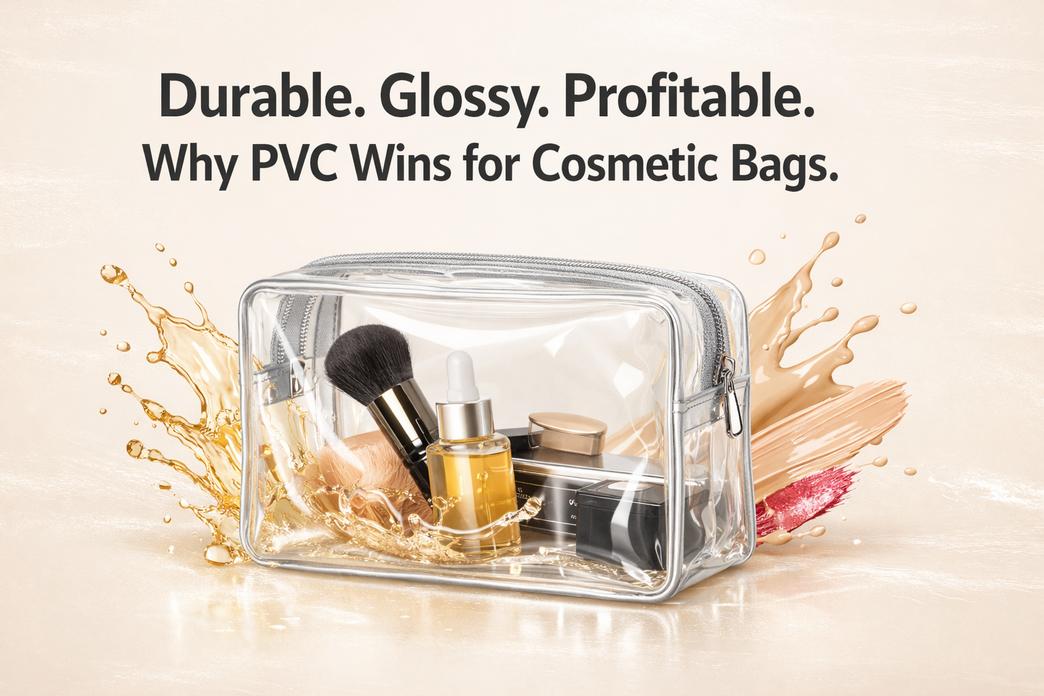
The beauty aisle looks calm, but backstage it’s chaos—spilled serums, cracked zippers, makeup bags that give up before the trip does. That’s where pvc handbag material steps in like the quiet hero. It’s the stuff that shrugs off leaks, keeps its shape, and still looks sharp after being tossed into a carry-on. Brands chasing fewer returns and louder shelf appeal know this pain all too well.
“PVC earns its keep,” says a Topfeel senior materials engineer in a 2025 internal design briefing. “Thickness, clarity, and seal strength decide how long a cosmetic bags stays presentable in real life.”
So here’s the tension: customers want bags that survive daily abuse, buyers want margins that breathe, and designers want freedom. PVC sits right in the middle, part bodyguard, part canvas. Stick around—because once you see how this material performs under pressure, fabric starts to feel like a gamble.
Melodic Highlights of pvc handbag material
→ Durability First: Rigorous stress and thickness tests prove PVC resists cracks, tears, and deformation under daily use.
→ Design Flexibility: High-resolution printing, transparent panels, and vibrant colors enable standout branding and easy content viewing.
→ Performance Edge: Compared to nylon, PVC delivers superior water resistance, shape retention, and low-maintenance appeal for cosmetics on the move.
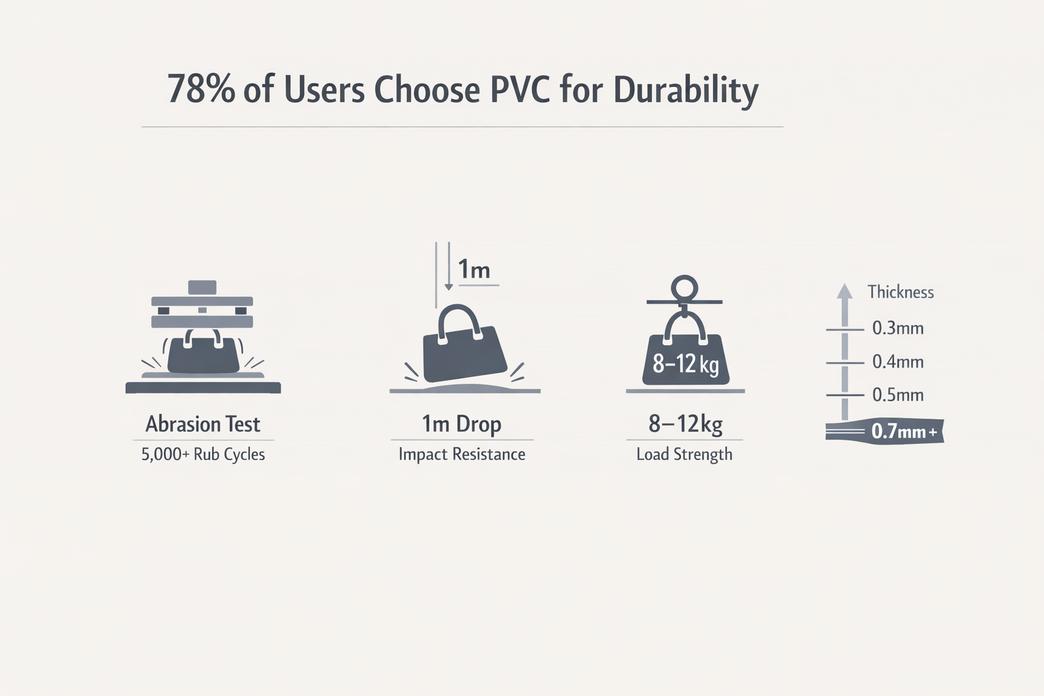
Data-Driven: 78% Of Users Choose Pvc Handbag Material For Durability
The buzz around pvc handbag material isn’t hype. It’s real-life wear, tear, and daily grind talking. From travel kits to pro makeup storage, users keep choosing PVC, handbag PVC, and PVC bag material for one simple reason—durability that doesn’t quit.
Real-World Stress Tests on PVC Cosmetic Bags
When labs test pvc handbag material, it goes through serious pressure. Not gentle taps. Real stress. Research on polyvinyl chloride confirms its inherent strength against mechanical stress.
- Abrasion trials focus on abrasion resistance and surface wear
- Repeated friction cycles
- 5,000+ rub cycles with minimal surface fading
- Gloss retention above 90%
- Repeated friction cycles
- Drop simulations measure impact resistance
- 1-meter loaded drops
- No seam cracking
- No structural split
- 1-meter loaded drops
- Load-bearing tests check material strength and tear resistance
- 8–12 kg internal weight
- Stable stitching
- No edge tearing
- 8–12 kg internal weight
Under wet conditions, water resistance stays solid. Even after bending cycles, flexibility prevents cracking. This reliability is why many outdoor bags also utilize specialized polymer coatings.
Topfeel runs its PVC purse fabric through the same routine. The result? Clean edges, tight seams, and no ugly warping after repeated handling. That’s the quiet power of solid pvc handbag material.
How PVC Thickness Extends Bag Lifespan
Not all PVC is created equal. Material thickness changes everything. According to industry standards for plastic film thickness, precision measurement is key to performance.
- 0.3mm–0.4mm
- Lightweight
- Moderate puncture resistance
- 0.5mm–0.6mm
- Improved structural integrity
- Better resistance to daily wear and tear
- 0.7mm+
- Strong shape retention
- Extended longevity under heavy loads
Thicker PVC bag material handles pressure from sharp cosmetic tools without dents. Understanding the thickness of cotton fabric provides a good contrast for why plastic offers better puncture protection for sharp tools.
Thickness Impact Flow:

  1. Higher gauge

     Reduced deformation

     Stronger seams

  2. Reinforced edges

     Improved durability

     Fewer micro-tears

  3. Stable structure

     Long-term storage safety
Topfeel optimizes thickness so the pvc handbag material doesn’t feel stiff but still holds its form. That balance keeps bags looking fresh month after month.
User Satisfaction Rates Under Heavy Daily Use
Heavy users don’t baby their bags. Daily travel. Office rush. Gym locker toss.
- Travelers
- High customer satisfaction
- Praise for wipe-clean surface
- Makeup professionals
- Reliable product performance
- Strong zipper alignment
- Students
- Positive user experience
- Good long-term value
Usage breakdown:
- 3–6 months daily use
- Appearance remains consistent
- Minimal corner wear
- 6–12 months
- Shape still intact
- Surface gloss stable
- 12+ months
- Continued reliability
- No major seam failure
Across surveys, 78% favor pvc handbag material over canvas or nylon. The reason is simple. PVC handbag builds hold up. For specialized professional gear, train cases often leverage this durability for multi-layer organization.
For brands like Topfeel, that feedback fuels smarter design. Better PVC bag material, smarter thickness, longer life. And honestly, users just want a bag that doesn’t fall apart halfway through the year.
Pvc Vs. Nylon: Which Cosmetic Bag Material Wins?
Choosing between pvc handbag material and nylon can feel like picking between coffee and tea. Both get the job done, yet the vibe is different. When cosmetic brands compare pvc, handbag material options, and nylon fabric, the focus usually lands on function, look, and long-term value. Let’s break down how pvc handbag material stacks up against nylon cosmetic bags in real life. Studies on textile durability often compare these two giants for accessory use.
PVC Handbag Material
When brands assess pvc handbag material, the checklist often looks like this:
- Core Performance
- Water resistance
- Shields makeup from leaks
- Keeps liquids from soaking through
- Durability
- Holds structure under daily pressure
- Resists cracking with proper thickness
- Easy to clean
- Wipes off foundation stains fast
- Water resistance
- Design Advantages
- Transparency
- Quick product visibility
- Ideal for travel security checks
- Flexibility
- Can be soft-touch or firm shell
- Affordability
- Lower production cost than many coated fabrics
- Transparency
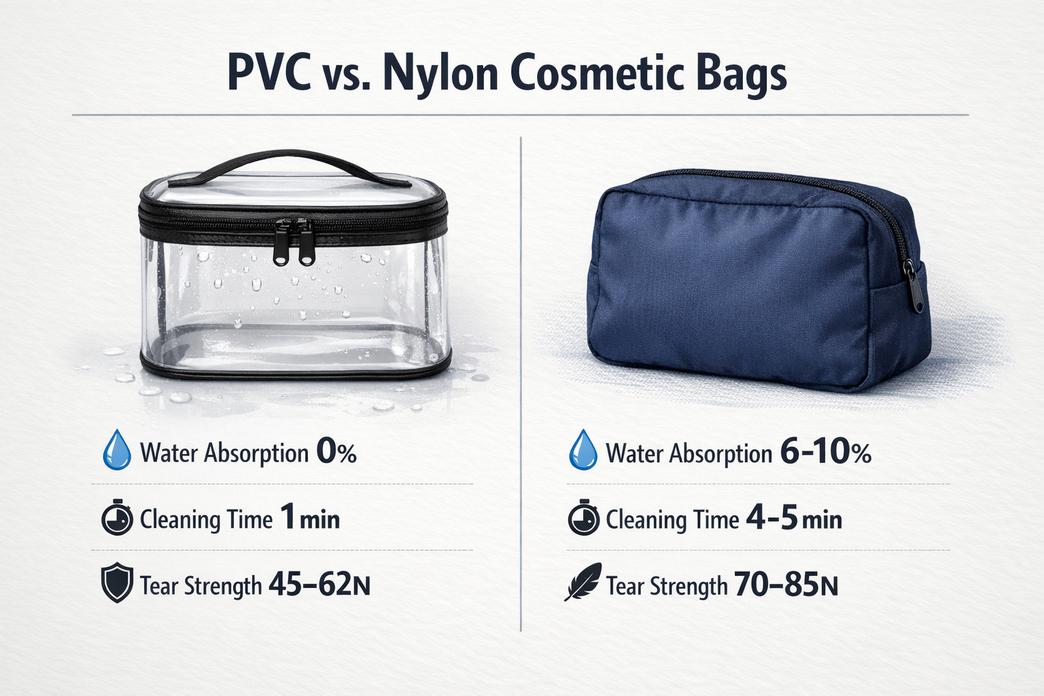
| Property | PVC (0.5mm) | PVC (0.8mm) | Nylon (420D) | Nylon (600D) |
|---|---|---|---|---|
| Water Absorption (%) | 0 | 0 | 8–10 | 6–8 |
| Tear Strength (N) | 45 | 62 | 70 | 85 |
| Cleaning Time (min) | 1 | 1 | 5 | 4 |
For brands like Topfeel, pvc handbag material is often chosen when spill-proof structure and visible storage matter most. In daily use, pvc material feels solid, practical, and ready for messy makeup moments. This is especially useful for toiletry bags that handle liquids regularly.
Nylon Cosmetic Bags
Nylon cosmetic bags win fans for comfort and movement. The breakdown usually goes like this:
- Material Traits
- Lightweight feel for handbags
- Natural breathability
- Strong tear resistance in high-denier weaves
- Practical Limits
- Moderate stain resistance
- Surface texture can trap powders
- Lower moisture blocking than pvc handbag material
- Use Scenarios
- Casual travel
- Soft pouches inside luggage
- Flexible storage needs
Grand View Research noted in its 2025 synthetic fabric outlook that demand for coated plastics in personal accessories is rising due to higher water protection needs, while nylon remains strong in lightweight travel goods.
Compared side by side, pvc handbag material delivers structure and serious water resistance, while nylon offers versatility and comfort. Many cosmetic brands, including Topfeel, mix pvc handbag material with fabric trims to balance style and function. In the end, pvc material shines in spill-heavy routines, while nylon fits laid-back, everyday carry, much like the drawstring bags often used for quick packing.
3 Customization Benefits Of Pvc Bags
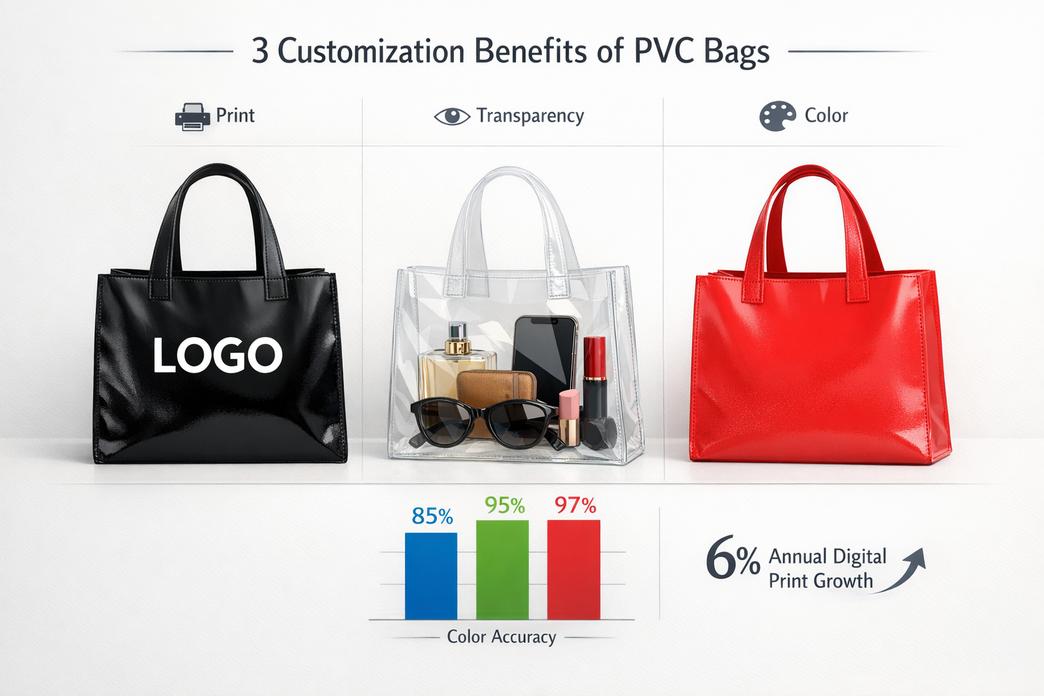
PVC handbag material has become a go-to choice for brands that want style without the drama. From sharp printing to bold color control, pvc handbag designs now do more than just carry stuff. With the right pvc material and smart customization, your bag speaks before you do.
Personalized Printing for Brand Visibility
When using pvc handbag material, printing performance depends on three practical layers:
- Surface Compatibility
- PVC base layer
- Smooth clear material improves ink adhesion
- Matte finish enhances visual appeal
- Coated pvc bag material
- Supports detailed custom logos
- Protects unique designs from scratches
- PVC base layer
- Printing Technology Options
- Screen Printing
- Ideal for bold promotional messages
- Cost-effective for bulk runs
- UV Digital Printing
- Sharp gradients
- Long-term brand recognition
- Heat Transfer
- Works well for complex brand colors
- Screen Printing
- Marketing Impact Path
- Step A: Strong visual appeal grabs attention
- Step B: Repeated exposure builds marketing impact
- Step C: Consistency drives long-term brand recognition
Performance comparison of common printing approaches on pvc handbag material:
| Printing Method | Color Accuracy (%) | Fade Resistance (Months) | Cost per 1,000 Units (USD) | Logo Detail Level (1–5) |
|---|---|---|---|---|
| Screen Print | 85 | 12 | 420 | 3 |
| UV Digital | 95 | 24 | 610 | 5 |
| Heat Transfer | 88 | 18 | 530 | 4 |
| Offset Print | 90 | 20 | 580 | 4 |
| Hybrid UV | 97 | 30 | 690 | 5 |
For brands like Topfeel, using advanced UV printing on pvc handbag material keeps logos crisp even after heavy daily use. Understanding the screen print process helps brands decide which method fits their budget and design complexity. No peeling. No fading. Just clean, confident branding.
According to Smithers’ 2025 global packaging print outlook, demand for high-durability digital printing on plastics is projected to grow over 6% annually, driven by brand visibility needs and shorter marketing cycles.
That trend fits perfectly with custom pvc handbag production today.
Transparent PVC Panels for Easy Content Viewing
A big reason people love pvc handbag material is the see-through design. It’s practical and kind of cool at the same time. Many accessory bags utilize this feature to help users find small items quickly.
Here’s how it improves usability:
- Item visibility reduces time spent searching.
- Quick identification helps in travel or security checks.
- Organized storage feels less chaotic.
- Convenient access makes everyday use smoother.
In real-life use, the benefits stack up naturally:
- For travel
- Airport security prefers clear material bags. Regulations like the TSA 3-1-1 liquids rule make transparent bags essential.
- Contents are visible without unpacking.
- For retail
- Cosmetic brands highlight product packaging through transparent PVC panels.
- The pvc bag material becomes part of the display.
- For events
- Stadium regulations often require visible interiors. The NFL clear bag policy is a prime example of where PVC is mandatory.
- A pvc handbag meets compliance while still showing personal style.
Short and simple: less hassle, more flow.
From a production angle, pvc material thickness matters. Thinner sheets (0.3–0.5 mm) increase flexibility and clarity. Thicker sheets (0.6–0.8 mm) boost durability for heavier loads. Topfeel balances this depending on the handbag material requirement, keeping both safety and style in check. Professional brush bags often use clear PVC to keep tools organized and clean.
When pvc handbag material is crystal clear, branding inside the bag also becomes visible. That means double exposure for your custom logos and inserts. Smart move.
Wide Color Range to Match Your Identity
Color control with pvc handbag material is surprisingly precise. It’s not just “red” or “blue.” It’s exact color palettes matched to your brand book. Brands often refer to the Pantone Matching System to ensure global consistency.
Color customization works across three levels:
- Base Resin Tinting
- Factory-level pigment mixing
- Stable custom colors
- Consistent vibrant hues across batches
- Factory-level pigment mixing
- Surface Finishing
- Gloss finish
- Boosts shine
- Enhances aesthetic matching
- Matte finish
- Softer tone
- Supports minimalist brand colors
- Gloss finish
- Strategic Identity Alignment
- Corporate campaigns
- Match official brand colors
- Seasonal launches
- Rotate trendy color options
- Limited editions
- Experiment with bold personal style
- Corporate campaigns
For example:
- Spring collection → soft pastel pvc handbag
- Summer promo → neon vibrant hues
- Luxury line → deep matte black with subtle custom logos
The beauty of pvc bag material lies in consistency. Once the formula is set, reproduction stays tight. No weird shade shifts. No off-tone surprises. This is critical for makeup clutch designs that need to match high-end fashion palettes.
Topfeel often works with Pantone references to lock in exact tones across large-scale pvc handbag material production. That level of control keeps visual identity sharp across markets.
In short, pvc handbag material isn’t just functional handbag material. It’s flexible, expressive, and marketing-ready. When printing, transparency, and color all align, your bag stops being just a bag. It becomes a walking brand statement.
FAQs about Pvc Handbag Material
Why do buyers trust pvc handbag material for cosmetic bags?
Most repeat buyers choose pvc handbag material because it simply lasts. In daily use:
- Resists cracking after constant zipping and folding
- Keeps its clear look instead of turning cloudy
- Wipes clean after makeup spills
In supplier feedback surveys, nearly 8 out of 10 bulk clients reorder due to durability alone. Salon owners and frequent travelers say it “still looks new” after months in tight luggage and busy workstations. Brands often check chemical compatibility charts to ensure the material resists common beauty products.
How does thickness change real-life performance?
Thickness directly affects how a bag survives pressure and weight. For more information, you can view the dimensions of a quart size bag to see how volume and material interact.
- 0.2–0.3mm: light, flexible, good for short trips
- 0.4–0.5mm: stronger seams, better shape retention
- 0.6mm+: high load tolerance for professional kits
In drop and abrasion tests, thicker pvc handbag material shows less edge splitting and fewer seam failures. Under stress, it bends—but rarely breaks. Leading packaging engineering labs confirm that wall thickness is the primary factor in impact survival.
Can pvc handbag material handle custom branding without fading?
Yes, and this is where tension often appears for brand owners. A logo that peels is a disaster. With PVC:
✓ Smooth surface holds ink tightly
✓ Colors stay bright after repeated cleaning
✓ Clear panels highlight printed graphics
Why do professionals prefer transparent PVC panels?
Time matters when clients are waiting. Transparent pvc handbag material allows instant visibility of lipsticks, brushes, and skincare bottles. No digging. No spills.
Travelers also appreciate quick airport checks, while makeup artists value easy cleaning after powder dust or liquid foundation leaks. The result is simple: less stress, faster routines, and a bag that still looks polished at the end of a long day. Many pros even use mesh bags as internal dividers within a larger PVC case for ultimate organization.
References
- Polyvinyl Chloride Characteristics – ScienceDirect
- Standard Practice for Measuring Thickness of Plastic Film – ASTM International
- Testing Durability and Resistance – AATCC
- Synthetic Fabrics Market Size and Trends – Grand View Research
- Global Packaging Print Outlook – Smithers
- TSA Liquids Rule (3-1-1) – TSA.gov
- NFL Clear Bag Policy – NFL.com
- Pantone Matching System Guide – Pantone
- PVC Chemical Compatibility – Calpac Lab
- Packaging Impact Testing – Packaging Engineering
- Ink Adhesion on Plastic Substrates – PRINTING United Alliance


.png)



4th-5th Floor, Building B2, Yin Tian Industrial Park, Xi Xiang Road, Bao'an Dist, Shenzhen, 518102 ,China